
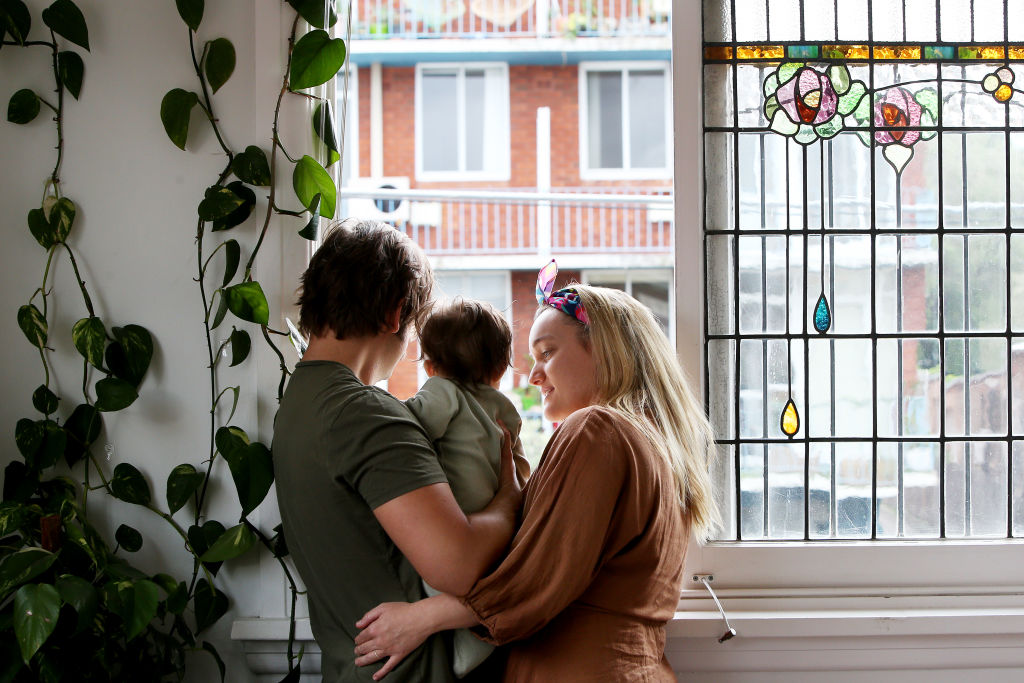
SYDNEY, AUSTRALIA - APRIL 20: Laura Pike and partner Jordan Gallaway isolate with daughter Rumi Gallaway, 7 months, at their home in the Eastern Suburbs on April 20, 2020 in Sydney, Australia. "Rumi was born during the bushfires and then we had the dust storms and now COVID-19, so in a way we’ve been self-isolating since she was born. It has been quite frightening having a new baby born in to this time, everything feels like an unknown at the moment and with so much fear surrounding it and people being so cautious. I had an idea of having a baby, being able to socialise them, pass them around to people, be down the beach, having picnics, being in mothers’ groups - it’s been completely different to that. We feel really grateful to still have work; we know it’s not the same for a lot of other people. We are both actors and work in the arts, our industry has been devastated, so many of our friends have been directly impacted by this so we feel incredibly blessed," said Laura. Jordan believes," the most beautiful thing I’ve noticed, is as a community we have been reaching out and leaning on each other more, out on the street people seem so much keener to have human interaction. So if you say 'hi' they will say hello back and that’s not that common in Sydney and the major cities. I just hope people will remember that and remember there are people that live alone and live very solitary lives all the time regardless of COVID-19 and that a smile and a wave can make a big difference to someone’s day." Strict measures are currently in place across Australia due to the ongoing coronavirus (COVID-19) pandemic, with the federal government requiring all people to adhere to social distancing rules. (Photo by Lisa Maree Williams/Getty Images)
URGENT UPDATE: Despite spending billions of dollars, Australia faces a critical fertility crisis as its birth rate plunges to alarming lows. The Labor government’s latest estimates reveal that the national total fertility rate is set to fall to a historic low of 1.42 children per woman by 2026, significantly below the replacement rate of 2.1.
In an effort to reverse this trend, the Australian government plans to invest $4.8 billion (US$3.39 billion) in paid parental leave by January 5, 2026. This initiative is part of a broader strategy that includes childcare subsidies and enhanced workplace flexibility aimed at supporting new parents.
Starting in January, more Australian parents will also be eligible for an additional three days of guaranteed childcare, projected to cost $430 million over the next four years. Furthermore, an extra $1 billion will be allocated to the Building Early Education Fund to expand early learning services across regional areas.
Despite these significant financial commitments, experts are questioning the effectiveness of such measures. The ongoing decline in birth rates suggests that financial incentives alone may not be sufficient to encourage families to have more children.
Why This Matters NOW: The implications of a declining birth rate are profound, affecting the economy, workforce sustainability, and social services in Australia. As fewer children are born, the country risks facing an aging population with a shrinking workforce, which could burden the economy and social support systems.
As the Labor government continues to explore solutions, the urgency of the situation cannot be overstated. The decreasing birth rate is not just a statistic; it has real-world consequences for families and communities across Australia.
Next Steps: Officials are expected to monitor the effectiveness of these new initiatives closely. As programs roll out, the government will likely make adjustments based on their impact on birth rates and family support.
Stay tuned for more updates as Australia navigates this pressing issue. The future of family planning and community support in the country hangs in the balance, and every development will be crucial for parents and policymakers alike.