


Scientists are exploring the intriguing possibility that mathematics could serve as a universal language for communication with extraterrestrial life. A recent study, led by researchers from Monash University and RMIT University, draws parallels between human communication and the mathematical abilities of honeybees, suggesting that if intelligent life exists elsewhere in the universe, it may also understand math.
The distances between stars present a significant challenge for potential interstellar communication. The nearest star system, Alpha Centauri, is approximately 4.4 light-years away, which means that any messages sent could take over ten years to receive a response. Given this delay, establishing a shared method of communication becomes crucial.
Mathematics has long been considered a possible common ground. The concept dates back to the 17th century when Galileo Galilei famously remarked that the universe is a “grand book written in the language of mathematics.” This notion has been echoed in various science fiction narratives, including the film adaptation of Carl Sagan’s novel, “Contact,” where extraterrestrials communicate through prime numbers.
Exploring Communication Through Mathematics
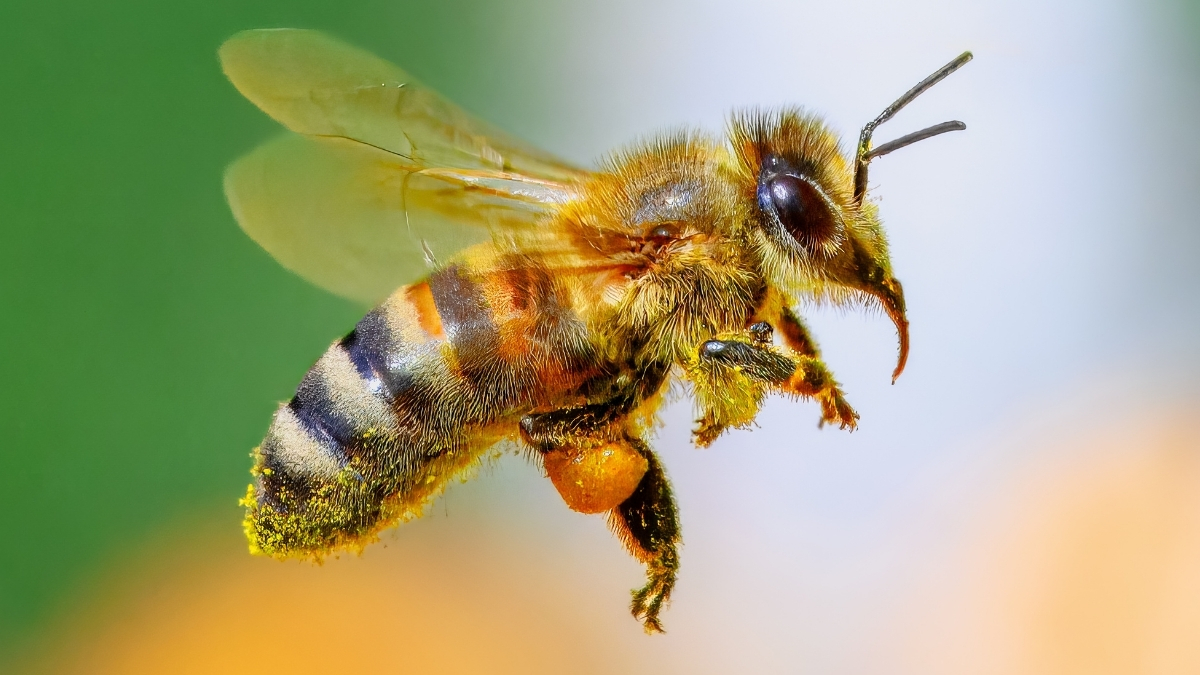
The study highlights how humans and bees, despite vastly different evolutionary paths, demonstrate mathematical capabilities. Over the last several years, researchers have conducted experiments to assess bees’ ability to solve basic mathematical problems. In these tests, honeybees were rewarded with sugar water for correctly engaging in simple addition and subtraction tasks. They exhibited the ability to categorize numbers, recognize odd and even quantities, and even understand the concept of zero.
These findings suggest that even with their small brains, bees possess a fundamental understanding of mathematics. Specifically, they can perform operations that allow them to represent natural numbers, which raises the question of whether mathematics could serve as a universal language for disparate species.
According to Scarlett Howard, a Research Fellow at Monash University, “If two species considered alien to each other—humans and honeybees—can perform mathematics, then perhaps mathematics could form the basis of a universal language.” The researchers propose that if extraterrestrial species exist, they may possess similar mathematical reasoning abilities, given their intelligence.
Historical Context and Future Implications
Efforts to communicate with potential extraterrestrial life have employed mathematics historically. For instance, the Golden Records, launched with the Voyager 1 and 2 spacecraft in 1977, include mathematical and physical concepts intended to convey information about Earth. The 1974 Arecibo message, transmitted into space, consisted of binary code relaying fundamental information about humanity, including numerical sequences and the atomic structure of DNA.
The implications of these findings extend beyond theoretical discussions. They prompt questions about whether mathematics is a construct unique to humans or a universal aspect of intelligence. The researchers speculate that different species might develop distinct mathematical frameworks, similar to dialects in spoken languages.
In summary, the exploration of how bees engage with mathematics provides a fascinating lens through which to consider the possibilities of communication with extraterrestrial life. As humanity continues to seek answers to the age-old question of whether we are alone in the universe, the intersection of mathematics and communication presents an exciting avenue for future research.