




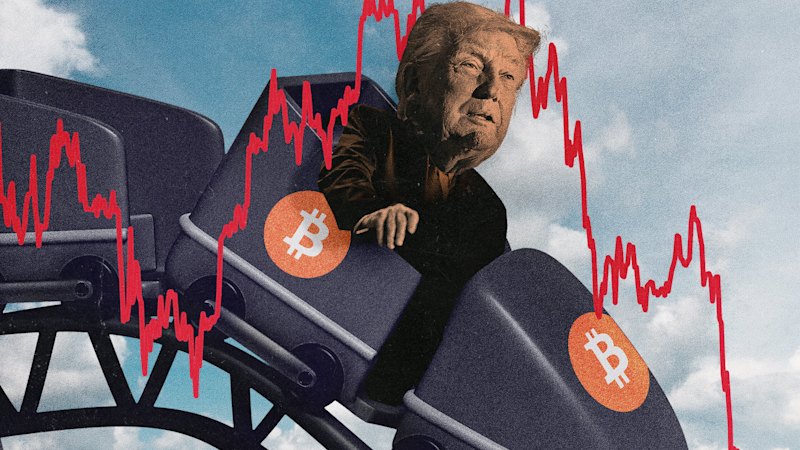
UPDATE: In a shocking turn of events, Bitcoin has plunged over 22% in just one week, raising serious doubts about its status as “digital gold,” a term popularized by former President Donald Trump. This dramatic drop comes amid a backdrop of heightened volatility in global financial markets.
Last week, Bitcoin’s price fell below $64,000 before slightly recovering to around $68,650. The cryptocurrency, once peaking at more than $126,000 in October, has now lost more than 45% of its value since then. In stark contrast, gold has surged from just under $4,000 an ounce to over $5,000 an ounce, proving its reliability as a hedge against inflation and geopolitical risks.
The sell-off in Bitcoin is linked to broader market turmoil triggered by Anthropic’s release of new AI tools, which investors fear could disrupt existing tech companies. At one point, the S&P 500 dropped more than 2.5%, while the Nasdaq fell 4.5%. Bitcoin’s performance suggests it is more correlated with tech stocks than with traditional safe-haven assets like gold.
The volatility of Bitcoin is exacerbated by its limited supply of 21 million coins and the increasing leverage within cryptocurrency markets. Reports indicate that a Hong Kong hedge fund may have faced margin calls due to its leveraged positions in Bitcoin derivatives, contributing to the recent market volatility.
Trump’s transformation from a crypto skeptic to a proponent has also played a role in the narrative. After securing funding from crypto billionaires during his 2024 presidential campaign, Trump declared he would lead the U.S. to become the “crypto capital of the planet.” However, the regulatory landscape remains uncertain, with Congress recently passing the Genius Act and considering the Clarity Act for stablecoins.
Despite the Trump administration’s push for a flourishing stablecoin sector, ongoing discussions about regulatory frameworks have raised concerns. A recent meeting at the White House revealed tensions between crypto promoters and bankers over whether stablecoins should offer yields. The potential fallout from these discussions could lead to more than $6 trillion in deposits at risk, should the regulations not be carefully designed.
While Bitcoin’s decline cannot be solely attributed to these regulatory challenges, the overall economic environment—including Trump’s unpredictable tariff policies and geopolitical tensions—has fostered a risk-averse climate among investors.
As Bitcoin struggles to maintain its value, the stark contrast with gold’s performance underscores a pivotal moment for cryptocurrency enthusiasts and investors alike. The future of Bitcoin as a legitimate store of value remains in question, with many now viewing it as a speculative asset rather than a safe haven.
Stay tuned for further updates as this story develops. The implications for the cryptocurrency market, regulatory landscape, and global economy are significant and warrant close attention.
