




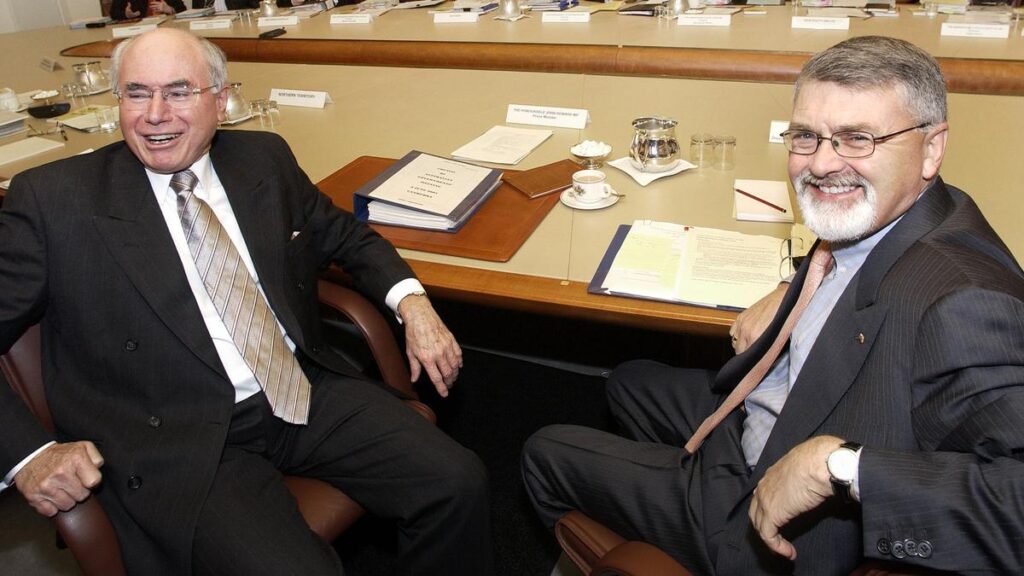
UPDATE: Newly released cabinet papers from 2005 expose how former Prime Minister John Howard leveraged a rare Senate majority to aggressively pursue his controversial WorkChoices reforms. The documents, unveiled by the National Archives on Thursday, highlight the government’s determination to overhaul Australia’s industrial relations landscape, a move that ultimately contributed to their electoral downfall in 2007.
With newfound political power following the 2004 election, Howard and then-employment minister Kevin Andrews recognized a “once-in-a-generation opportunity” to enact sweeping changes. According to Philip Ruddock, then-attorney general, the double parliamentary majority emboldened the government to act decisively, stating, “Now that you’ve got the numbers, the view will be it’s the best time to progress it.”
The cabinet’s ambitious strategy aimed to dismantle union influence and reshape minimum wage standards through the introduction of the Fair Pay Commission. In a submission from March 2005, Andrews argued for radical reforms, noting that Australia’s minimum wage was comparatively high and the existing commission lacked economic expertise.
Despite significant backlash expected from unions, particularly the ACTU and its “Your Rights at Work” campaign, the cabinet pressed forward. Ruddock indicated that the potential political fallout was acknowledged but not fully understood. “Did we contemplate that we may not be able to do well enough to secure our further re-election? I guess that was always a possibility,” he reflected.
The cabinet’s decisive meeting on May 23 resulted in a vote to implement the reforms, which were swiftly enshrined in law by December 2005—after just eight days of parliamentary debate. The reforms included drastic measures such as exempting small businesses from unfair dismissal laws and reducing the safety net for workers.
Howard faced tough questioning from the media post-announcement, labeling critics as “Chicken Littles” and insisting the reforms were necessary for Australia’s economic future. Cabinet historian David Lee highlighted the significance of the ACTU’s opposition, suggesting it played a pivotal role in the government’s eventual loss.
In an intriguing twist, the cabinet papers also disclose that discussions about fully privatizing Telstra were contentious, revealing deep divisions within the party, particularly from first-term senator Barnaby Joyce. The cabinet’s decision-making process involved multiple meetings and careful consideration of various economic impacts, emphasizing the gravity of the reforms being proposed.
As the political landscape evolves, the implications of these cabinet revelations resonate with current debates on workplace reforms and labor rights in Australia. This urgent update sheds light on how historical decisions continue to shape the nation’s workforce dynamics.
For those following the unfolding political narrative, this development underscores the ongoing tension between economic policies and worker rights—a topic that remains critical in today’s political climate. Stay tuned for more updates as the story develops.