




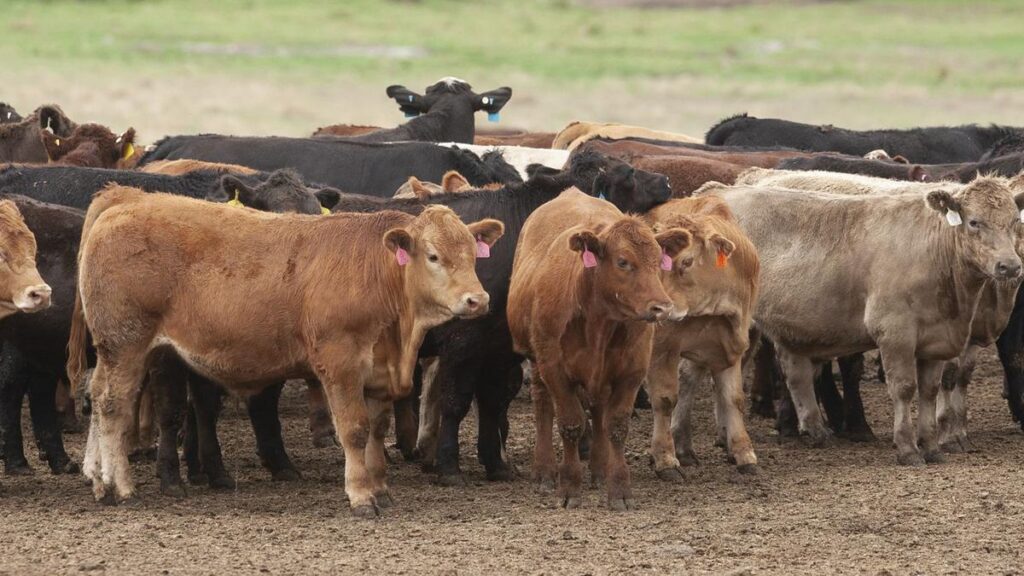
HGP-free WA beef cattle, pictured, ready for processing for chilled box beef products for both export and local markets.
URGENT UPDATE: Just hours before the new year, China has announced significant trade restrictions on Australian beef, imposing new import caps that will take effect from January 1, 2026. The move comes as a devastating blow to Australian exporters, who were hoping for a more favorable trading environment after a tumultuous 2025.
Under the new regulations, Australia’s beef export limit will be capped at 205,000 tonnes annually. Any shipments exceeding this threshold will incur a staggering 55 percent tax. The Australian Meat Industry Council estimates that this restriction could cost the local beef industry a staggering $1 billion each year.
This latest development follows a record year for Australian beef exports, projected to reach 1.5 million tonnes in 2025, despite challenges such as a 10 percent tariff imposed by the United States on Australian beef. The U.S. market has remained a critical buyer, but as Australia’s second-largest beef market, China’s new caps could dramatically reshape the landscape for Australian exporters.
Chinese authorities characterized these import quotas as “safeguard measures” meant to protect its domestic beef producers. The Ministry of Commerce stated, “The increase in the amount of imported beef has seriously damaged China’s domestic industry.” These caps are set to remain in place for three years, with some gradual relaxation expected over time.
Australian Prime Minister Anthony Albanese responded swiftly, emphasizing that Australia has not been uniquely targeted by these restrictions. “This is an announcement that is across the board,” he stated. Albanese maintained confidence in the global demand for Australian beef, declaring it to be “the best in the world.”
The relationship between Australia and China has seen significant ups and downs. Albanese has worked diligently to normalize ties without making major concessions, leading to the gradual removal of previous tariffs on other Australian exports like wine and barley. In July 2025, Albanese visited China, where he and President Xi Jinping discussed the “mutual respect” between the two nations.
As Australia’s most important trading partner, the health of its relationship with China is crucial for economic prosperity. The Prime Minister must now navigate these new trade restrictions to ensure that respect and cooperation continue.
The immediate impacts of these trade caps will be felt across the Australian beef industry and beyond. Producers and exporters are now left to grapple with the consequences of China’s decision, which could redefine their strategies in the coming years.
What happens next will be closely monitored by industry leaders and government officials alike, as they seek to mitigate the effects of this significant trade challenge. The urgency of this situation makes it a critical point of discussion in the agricultural and economic sectors, underscoring the importance of international trade dynamics in today’s global economy.
Stay tuned for further updates as this developing story unfolds.
