




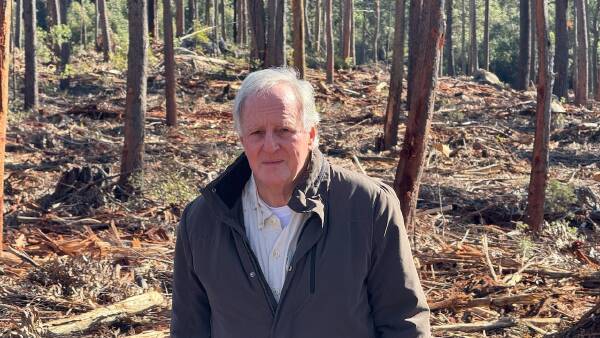
URGENT UPDATE: Citizen scientists are racing against time to survey the vital biodiversity of the Glenbog State Forest before proposed logging operations begin on January 5, 2026. This collaborative effort comes as the Forestry Corporation of NSW (FCNSW) has set plans to log compartments 2312A to 2315A, threatening a unique “cloud forest” ecosystem located west of Bega, Australia.
As logging looms, multiple conservation groups are joining forces this summer to document the forest’s rich biodiversity. Among the organizations on the front lines are Wilderness Australia, Birdlife Southern NSW, South East Forest Rescue, and WWF Australia. Their immediate goal is to gather comprehensive data on the forest’s flora and fauna before the chainsaws start.
Wilderness Australia highlights the urgency of this initiative, stating that Glenbog is a “stronghold” for several threatened species, including the vulnerable flame robin. Reports indicate that there have been four recent sightings of this species, underscoring the need for protection before logging disrupts their habitat. The area is also home to a dense population of wombats, whose burrows could be buried alive if logging machinery is allowed to operate without proper identification and flagging.
Andrew Wong, a representative from Wilderness Australia, emphasized the importance of community involvement. “Under NSW logging rules, a number of species receive logging protections in the form of exclusion zones,” he stated. The citizen science project, ongoing throughout the Christmas and New Year period, is focused on identifying crucial habitats for various species, including yellow-bellied gliders and nocturnal birds such as powerful owls and sooty owls.
The collaborative effort is not merely academic; it aims to influence policy and ensure the survival of these species. “Ultimately, we hope that our combined efforts will convince FCNSW to leave this high conservation value forest alone,” Wong added.
Additionally, the community has been working closely with Jarake Wildlife Sanctuary, which has been mapping wombat burrows in northern Glenbog for years. They have developed a protocol to protect these burrows, ensuring that logging operations take into account the ecological features that need safeguarding.
This urgent call to action highlights the growing concern among conservationists about the potential loss of biodiversity in Glenbog State Forest. The area, situated around Brown Mountain on the Snowy Mountains Highway, is characterized by patches of giant old-growth, cool temperate rainforest, and serves as a critical habitat for several endangered species.
As the clock ticks down to the proposed logging date, the efforts of these citizen scientists gain even more significance. Their findings could play a pivotal role in preserving this irreplaceable ecosystem. The public is urged to support the initiative and advocate for the protection of Glenbog’s unique environment as this situation develops.
Stay tuned for updates as this story progresses and the fate of Glenbog State Forest hangs in the balance. The voices of citizen scientists and conservation groups will be crucial in the fight to protect this vital ecological treasure.
