




URGENT UPDATE: A community of concerned residents gathered on December 6, 2025, at Swan Bay to chart a course for restoring the critically damaged Richmond River. Led by local advocates Steve Posselt and Graeme Gibson, the meeting brought together farmers, fishers, and local officials, all united by the alarming decline of the river’s health.
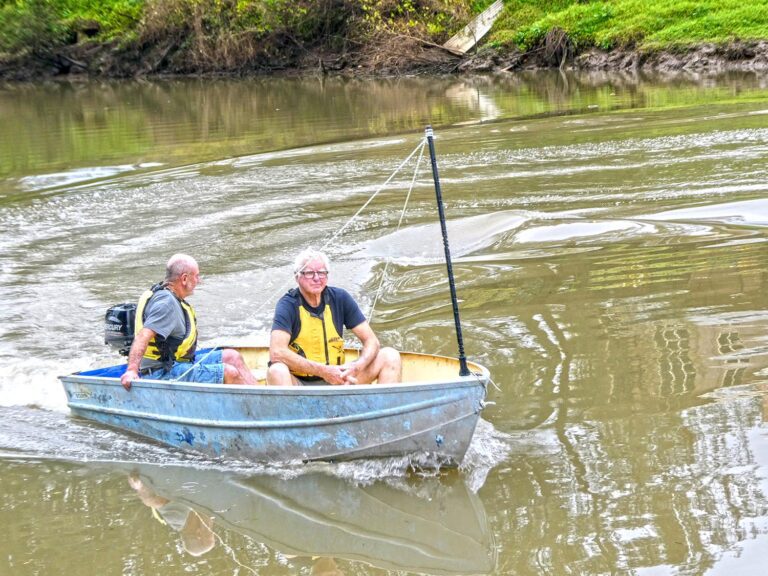
The urgent meeting followed the recent Tinnie Trip, a journey aimed at raising awareness during the Riverfest. Participants reported shocking conditions: toxic sludge, a drastic drop in fish populations, and the river’s ecosystem on the brink of collapse. One fisherman recounted catching just 10 kg of mullet where he once snagged 500 kg on a good day, illustrating the dire state of the river.
“During our discussions, it became clear that the community recognizes the Richmond River’s health is vital for recreation, livelihoods, and even property values,” said Posselt. “We need immediate action to address these concerns.”
Participants unanimously adopted the slogan “Open the Gates” to advocate for the reopening of floodgates that have contributed to the river’s acidification and degradation. Attendees acknowledged that the river’s health has deteriorated over more than a century, with many younger residents lacking firsthand knowledge of its former vitality.
The NSW Department of Primary Industries has indicated that changing land management practices in just five sub-catchments could reduce the risk of black water by 85%, reinforcing the urgency of the community’s efforts. “Recent fish kills have highlighted the need for immediate remediation,” Posselt added, emphasizing that public support for restoration projects is crucial.
The group also discussed broader legislative needs, calling for a dedicated river commissioner following a recent resolution by the Ballina Council. “This is a positive step towards ensuring accountability for the river’s health,” stated Gibson. “However, real change will only happen with community backing and collaborative action.”
This passionate gathering of 18 residents showcased the human impact of the river’s decline, with personal stories of loss and longing for a healthier ecosystem. The meeting also raised concerns about the current lack of legal protections against pollution and the need for sustainable agricultural practices that do not compromise the river’s health.
With the community rallying behind these initiatives, the group aims to engage more local governments to adopt similar resolutions, enhancing coordinated efforts for river restoration. “Our mission is to educate decision-makers on the significance of groundwater and river health,” Posselt noted.
The Tinnie Men group’s commitment to revitalizing the Richmond River emphasizes the critical need for immediate action, with an eye toward collaborative solutions that engage all stakeholders. As this story develops, residents are urged to stay informed and participate in upcoming initiatives aimed at restoring the river to its former glory.
Stay tuned for updates on this urgent environmental issue and how you can help make a difference for the Richmond River.
