




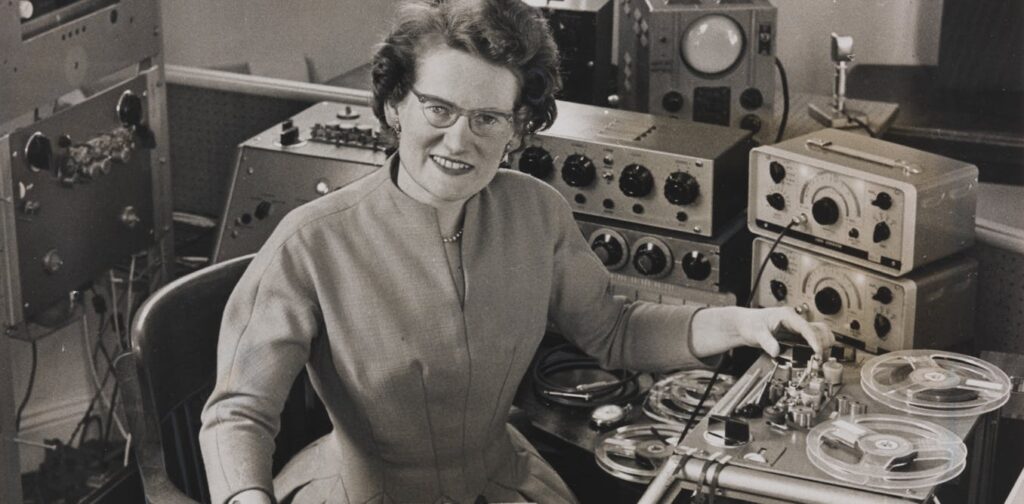
UPDATE: The legacy of Daphne Oram, a pioneering figure in electronic music, is making headlines as her centenary approaches this December 2023. New insights into her groundbreaking contributions highlight why her work is more relevant today than ever.
Oram, who passed away in 2003, revolutionized the sound landscape by co-founding the BBC Radiophonic Workshop in 1958. Her innovative approach to sound design transformed radio and television, most famously contributing to the iconic Doctor Who theme.
As we celebrate her life, here are five compelling reasons why Oram remains a vital figure in the evolution of music technology and creativity.
1. Spiritual Roots Shaped Her Vision
Oram grew up in a household steeped in the spiritualist movement, where séances were common. This environment fostered her fascination with sound as a conduit to unseen realms, making her later experiments with electronic vibrations feel almost predestined.
2. The Creation of Oramics
After leaving the BBC, Oram established the Oramics Studios for Electronic Composition at her home, Tower Folly. Here, she invented the Oramics system, an innovative machine that used 35mm film strips to generate sound. This groundbreaking approach humanized electronic music, emphasizing the composer’s creativity in shaping sound.
3. Visionary Ideas on Music’s Role
In her 1972 book, “An Individual Note of Music, Sound and Electronics,” Oram asserted that music should not merely reflect contemporary life but also envision future possibilities. Her ideas were rooted in the 17th-century writings of Francis Bacon, advocating for sound’s role in societal progress and healing.
4. Ahead of Her Time with Still Point
At just 23, Oram composed “Still Point,” a groundbreaking piece for orchestras and turntables that called for live electronic processing. Shelved for years, it finally premiered at the BBC Proms in 2018, showcasing her revolutionary approach to sound as a dynamic, spatial experience—long before DJ culture emerged.
5. A Future of Inclusivity
In a 1994 essay, Oram discussed the challenges women face in music and predicted that personal computers would empower independent female artists. This vision has materialized today, with the Oram Awards supporting women and gender-diverse creators. In partnership with the Daphne Oram Trust, a new compilation called “vari/ations, Ode to Oram” features contemporary artists crafting new work from her archived tapes.
As Oram’s centenary approaches, her influence continues to inspire a new generation of musicians and sound artists. Her archive is not merely a historical artifact; it serves as a vibrant resource for those aspiring to innovate in electronic music.
Stay tuned for more updates as celebrations of Oram’s life and work unfold, showcasing the enduring power of her vision in today’s music landscape.
