




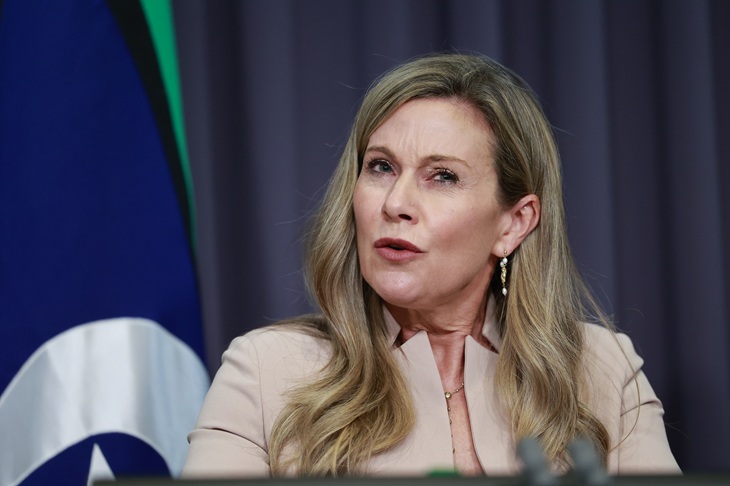
CANBERRA, AUSTRALIA - NOVEMBER 05: eSafety Commissioner Julie Inman Grant speaks to the media at Parliament House on November 05, 2025 in Canberra, Australia. Australia's Parliament convened for sittings as a number of pressing issues come to the fore, from inflation and cost of living domestically to Australia's relationship with its allies in the region and beyond internationally. (Photo by Hilary Wardhaugh/Getty Images)
URGENT UPDATE: The eSafety Commissioner, Julie Inman Grant, has just announced a significant crackdown on electric vehicles (EVs), warning they could be misused in domestic violence situations. This alert comes as 20,000 requests for information on EV abuse have been reported, raising serious concerns about the safety of these digital vehicles.
In a striking announcement today, Grant emphasized that the rise of ‘smart cars’ could lead to dangerous outcomes if left unchecked. She stated that these vehicles might be “weaponized in domestic and family violence cases,” highlighting a pressing need for regulatory frameworks to address this growing issue.
Grant’s comments come on the heels of her previous initiative, which banned individuals under 16 years old from social media platforms, stirring debate about the effectiveness of such regulations.
“We’ve seen much more pernicious and creative misuses of technology,” Grant stated, illustrating her concerns with alarming examples from everyday life, such as using smart devices to control a partner’s access to food and comfort. Her warning underscores the potential for EVs to be manipulated in similar ways, where features like a ‘kill switch’ could restrict a victim’s mobility.
These developments raise critical questions about privacy and control over personal vehicles. Grant pointed to past incidents where individuals were limited to a specific radius, effectively trapping them in abusive situations. With EVs capable of being shut down remotely, the fear intensifies that such technology could be misused by abusive partners or even the state during emergencies.
As the landscape of personal transportation shifts, officials are grappling with the implications of regulating a growing market that is projected to expand in Australia. The potential for government intervention in EV technology sparks a complex debate about freedom, safety, and privacy in the digital age.
Concerns over national security also loom large, especially as many EVs are manufactured in China. In a climate of geopolitical tension, the risk of third-party shutdowns during conflicts becomes a chilling possibility.
Furthermore, the threat of hacking and malicious interference adds another layer of complexity. If personal computers can be compromised, so too can vehicles, making the idea of remote lockouts uncomfortably plausible.
Grant’s warning is a clarion call for regulators to consider the unintended consequences of their actions. The push for stricter controls on EVs must be balanced with the need to protect individual freedoms, not further entrap them.
Despite the urgency of this matter, only a fraction of the total EVs on the road are linked to reported abuse, with 400 calls for help logged thus far. Critics argue that focusing on the technology instead of addressing the root causes of domestic violence could lead to overregulation and unnecessary complications for law-abiding citizens.
The eSafety Commissioner’s proposal to integrate EV abuse into existing domestic violence legislation is a step towards addressing these concerns. However, it raises questions about the role of technology in personal relationships and the ethical implications of government oversight.
As the Australian government continues to incentivize the transition to EVs, the implications for consumer choice and autonomy become increasingly significant. The conversation around eSafety must evolve to address not just the potential harms of technology but also the broader societal issues at play.
Moving forward, stakeholders must navigate this delicate balance, ensuring that safety regulations do not encroach upon individual liberties. The call to action is clear: as EV technology gathers momentum, proactive measures are needed to safeguard against its potential misuse without stifling innovation.
Watch for further developments as the eSafety Commissioner continues to shape policies affecting the future of electric vehicles in Australia.
