




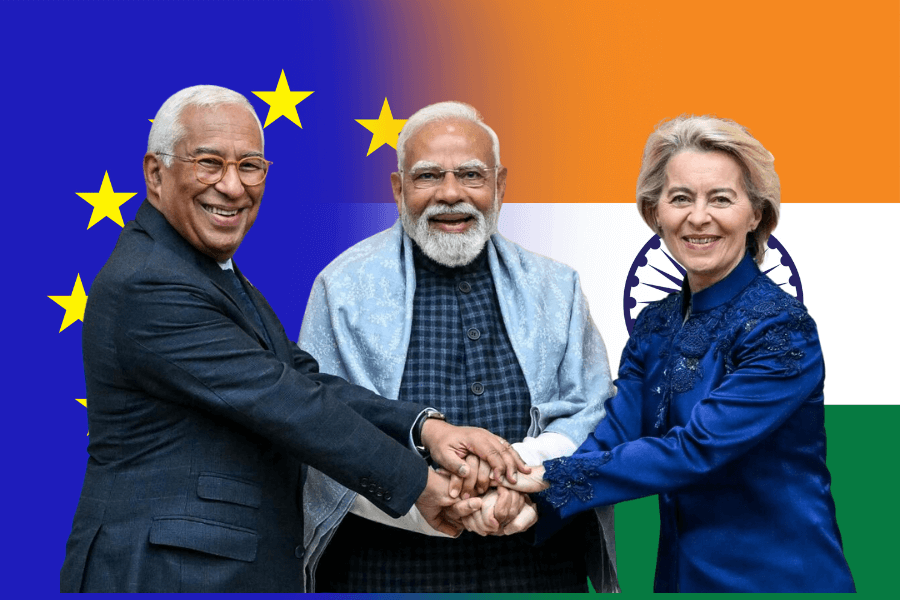
BREAKING: The European Union and India have just finalized a historic free trade agreement after nearly two decades of negotiations, marking a transformative moment in global trade. This landmark deal will progressively eliminate tariffs on approximately 96-97% of goods exchanged between the two economies, creating a colossal market comprising nearly 2 billion consumers.
This agreement is not just significant for its commercial scope; it also represents a crucial geopolitical shift, largely influenced by uncertainty in global trade dynamics triggered by U.S. tariff actions under former President Donald Trump. The renewed focus on diversifying trade relationships has propelled both parties to this momentous conclusion.
As part of the agreement, India will reduce tariffs on a wide array of European exports, including automobiles, machinery, chemicals, wine, and spirits. In return, the EU will enhance access for Indian products such as textiles, pharmaceuticals, leather goods, jewelry, and chemicals. The deal also addresses long-standing issues surrounding services, digital trade, and regulatory cooperation, indicating a more comprehensive partnership than previous drafts suggested.
Negotiators faced intense challenges, particularly with politically sensitive sectors. India’s automobile tariffs have historically exceeded 100%, keeping European manufacturers at bay. The final agreement allows for a gradual reduction of these tariffs over an extended period, providing Indian manufacturers time to adapt while offering European firms a long-desired entry point into one of the world’s most protected auto markets.
Agriculture and dairy were among the most contentious issues. With millions of small farmers in India, the country has traditionally viewed food imports as a critical concern. While European producers sought access to high-value dairy products, many areas remain under strict quotas or are excluded altogether. A trade analyst noted,
“Agriculture was where negotiators drew the clearest boundaries.”
The timing of this agreement is crucial. The Trump administration’s tariff threats reshaped global trade perceptions, pushing both India and the EU to seek alternatives and reduce dependency on the U.S. market. A European trade official stated,
“For both India and the EU, this agreement is as much about resilience as it is about growth.”
The deal’s impact varies between the two economies. In the short term, the EU is positioned to gain significantly, securing unprecedented access to one of the fastest-growing markets globally. European sectors like automobiles and machinery, where they hold a competitive edge, are set to thrive. Conversely, India’s benefits, while slower to materialize, include enhanced access to the EU market for labor-intensive sectors such as textiles and pharmaceuticals.
This agreement not only strengthens India’s position as a viable manufacturing alternative to China but also reinforces its integration into global supply chains. A senior trade economist remarked,
“The EU gets faster commercial returns; India gets long-term industrial positioning.”
The implications extend beyond Europe and India. Australia stands to gain from increased trade flows, with rising demand for Australian exports in raw materials, energy, and agricultural inputs, particularly in the emerging fields of green technology and pharmaceuticals. Opportunities may also arise for Australian firms as third-country partners within EU-India value chains.
In conclusion, the EU-India trade agreement represents a shift toward pragmatic, geopolitically informed trade policy, shaped by the lessons learned from an increasingly unpredictable global trading environment. As developments unfold, this deal is poised to redefine the economic landscape, making it a moment for stakeholders across the globe to watch closely.
