
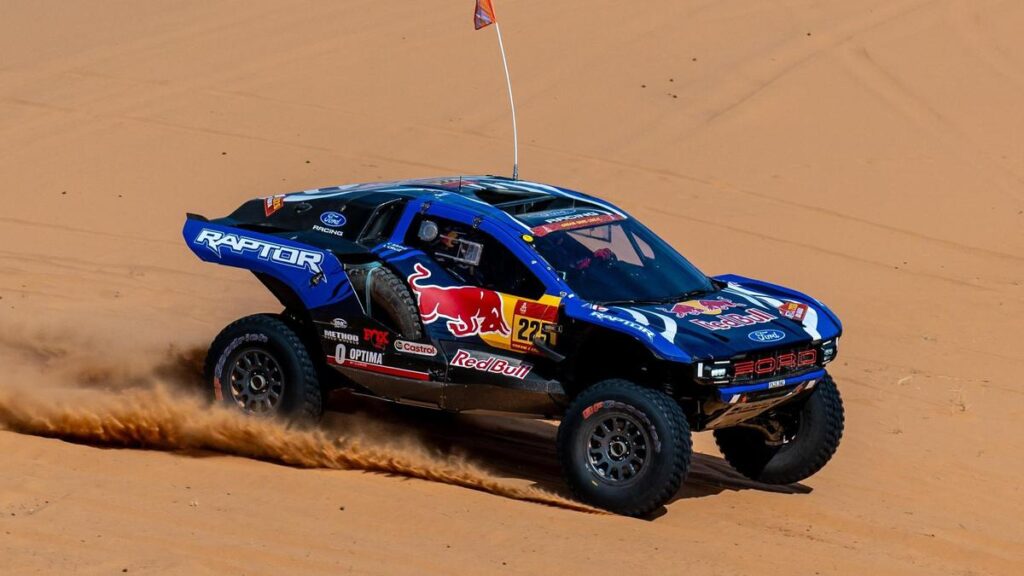
Ford is positioning its participation in the Dakar Rally as a pivotal moment in its quest to establish itself as a leader in off-road performance, akin to the company’s historic triumph at Le Mans. During the 2026 Dakar Rally, CEO Jim Farley stated that winning the event is not merely about securing another trophy; it embodies a greater ambition to dominate the off-road vehicle market, particularly against rival Toyota.
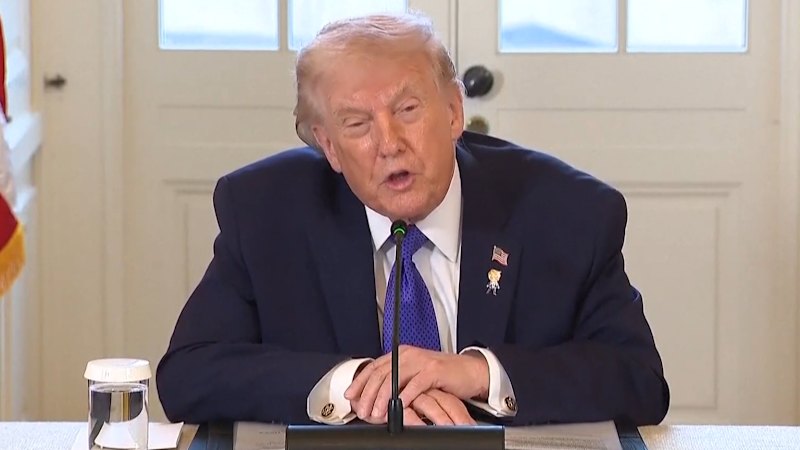
Farley, alongside Kumar Galhotra, the company’s COO, and other key executives, attended the grueling endurance race, which is currently held in Saudi Arabia. He emphasized that the Dakar Rally is no longer just a fixture on Ford’s motorsport calendar but a crucial element of its product development strategy. “If you want to be the Porsche of off-road, you’ve got to win Dakar,” Farley told CarExpert, highlighting the event’s significance in shaping Ford’s future.
The Dakar Rally, known for its extreme challenges over 14 days, occupies a similar emotional and strategic space as the Le Mans 24 Hour race did in the 1960s. Ford’s historic victory over Ferrari at Le Mans not only enhanced its global reputation but also demonstrated its capability to compete at the highest level. Farley believes that winning Dakar can offer a similar validation, providing credibility that no marketing campaign could achieve. “There’s no race like Dakar,” he remarked, noting that the outright win is of utmost importance.
Toyota, with its established reputation for reliability and durability, stands as Ford’s primary competitor in the off-road segment. Farley, who previously spent 25 years with Toyota, has described the prospect of defeating the Japanese automaker at Dakar as “a spiritual moment,” drawing parallels to Ford’s historical victories.
With the stakes set high, Ford’s strategy extends beyond mere competition. Farley has made it clear that success in the Dakar Rally is integral to Ford’s broader business strategy, especially concerning its off-road vehicle lineup, which includes the Ranger, Raptor, and Bronco. He believes that winning Dakar would reinforce the brand’s commitment to durability, performance, and innovation—qualities Ford aims to translate into its consumer vehicles.
“This isn’t marketing – this is what we do,” Farley asserted, reflecting a significant shift in Ford’s approach to motorsport. Under his leadership, racing is viewed not just as a promotional tool but as an essential engineering initiative. The Dakar Rally serves as a rigorous testing ground for vehicle durability, suspension, and real-world reliability, which, according to Farley, resonate more with customers than traditional metrics like lap times or horsepower.
As Ford intensifies its focus on Dakar, it has positioned the event alongside Le Mans and a return to Formula 1 in its motorsport hierarchy. Winning Dakar is crucial for Ford to demonstrate its leadership in off-road performance, emphasizing engineering excellence in the harshest conditions.
At the mid-point of the 2026 Dakar Rally, Ford’s efforts are already yielding results. Four factory-backed drivers are currently in the top ten, with positions of second, third, fifth, and seventh, closely trailing the leader. Nasser Al Attiyah, a five-time Dakar winner, currently leads the race in a Dacia, but Ford is determined to close the gap and challenge Toyota’s dominance.
As the competition unfolds, it is clear that for Ford, the Dakar Rally is not just a race—it is a defining moment that could reshape its future in the off-road market and solidify its standing against an established rival.