




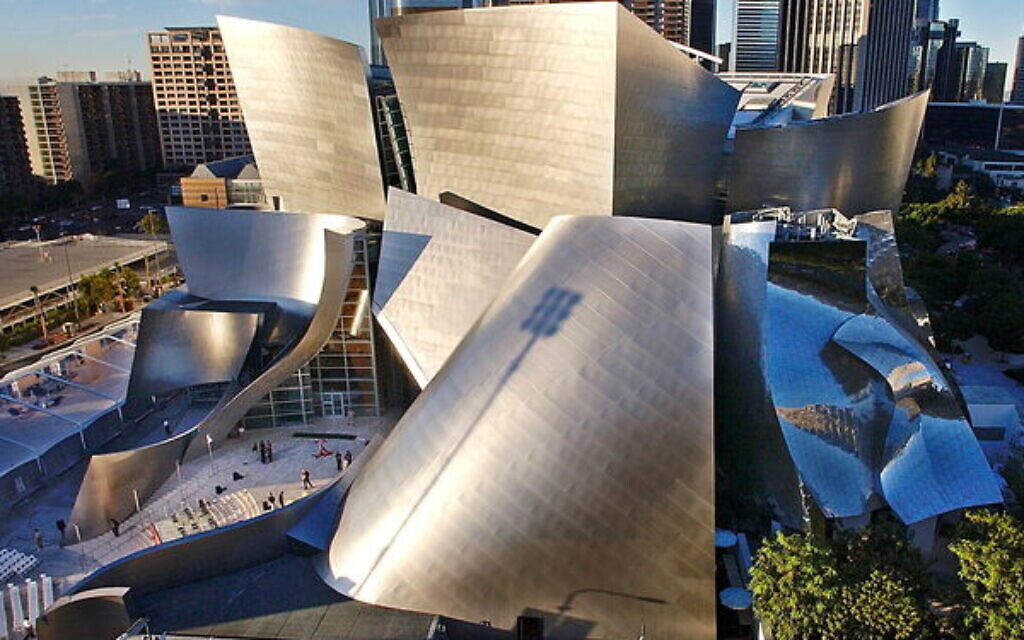
UPDATE: Renowned architect Frank Gehry has passed away at the age of 96 on December 5, 2025, leaving behind an extraordinary legacy that reshaped architecture globally. Gehry, known for his bold designs and whimsical forms, not only transformed skylines but also revolutionized how we perceive and interact with buildings.
Born in Toronto in 1929, Gehry’s journey began as Frank Owen Goldberg, but he adopted his surname in his 20s to navigate the challenges of antisemitism within the architectural community. His migration to Los Angeles in 1947 marked the beginning of a prolific career that would defy conventions and inspire generations.
Gehry’s iconic works, such as the Guggenheim Museum Bilbao and the Walt Disney Concert Hall, stand as testaments to his innovative spirit. The Bilbao Museum, opened in 1997, is celebrated for its striking titanium-clad design that redefined museum architecture, sparking the phenomenon known as the “Bilbao effect.” This term describes how a single, audacious structure can revitalize a city, drawing tourists and attention from around the world.
In 2003, the Disney Concert Hall opened, merging art with acoustic science, and providing a unique venue for music and public life. Critics hailed it as a conversation starter, with LA Times critic Mark Swed noting that Gehry’s buildings create an emotional resonance rarely found in architecture.
One of Gehry’s notable projects outside the U.S. is the Dr Chau Chak Wing Building at the University of Technology Sydney, completed in 2015. This structure, with its crumpled-brick facade, garnered international acclaim and showcased Gehry’s vision of architecture as a surprise and delight. He described the design as a way to “humanize” the university experience, utilizing over 320,000 individually shaped bricks to achieve a remarkable effect.
Gehry’s influence extended beyond aesthetics; he was also a pioneer in using computer-aided design. This technology allowed for the creation of fluid, complex forms that were previously unimaginable. His designs challenged the notion that architecture should merely serve a functional purpose, instead positioning buildings as works of art.
Throughout his illustrious career, Gehry received numerous accolades, including the prestigious Pritzker Prize in 1989, the National Medal of Arts, and the Presidential Medal of Freedom. Many of his most significant works were completed after receiving these honors, proving that his creativity knew no bounds.
Gehry’s Jewish heritage played a significant role in shaping his worldview. While he identified as an atheist, he acknowledged the influence of his upbringing, stating, “There’s a curiosity built into the [Jewish] culture… I call it a healthy curiosity.” This curiosity drove him to explore and innovate throughout his career.
As the world mourns the loss of Gehry, his impact on architecture and urban design endures. He once expressed a desire to nurture young talent, stating that the best thing he could do was to “train young minds.” His legacy will continue to inspire future architects, reminding us that buildings can evoke emotion and wonder.
As tributes pour in from around the world, Gehry’s unique blend of whimsy and boldness will remain a beacon for aspiring architects and design enthusiasts alike. His work has not only changed skylines but has also enriched the cultural fabric of cities across the globe.
