


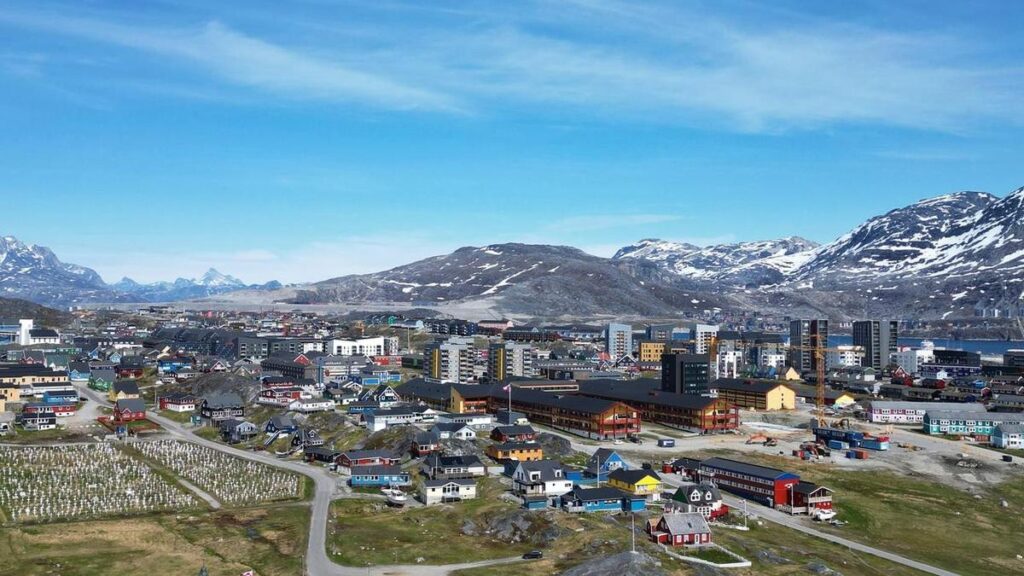
BREAKING: Greenland’s government has just announced a significant push for defense under NATO, firmly rejecting renewed US ambitions to take control of the Arctic territory. In a strong statement released earlier today, officials emphasized that all NATO member states, including the United States, share a crucial interest in the defense of Greenland, a strategically important region rich in minerals.
The coalition government of Greenland stated unequivocally, “We can in no way accept a US takeover of Greenland.” This declaration comes in response to comments made by former US President Donald Trump, who previously suggested that the United States should acquire Greenland to prevent potential occupation by Russia or China.
Greenland, an autonomous territory of the Kingdom of Denmark, has been moving toward greater independence since it gained home rule in 1979. The island was a Danish colony until 1953 and currently enjoys a high degree of self-governance, while Denmark retains responsibility for its security and defense policies.
Earlier today, European Union Commissioner for Defence and Space, Andrius Kubilius, weighed in, stating that any US military takeover of Greenland would effectively spell the end of NATO. This sentiment reflects the growing tensions and complexities surrounding Arctic geopolitics.
Greenland’s Prime Minister, Jens-Frederik Nielsen, took to LinkedIn to underscore the territory’s commitment to democratic principles and international law. He stated, “We are a democratic society that makes our own decisions.”
As tensions escalate, the eyes of the world are on Greenland and NATO. The implications of this situation could significantly affect Arctic security dynamics and international relations.
Officials have made it clear that any military arrangements concerning Greenland must be brokered through NATO, maintaining that the island’s security is a collective responsibility. The government’s statement reflects a growing resolve to assert its sovereignty amid external pressures.
What happens next remains uncertain, but the international community will be closely monitoring developments in this pivotal region. Share this critical update and stay tuned for more on this evolving story.