



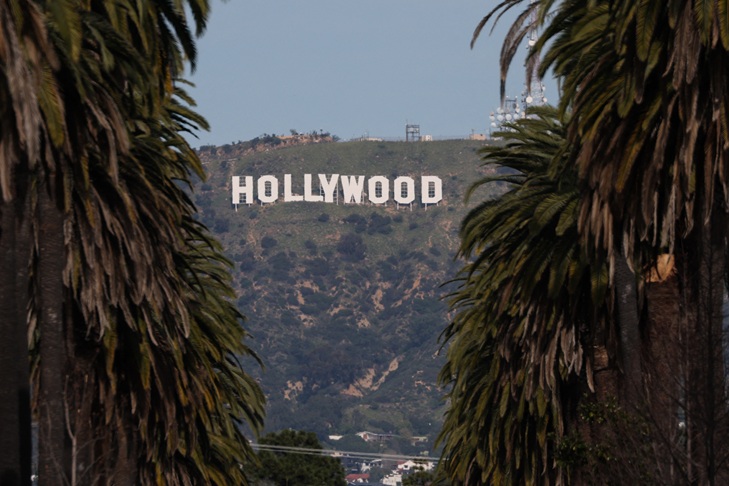
The Hollywood sign is framed by palm trees standing along a residential street in Los Angeles, California on January 28, 2026. (Photo by Patrick T. Fallon / AFP via Getty Images)
URGENT UPDATE: Hollywood is experiencing a profound identity crisis as filmmakers grapple with the diminishing presence of individual vision in modern cinema. New insights reveal that the art of filmmaking is increasingly compromised, with directors acting more as brand stewards than creative auteurs. This shift raises critical questions about the future of storytelling in the industry.
Recent comments from renowned music producer Rick Rubin highlight this pressing issue. In a statement released just days ago, Rubin declared that many contemporary films feel lifeless, lacking the passionate touch of creators who truly care about their work. “They are made by people attempting to construct something they think others will like,” he stated. “That’s not how art works; it’s commerce.”
The stark contrast between the vibrant creativity of the 1960s and 1970s and today’s cinematic landscape is striking. During the golden age of Hollywood, studios like MGM and Warner Bros. were shaped by the distinct personalities of their leaders. Movies bore the imprint of their creators, allowing for moral complexity and artistic risk. Iconic films like Five Easy Pieces and Chinatown emerged as expressions of unique vision rather than products of corporate consensus.
However, the current film industry is dominated by conglomerate interests, where the focus is on minimizing risk and maximizing profits. The acquisition of Fox by Disney exemplifies this trend, leading to a homogenization of content that prioritizes predictable outcomes over innovative storytelling. Directors are now often tasked with maintaining franchise coherence, resulting in films that lack the individuality and depth once celebrated in cinema.
The implications of this transformation extend beyond aesthetics; they represent a structural shift in how films are produced. When creative authority is diffused among corporate committees, the unique voices that once defined cinema become muted. As budgets soar into the hundreds of millions, the appetite for artistic experimentation dwindles. Focus groups and international marketability dictate creative choices, leading to a homogenized product that risks losing its artistic essence.
Notably, films like Martin Scorsese’s Silence and Julian Schnabel’s At Eternity’s Gate stand as rare exceptions. These works prioritize depth and contemplation over commercial viability, yet their muted box office performances suggest a disconnect with current audience expectations. As noted, the system appears ill-equipped to recognize and nurture films that aspire to artistic transcendence rather than market dominance.
The modern cinematic landscape demands that viewers adapt to a pace of storytelling that favors rapid consumption over thoughtful engagement. This conditioning raises concerns about the future of art in cinema, as audiences may no longer possess the patience or expectation for films that challenge them intellectually.
Yet, the decline of individual vision in Hollywood does not spell the end of cinematic art. Much like the thriving underground jazz scene, which continues to foster innovation and individual expression, there remains hope for a renaissance in filmmaking. Directors who are willing to take risks and share their unique perspectives can still find ways to connect with audiences craving genuine artistry.
The call to action is clear: Hollywood must rediscover the courage to invest in singular voices rather than formulas. The path forward lies not in nostalgia, but in a restoration of trust in vision and personality—elements that once made cinema a powerful medium for expression.
As the industry grapples with these challenges, the question remains: will Hollywood reclaim its identity and allow for the return of individual vision, or will it continue down the path of formulaic storytelling? The answer could have lasting implications for the future of film as an art form.
Stay tuned for further updates as this story develops.