




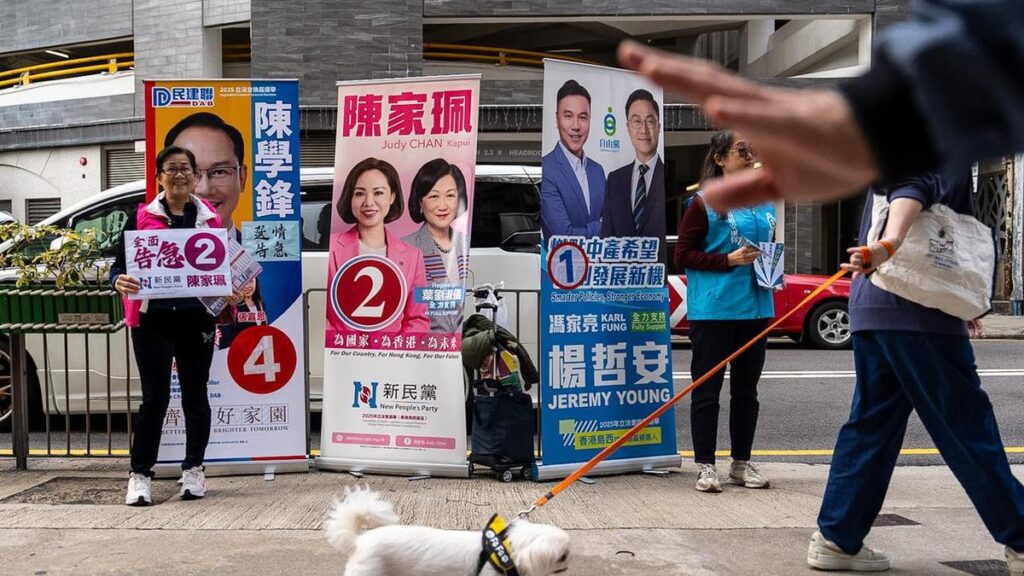
UPDATE: Hong Kong’s voter turnout has increased to 31.4% as citizens cast ballots for a new 90-member legislature, despite widespread public anger over a recent deadly apartment fire that claimed at least 159 lives. This turnout, reported at 10:30 PM local time—just one hour before polls closed—marks a slight improvement from the 30.2% turnout seen in the 2021 election, the first under the revamped electoral system.
The rise in participation avoided a significant embarrassment for the government but fell short of a strong endorsement of the new electoral framework, which has effectively eliminated opposition voices in the region. Many of the city’s 4.1 million eligible voters, particularly those who support democracy, have distanced themselves from the political process following a crackdown on dissent.
Authorities pushed for higher turnout rates through various measures, including adding polling stations, extending voting hours, and organizing candidate forums. However, public outrage over the apartment fire—which has raised serious questions about government oversight—threatened to keep many potential voters at home. Despite this sentiment, a sufficient number of citizens participated to slightly elevate the turnout from previous elections.
“I’m performing my civic duty as a citizen to vote … but I’m not too certain which candidate is hardworking and which is not,” said retiree Kwan Lam, who expressed his uncertainty outside a polling station.
Prior to the election, officials from the Chinese government held a rare meeting with foreign media, urging compliance with Hong Kong’s national security laws amid growing scrutiny. Election campaigning was muted in the wake of the tragic fire, which occurred in a building undergoing renovations and has led to concerns over potential bid-rigging in city maintenance projects.
City leader John Lee defended the decision to proceed with the election, stating that it would better support the response to the recent tragedy. “They have all experienced this fire and shared the pain,” he remarked, emphasizing the Legislative Council’s role in promoting reforms and drafting relevant laws.
Under the current electoral system, only 20 out of 90 seats are directly elected by the public, with a significant portion of representatives chosen by a pro-Chinese election committee. This shift has effectively marginalized opposition parties that had previously advocated for a more democratic system.
Government efforts to encourage voter participation included promotional campaigns and financial support for centers assisting the elderly and disabled voters. However, authorities have also arrested individuals accused of inciting discontent against the government, reinforcing a climate of caution among the electorate.
As the situation develops, the implications of this election will be closely monitored, particularly as it reflects the ongoing tension between the Hong Kong populace and its government. The turnout rate, while slightly improved, underscores the deep divisions within society and the challenges facing Hong Kong’s political landscape in the wake of recent tragedies.
As Hong Kong continues to grapple with its shifting political environment, citizens and officials alike are left to ponder the future of governance in the region and the ongoing fight for democratic representation.
