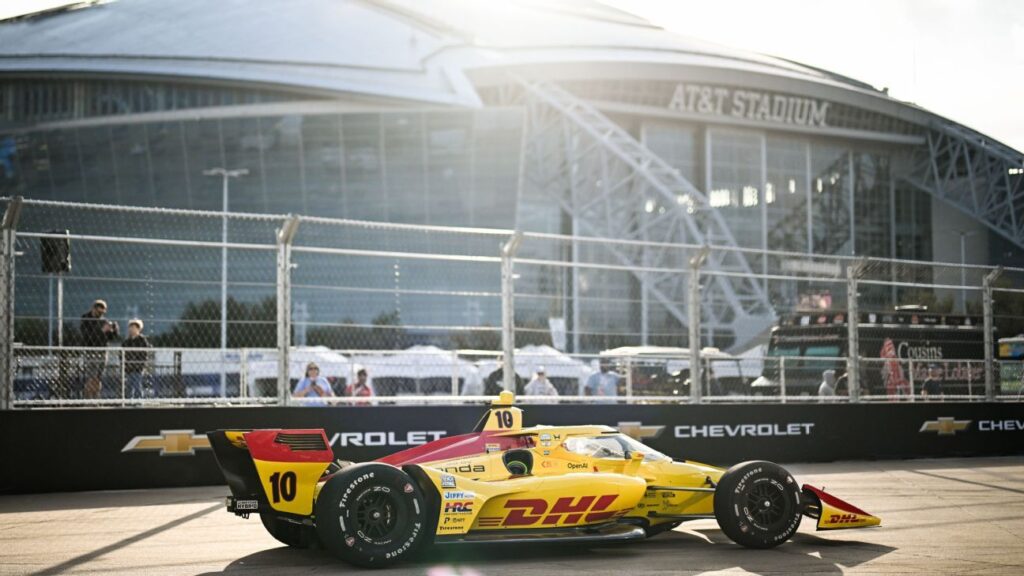
IndyCar has injected new life into its racing series with the successful launch of the inaugural Grand Prix of Arlington, held on March 1, 2026. This event, which took place on a newly designed 2.7-mile, 14-turn street course in Arlington, Texas, attracted a record number of fans and showcased the potential for IndyCar to expand its reach into metropolitan markets.
The Grand Prix of Arlington brought motorsports directly to a vibrant community, utilizing the iconic AT&T Stadium, home to the Dallas Cowboys, and Globe Life Field, the Texas Rangers’ venue, as key features of the race. This strategic move allowed IndyCar to tap into a fresh market, generating excitement and interest around the series.
Pato O’Ward, a driver for Arrow McLaren, praised the event, stating, “Arlington is the best street course circuit and event we have in IndyCar right now. It really is the complete package, and that showed today with the sold-out crowd.” His sentiments reflect the enthusiasm surrounding the race and the appealing atmosphere created by the combined forces of sports and entertainment.
The Grand Prix marked a significant departure from traditional racing venues, aligning with a broader strategy within the sport to attract new fans. Scott Dixon, a six-time IndyCar champion, emphasized the event’s success, saying, “The track and the presentation… you couldn’t ask for much better.” His experience in street racing provides valuable insight into the event’s impact on IndyCar’s future.
Building a New Audience
IndyCar’s recent races have demonstrated the effectiveness of taking racing to urban centers. The season opened with a strong turnout in St. Petersburg, Florida, followed by a collaborative event with NASCAR at Phoenix Raceway. These strategic partnerships and promotions have reinvigorated interest in the series, showcasing the potential for IndyCar to engage with a broader audience.
The concept of street racing is not new but has seen a resurgence as a viable method for reaching fans who may not be familiar with the sport. This approach dates back to the 1980s, when the International Motor Sports Association (IMSA) pioneered street races in metropolitan areas, making high-level motorsports accessible to the masses.
As IndyCar explores opportunities in cities with major sports franchises, the Grand Prix of Arlington stands as a testament to this evolving strategy. The successful execution of the event demonstrates that combining racing with established sporting venues can create a dynamic experience for fans and enhance the visibility of the series.
Future Prospects and Expansion
IndyCar is not resting on its laurels following the Arlington event. The series plans to introduce an 18th race to its calendar with the Freedom 250 street race in Washington, D.C., scheduled to coincide with the nation’s 250th birthday celebrations. This race aims to further solidify IndyCar’s presence in urban markets and engage with new audiences.
IndyCar president Doug Boles expressed optimism about the future, stating, “The whole idea of street racing and taking our product to the cities is something that obviously we enjoy.” The positive reception of the Grand Prix of Arlington reinforces the potential for similar events in other cities, paving the way for continued growth.
As IndyCar seeks to establish itself as a leading motorsport series, the combination of innovative marketing strategies, partnerships with prominent sports teams, and exciting race formats will be crucial. With a successful 2026 season underway, the series appears poised to capture a larger share of the motorsport audience and solidify its legacy in American racing.
In conclusion, the Grand Prix of Arlington not only set a new standard for IndyCar races but also exemplified the transformative potential of urban street racing. The success of this event could signal a lasting shift in how IndyCar engages with fans and expands its presence across the United States.