




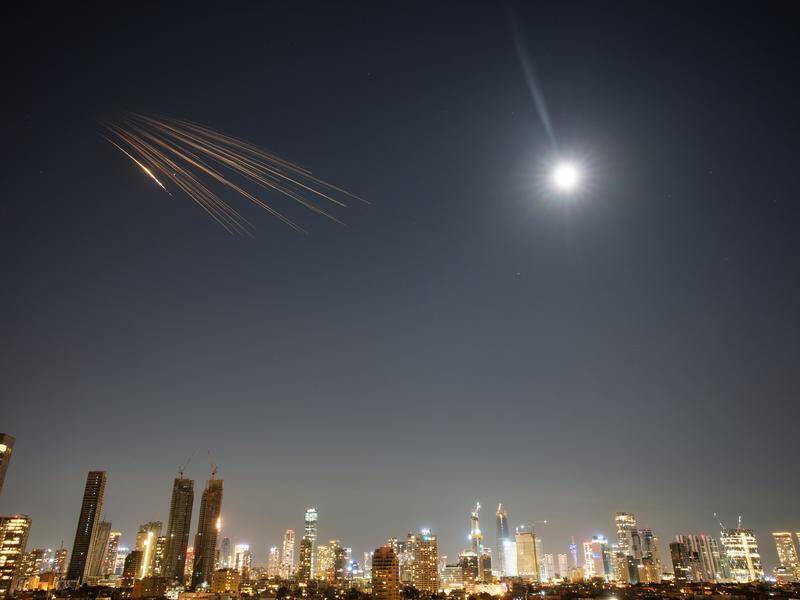
Intensifying violence in the Middle East has resulted in significant casualties and widespread disruption, as Iran and Israel engage in a series of drone and missile strikes. The conflict, which began with joint Israeli and U.S. operations against Iran on February 28, 2024, has claimed over 2,000 lives and impacted millions, shaking energy and financial markets globally.
In a recent social media post, U.S. President Donald Trump condemned Iranian leadership, labeling them as “deranged scumbags” and expressing a sense of honor in targeting them. He boasted about the U.S.’s military might, stating, “We have unparalleled firepower, unlimited ammunition, and plenty of time.” His remarks reflect a stark escalation in rhetoric as the conflict reaches nearly two weeks of intense exchanges.
Intensified Strikes and Regional Reactions
Early on Friday, airstrikes targeted areas surrounding Tehran, coinciding with planned rallies for the annual Quds Day, which supports Palestinian causes. In his first public comments since the onset of hostilities, new Iranian Supreme Leader Mojtaba Khamenei vowed to keep the Strait of Hormuz closed, a crucial chokepoint for global oil shipments. He called on neighboring countries to remove U.S. military bases, warning of potential retaliation.
“I assure everyone that we will not neglect avenging the blood of your martyrs,” Khamenei declared, as he addressed the nation through a television presenter, following reports of his injuries during the initial strikes. Trump has expressed his belief that Khamenei is alive but “damaged.”
Israeli Prime Minister Benjamin Netanyahu also addressed the situation, emphasizing ongoing military operations. He stated, “We are creating the optimal conditions for toppling the regime,” while acknowledging the challenge of regime change from within.
The Israel Defence Forces reported that their air force hit over 200 targets across western and central Iran, which included missile launchers and weapons production sites. In retaliation, Iran launched missiles and drones, countering earlier claims by the U.S. and Israel that they had significantly degraded Iran’s long-range capabilities.
Widespread Impact on Civilians and Energy Markets
The conflict has led to significant civilian casualties. An Iranian missile struck a Bedouin Arab town near Nazareth, injuring 58 people according to local ambulance services. In Iraq, U.S. Central Command responded to a downed refueling aircraft under non-hostile circumstances, further complicating the military landscape.
The conflict has also prompted disruptions in the global energy market. Tensions led to a spike in oil prices, reaching $100 per barrel as fears of prolonged instability loom large. Earlier this week, two tankers were damaged in the Iraqi port of Basra by suspected Iranian explosive-laden boats, contributing to the chaos in the region.
To stabilize energy markets, the U.S. issued a 30-day license for countries to purchase Russian oil and petroleum products stranded at sea. This move reflects the urgent need to address potential shortages as the conflict continues to evolve.
As the situation develops, the international community watches closely, with the implications of this conflict resonating far beyond the immediate region. The ongoing volatility highlights the precarious balance of power in the Middle East and its significant effects on global energy supplies and geopolitical stability.
