

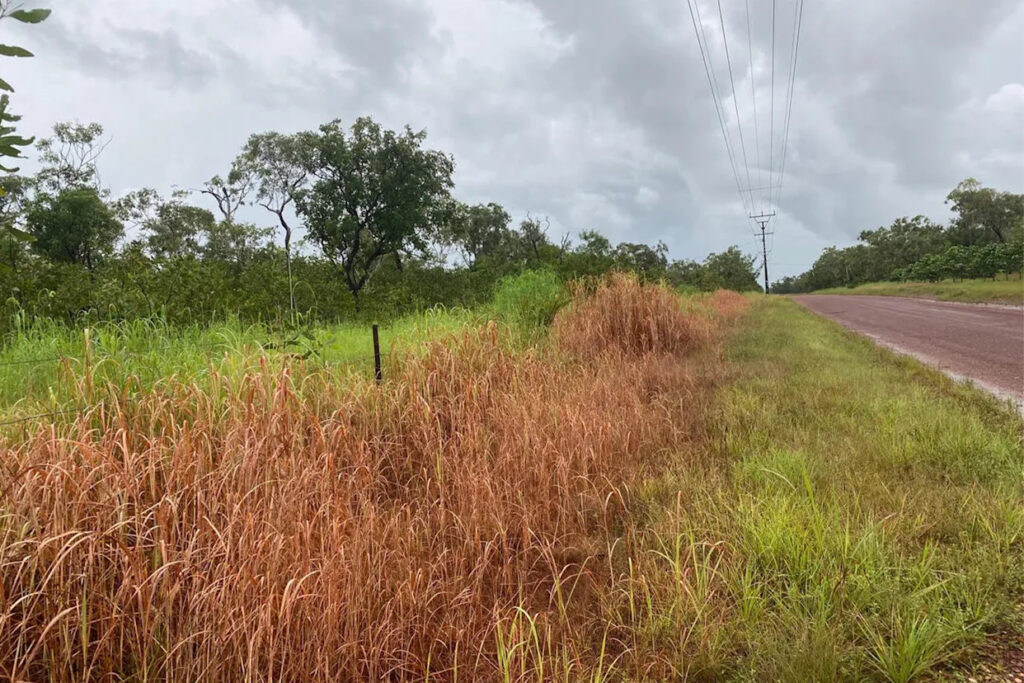
UPDATE: A local council’s controversial decision to spray a vital roadside habitat with a potent herbicide has ignited outrage among residents in Darwin River, Northern Territory. This shocking action, taken on February 12, 2023, has devastated a patch of grass that was crucial for the breeding of the vulnerable partridge pigeon, leaving property owner Dr. Denise Lawungkurr Goodfellow furious.
Dr. Goodfellow, a respected wildlife author, had nurtured a 50-metre stretch of native speargrass adjacent to her property, which provided an essential habitat for these endangered birds. She had been monitoring the population since 2017, boasting a count of 23 partridge pigeons thriving in the area. “They were breeding in that narrow strip of grass along the road with good reason,” she told Yahoo News, highlighting the habitat’s significance.
When she discovered that the grass had been destroyed following the council’s maintenance work, her anger was palpable. “It’s been growing there for such a long time,” Dr. Goodfellow expressed, speculating that the council mistook her valuable grass for the invasive gamba grass.
However, Litchfield Council’s Director of Operations, Geoff Thomas, confirmed that the removal was intentional, stating, “Council officers who undertake weed spraying are trained in weed identification relevant to the Northern Territory.” The grass was treated with Glyphosate, a broad-spectrum herbicide, to facilitate “ongoing operational access.”
Despite this, Dr. Goodfellow remains unconvinced by the council’s reasoning, emphasizing the need for greater respect for local ecosystems. “The grass was only 1.5 metres high, along the fenceline,” she noted, arguing that such important habitats deserve better protection than what was afforded in this instance.
The council has indicated that residents can request to opt-out of verge maintenance by emailing their preference for “No Spraying” and “No Mowing” directly to the council. However, Dr. Goodfellow is advocating for broader changes, asserting that the council should prioritize the preservation of native habitats over routine maintenance.
This incident raises alarming questions about the treatment of native flora and fauna in Australia. Thousands of hectares of natural habitat have been lost to agricultural development, while invasive species continue to threaten local ecosystems. With only 1 percent of the Victorian grasslands remaining, the plight of endangered species like the Victorian grassland earless dragon underscores the urgency of protecting these vital environments.
As the community rallies around Dr. Goodfellow’s plight, this incident serves as a stark reminder of the ongoing battles between environmental preservation and urban development. The council’s actions have not only impacted local wildlife; they have sparked a conversation about the crucial need for sustainable practices in local governance.
Stay tuned for updates on this developing story as residents push for more significant action from the Litchfield Council to protect their unique natural heritage.
Do you have a story tip? Email: [email protected]. Follow us on Facebook, Instagram, TikTok, Twitter, and YouTube for more updates.