



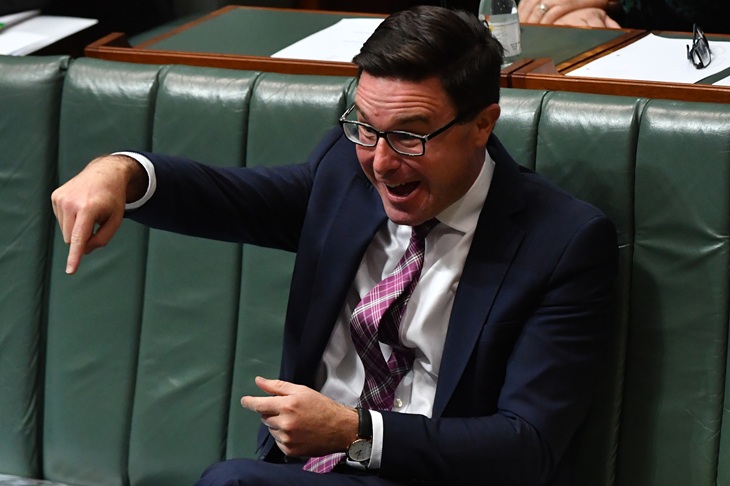
CANBERRA, AUSTRALIA - JUNE 22: Minister for Agriculture David Littleproud reacts during Question Time in the House of Representatives at Parliament House on June 22, 2021 in Canberra, Australia. Barnaby Joyce has been sworn in as Deputy Prime Minister by Governor-General Hurley today after Joyce deposed former Nationals leader Michael McCormack during a spill called yesterday by Senator Matt Canavan. Joyce is re-elected as leader of The Nationals in a leadership contest with at least 12 votes in the 21-member partyroom. (Photo by Sam Mooy/Getty Images)
UPDATE: The National Party is reportedly preparing to approach the Liberal Party to revive their Coalition partnership, just weeks after a significant funding drop. As taxpayer money dwindles, the urgency for both parties to reassess their alliance has escalated dramatically.
In a development that could reshape Australian politics, sources indicate that the Nationals are feeling the financial pinch from losing opposition ministry salaries and their accompanying perks. This situation often catalyzes a quick return to the negotiating table, as the Nationals have historically shown a readiness to reconcile when financial stability is threatened.
The familiar pattern is emerging: public displays of bravado followed by discreet conversations. “We’ve seen this movie before,” a political analyst noted. “Expect a swift walk back to the Coalition as financial realities set in.”
While a few dissenting voices, notably Senator Matt Canavan, express skepticism about the Coalition’s value, the broader sentiment within the National Party appears to favor a return. Their leadership, characterized by figures such as Barnaby Joyce and David Littleproud, is more focused on maintaining influence than on genuine governance.
This situation raises pressing questions about the nature of the Coalition. Critics argue that the Liberals are treating the Nationals as equal partners despite the glaring disparities in electoral competition. “Why not handle them similarly to how Labor interacts with the Greens?” one political expert suggested, emphasizing a transactional approach.
The Nationals have long touted their electoral successes, but analysts point out that these victories often occur in uncontested seats. “There’s a greater chance of a Liberal winning in David Littleproud’s seat of Maranoa than a National winning in Tim Wilson’s Goldstein,” an insider remarked.
The political landscape today starkly contrasts with years past. The absence of influential leaders like John Anderson and Tim Fisher has left a void in the National Party’s leadership. What remains is a faction focused on performative politics, rather than responsible governance, leading to a growing perception of disarray within the Coalition.
The question now surfaces: who truly benefits from the Coalition? While the Nationals gain substantial influence and relevance, experts warn that the Liberals shoulder the burden of the National Party’s frequent outbursts and crises.
As July 2023 progresses, the Liberal Party faces a critical juncture. The Coalition, often perceived as a sacred tradition, may require a reevaluation based on current political realities. The costs of maintaining this partnership are becoming increasingly apparent, while the benefits appear to be dwindling.
With both parties at a crossroads, the impending discussions could mark a significant shift in Australian politics. As developments unfold, the public and political analysts alike will be watching closely to see if the Nationals can negotiate their way back into a favorable position—one driven by necessity rather than principle.
Stay tuned for updates as this situation develops.