


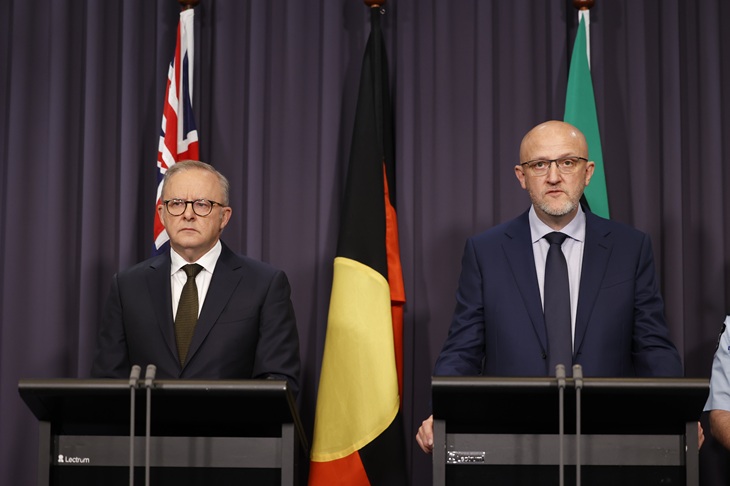
CANBERRA, AUSTRALIA - DECEMBER 14: Director-General of Security of ASIO Mike Burgess (R) and Prime Minister Anthony Albanese (L) speak to the media at Parliament House on December 14, 2025 in Canberra, Australia. Two gunmen dressed in black fired several shots at Sydney's world-famous Bondi Beach, causing at least 10 injuries and three deaths, and setting off mass panic on a Sunday evening. (Photo by Hilary Wardhaugh/Getty Images)
UPDATE: The National Socialist Network, commonly known as the Neo-Nazis, has announced its decision to dissolve before new anti-hate laws take effect, which are set to ban organizations linked to hate speech. This shocking development comes as the group confirmed it will disband by 11:59 PM on January 11, 2026, in a desperate attempt to evade impending legal repercussions.
Officials from the group cited the legislation’s potential to criminalize organizations that have performed Nazi salutes, stating, “If the laws pass, there will be no way to avoid the organization being banned.” This move has raised alarms, as the government seems to be shifting focus to hate speech while failing to address the persistent threat of Islamic terrorism in Australia.
The current political climate highlights a concerning trend: while the Neo-Nazis are retreating, radical Islamic groups remain untouched, prompting questions about the effectiveness of the new laws. Critics argue that these laws serve as a distraction from more pressing security issues, particularly the rise of Islamic extremists linked to recent attacks, including the tragic incident at Bondi Beach.
“We suffered an Islamic terror attack and decided to ban the Neo-Nazis,”
noted a local political analyst. This sentiment illustrates growing frustration among Australians who feel the government is avoiding direct action against radical Islamic networks that pose a genuine threat to public safety.
With the Neo-Nazis dissolving, the Labor government loses a convenient target for criticism, as many point out that the focus on hate speech laws may only serve to obscure the failures in addressing radical Islamic extremism. The government has faced backlash for failing to clearly identify Islamic terrorism as a central issue, even as public concern rises over the safety of citizens amid radicalization fears.
The draft legislation has also raised eyebrows for its provisions that may protect hate speech if it references religious texts. This loophole could shield individuals known for inciting violence under the guise of religious expression, further complicating efforts to combat radicalization.
As the clock ticks down to the new law’s enactment, Australians grapple with the implications of these decisions. Islamic hate preachers who have previously incited violence have not been mentioned in discussions surrounding the new laws, leaving many questioning the government’s priorities.
Authorities have yet to take decisive action against known radicals linked to extremist groups like ISIS, raising concerns that the focus on the Neo-Nazis may merely be a political maneuver rather than a robust response to genuine threats.
As the situation develops, observers are calling for urgent clarity from the government. Will it prioritize public safety over political optics? The Australian public deserves answers, especially in light of past failures to effectively address radicalization and violence.
As tensions mount, Australians are left wondering what comes next. Will the focus shift back to addressing the real threats posed by radical Islamic groups, or will the government continue to sidestep this pressing issue? The answer to this question could significantly impact the nation’s security landscape in the coming months.
Stay tuned for more updates as this story unfolds.