




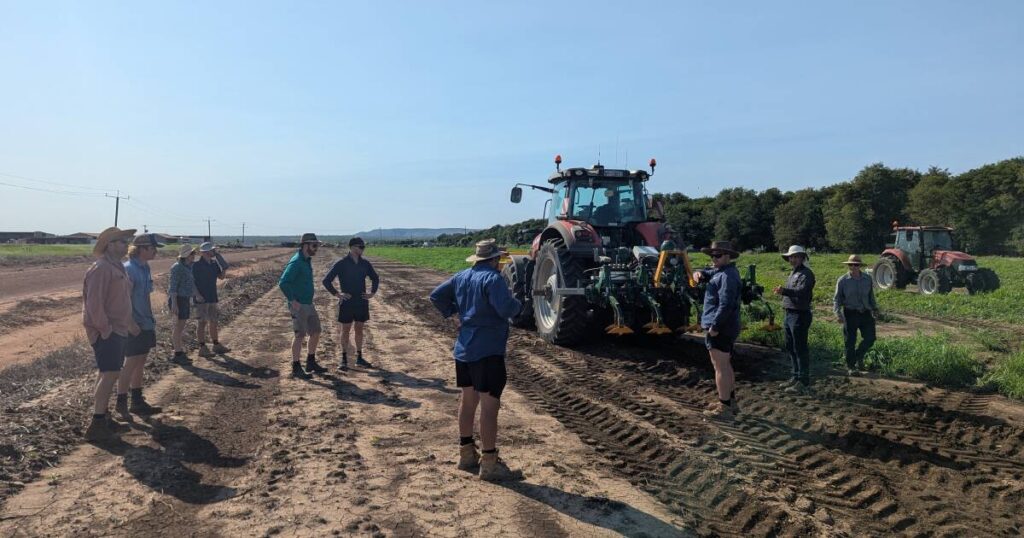
UPDATE: A groundbreaking mechanical weeding technology developed in Western Australia is on the verge of commercial rollout, promising to revolutionize weed control in broadacre cropping systems. The innovative system, known as the Weed Chipper, is nearing the final stages of demonstration, with its potential to effectively target individual fallow weeds without the use of chemicals.
Engineered by specialists at The University of Western Australia (UWA), the Weed Chipper uses advanced sensor technology to provide site-specific weed control during the critical fallow and pre-cropping phases of grain production. Associate Professor Andrew Guzzomi, leading the project, stated that this technology marks a significant advancement in sustainable farming practices, especially in response to rising herbicide resistance among weeds.
“We are excited about the opportunities this technology offers to farmers,” said Guzzomi. “By employing a targeted tillage approach, growers can significantly reduce their reliance on chemical treatments, which not only enhances farm efficiency but also protects the environment and human health.”
The Weed Chipper operates by using WEED-IT sensors that identify weeds based on their growth stage. When a weed is detected, the system activates a specialized tyne to chip it out, achieving an impressive rate of 100% weed kill every time conditions allow. This automated process mimics a farmer manually removing weeds but does so with greater precision and efficiency.
Recent demonstrations in Kununurra showcased the Weed Chipper’s capabilities, attracting interest from farmers seeking innovative solutions for weed management. Guzzomi emphasized that while the technology has been under development since a project funded by the Grains Research and Development Corporation (GRDC) from 2015 to 2018, momentum is building as the agriculture community seeks alternatives to chemical herbicides.
Significantly, the Weed Chipper is designed to operate effectively in various cropping systems, especially during fallow periods where low-density and herbicide-resistant weeds are prevalent. “The Weed Chipper will greatly suit broadacre farming enterprises, helping farmers tackle the growing challenge of weed resistance,” Guzzomi added.
The collaboration with Demagtech aims to accelerate the commercial viability of this technology. Although not yet available for purchase, ongoing demonstrations are paving the way for farmers interested in partnering to develop the first commercial prototypes. Interested parties are encouraged to reach out to UWA’s Office of Industry and Commercial Development at [email protected].
As the agricultural sector grapples with the dual challenges of herbicide resistance and environmental sustainability, the Weed Chipper offers a promising alternative that aligns with current farming practices. The ongoing development of this technology also signals exciting advancements in agricultural engineering, including future innovations in electrically-powered weeding solutions.
With the growing need for sustainable farming practices, this technology represents not just a breakthrough in weed management but also an approach that prioritizes ecological health, enhancing the future of agriculture in Australia and beyond.
Stay tuned for further updates as the commercial rollout of the Weed Chipper unfolds, potentially changing the landscape of weed control for farmers across the region.
