


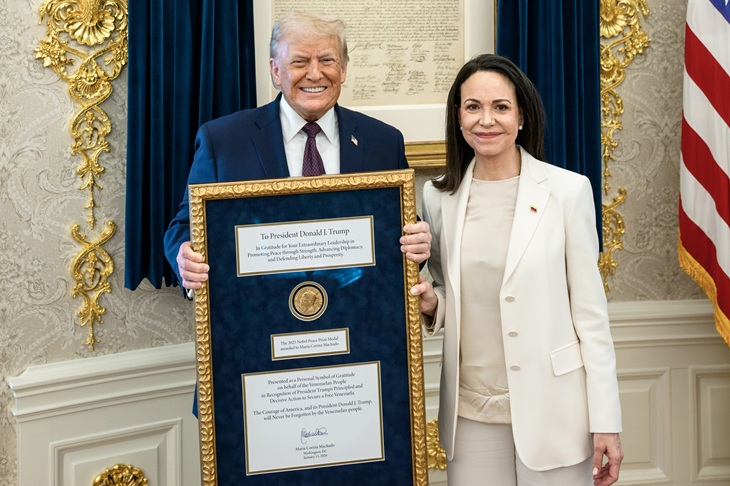
WASHINGTON, DC - JANUARY 15: (EDITOR'S NOTE: This Handout image was provided by a third-party organization and may not adhere to Getty Images' editorial policy.) President Donald Trump meets with Venezuelan opposition leader Maria Corina Machado in the Oval Office, on January 15, 2026 in Washington, D.C. (Photo by Daniel Torok/The White House via Getty Images)
UPDATE: The Nobel Peace Prize is under fire following Venezuelan opposition leader María Corina Machado’s controversial gesture of presenting her Nobel medal to former President Donald Trump during a White House meeting on January 15, 2026. This unexpected moment has ignited a heated debate about the prize’s evolving significance and relevance in today’s political landscape.
Machado, recognized for her relentless fight against authoritarianism in Venezuela, honored Trump for what she called his “unique commitment” to Venezuelan freedom. The presentation comes as the Nobel Prize continues to grapple with perceptions of “Wokeness” that critics argue undermine its credibility.
During the Oval Office meeting, captured in a viral photo, Trump embraced Machado’s gesture, stating on Truth Social, “María presented me with her Nobel Peace Prize for the work I have done. Such a wonderful gesture of mutual respect.” This acknowledgment highlights a deeper irony: the Norwegian Nobel Committee has overlooked significant political figures like Trump, who brokered key diplomatic agreements, including the Abraham Accords.
The Nobel Peace Prize, originally established by inventor Alfred Nobel to recognize those promoting peace and progress, appears to be drifting from its pragmatic roots. Recent awards have been criticized for prioritizing symbolic gestures over substantive achievements, raising questions about the committee’s focus.
The 2024 prize awarded to the Japanese atomic bomb survivors’ group, Nihon Hidankyo, exemplifies the trend, emphasizing historical trauma rather than addressing pressing geopolitical issues like the conflicts in the Middle East or Ukraine. Critics argue that the committee’s choices reflect a shift towards virtue-signaling rather than genuine peace-building efforts.
Machado’s act of giving her medal to Trump serves as a rebuke to this trend, suggesting that effective peace often requires pragmatic and sometimes controversial actions rather than mere aspirational ideals. Her symbolic gesture underscores the necessity for the Nobel Committee to realign with its foundational mission of recognizing transformative efforts for peace.
As the debate heats up, questions loom over the future relevance of the Nobel Peace Prize. If the committee continues down its current path, it risks being sidelined, akin to the United Nations, which now faces criticism for its bureaucratic inefficiencies and lack of real influence.
Critics, including political observers, argue that the Nobel Peace Prize must reclaim its realist origins. Alfred Nobel sought to atone for his legacy by fostering genuine advancement, while figures like Theodore Roosevelt brokered landmark peace agreements. The recent trend towards awarding prizes for perceived potential rather than proven achievements raises concerns about the prize’s integrity.
As the Nobel Peace Prize evolves, the implications of Machado’s decision resonate far beyond a single moment. It forces a reevaluation of what constitutes meaningful progress in the pursuit of peace and challenges the committee to navigate the delicate balance between symbolism and substance.
Next Steps: As the situation develops, observers will be watching closely for any official statements from the Norwegian Nobel Committee regarding their stance on recent controversies. The future of the Nobel Peace Prize hangs in the balance, with its credibility at stake amid rising global tensions and changing political dynamics.
This unfolding story invites discussion and debate, showcasing the intersection of politics, recognition, and the enduring quest for peace in a complex world.