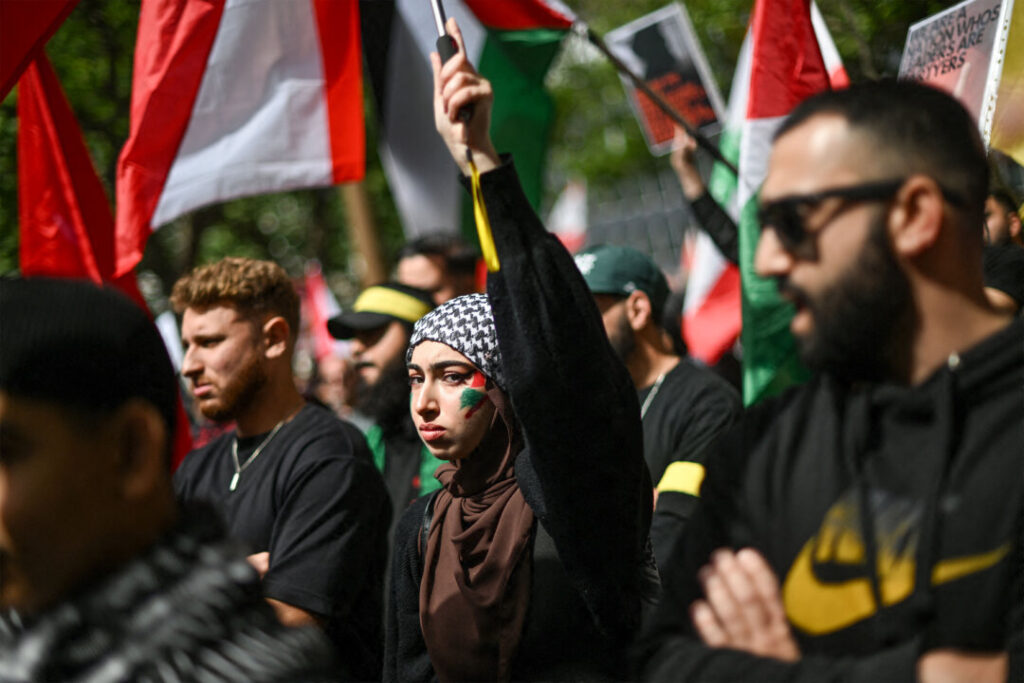
Demonstrators march through the streets against Israeli strikes in Gaza and Lebanon at a protest rally in the central business district of Sydney on September 29, 2024. (Photo by Saeed KHAN / AFP) (Photo by SAEED KHAN/AFP via Getty Images)
BREAKING: Palestinian Australian writer Randa Abdel-Fattah has been abruptly dropped from the guest list for the Writers’ Week program at the Adelaide Festival following the recent Bondi terror attack. Organizers cite concerns over cultural sensitivity, stating that her vocal criticism of Israel could exacerbate tensions in the wake of the tragedy.
The Adelaide Festival Board released a statement emphasizing that the decision is not intended to link Abdel-Fattah to the violence. “Whilst we do not suggest in any way that Dr Randa Abdel-Fattah or her writings have any connection with the tragedy at Bondi, we have formed the view that it would not be culturally sensitive to continue to program her at this unprecedented time so soon after Bondi,” the board explained.
This decision comes just days after the attack in Bondi, which left the community reeling and raised heightened sensitivities around discussions related to Israel and Palestine. The festival’s organizers are navigating a delicate balance between artistic expression and the cultural climate, making this move particularly impactful.
The Adelaide Festival, scheduled to take place in the coming weeks, aims to celebrate diverse voices, yet finds itself in a challenging position as it responds to current events. The board’s choice to remove Abdel-Fattah highlights an urgent need for sensitivity and awareness in public discourse, especially in light of recent violence.
Abdel-Fattah is known for her strong advocacy and critique of Israel, which has drawn both support and backlash. Her exclusion from the festival not only raises questions about freedom of expression but also reflects the intense atmosphere surrounding discussions of Middle Eastern politics in Australia and beyond.
As the festival approaches, observers will be closely watching how organizers continue to address these complex issues and whether any alternative programming will be introduced to fill the void left by Abdel-Fattah’s absence.
This developing situation underscores the ongoing impact of geopolitical events on cultural platforms, prompting broader discussions about the intersection of art, politics, and social responsibility.
Stay tuned for further updates as this story unfolds.