




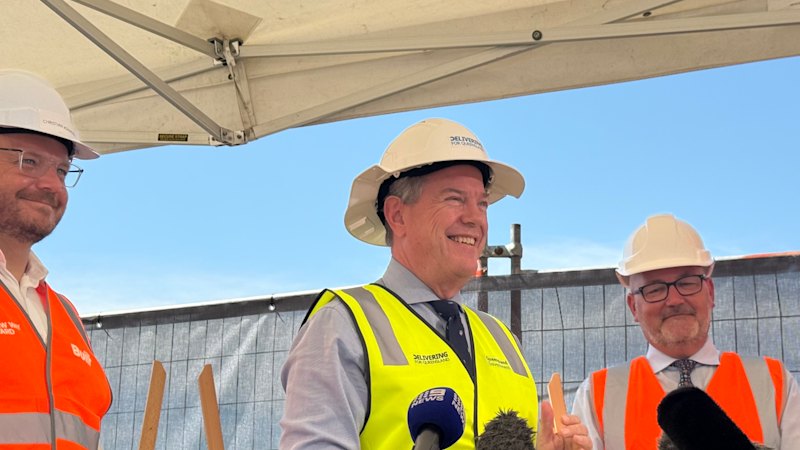
BREAKING: The Queensland Government has just announced a monumental $18.53 billion Hospital Rescue Plan aimed at delivering 2,600 additional hospital beds across the state within the next five years. This urgent initiative seeks to overhaul the struggling public health system, but experts warn that it could take years to resolve ongoing issues.
Health Minister Tim Nicholls revealed the ambitious plan today, emphasizing its importance as the state grapples with increasing healthcare demands. The new strategy includes revised timelines for critical projects in Townsville, Redcliffe, Coomera, Toowoomba, and Bundaberg, which have faced significant delays under the previous administration.
According to an independent review led by infrastructure consultant Sam Sangster, the former Labor government’s hospital expansion program was plagued by budget blowouts and delays of up to five years for certain projects. Nicholls stated, “Our plan provides realistic deadlines and realistic time frames for the staged delivery of hospital beds up to 2032.”
The immediate impact of this plan will increase capacity in south-east Queensland. Notably, the Princess Alexandra Hospital will see an addition of 93 overnight beds, while Redcliffe Hospital will gain 210 beds. Logan Hospital and QEII Hospital will each receive 112 new beds by 2028.
Construction on the new Coomera Hospital is set to commence next year, with plans for 400 beds and expanded acute and specialist services to be completed by 2031. An additional 200 beds will follow in 2032, dramatically increasing the state’s healthcare capacity.
This announcement comes amid ongoing negotiations with the federal government for increased public hospital funding. Prime Minister Anthony Albanese recently proposed an additional $3 billion on top of the already pledged $20 billion over the next five years, aimed at alleviating the backlog of elderly and NDIS patients occupying hospital beds. However, Nicholls has criticized this offer, stating it falls short of the state’s needs.
“The ramping crisis is being driven by the inability to move older Australians out of our hospital beds and into residential aged care,” Nicholls explained. “If we could move just 10 to 15 percent of those stranded patients into the care that they need, we would have a lot more capacity in our hospitals.”
The urgency of this plan cannot be overstated, as the healthcare system grapples with critical shortages and rising patient demands. As the Crisafulli government works to implement these changes, residents and stakeholders are urged to stay informed about future developments.
Stay tuned for more updates as the situation unfolds and the state moves forward with this vital initiative to enhance healthcare services for all Queenslanders.
