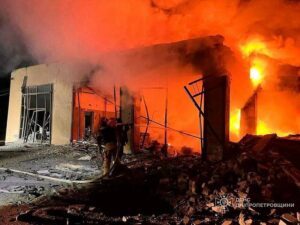




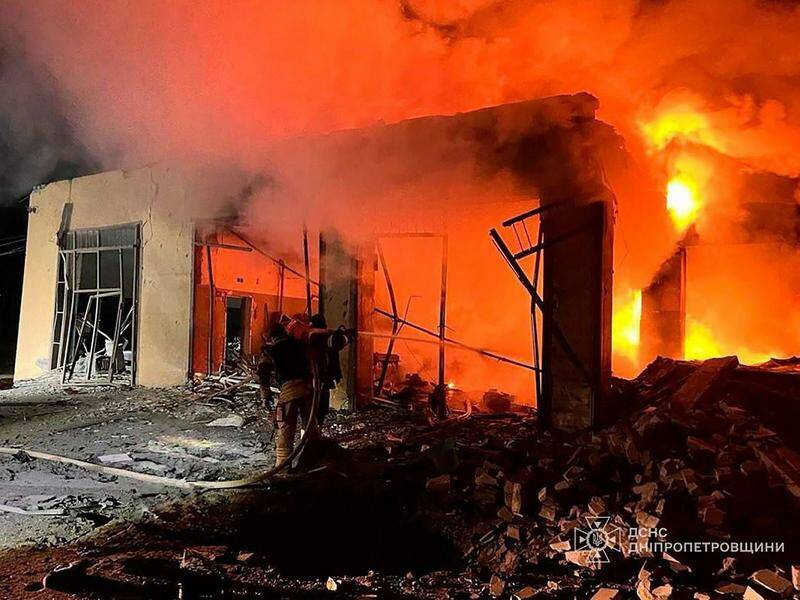
A recent wave of Russian airstrikes on Ukraine has resulted in the deaths of at least three individuals, including a child, while simultaneously causing extensive power outages across the nation. The attacks occurred as Ukrainians were preparing for the Christmas season, highlighting the ongoing impact of the nearly four-year conflict.
The assaults targeted energy facilities in western regions, with Prime Minister Yulia Svyrydenko stating that these areas were hit the hardest. The strikes took place shortly after a new round of peace talks led by the United States aimed at resolving the ongoing war. Reports indicate that the strikes involved over 30 missiles and approximately 650 drones, affecting at least 13 regions, including the central Zhytomyr area and locations near the capital, Kyiv.
Two fatalities occurred in the Zhytomyr region, including a four-year-old child, while one person was killed just outside Kyiv. Local officials noted that at least five additional individuals suffered injuries during the attack. President Volodymyr Zelenskiy expressed his outrage on social media platform X, emphasizing that such strikes during the holiday season reflect Russia’s priorities and disregard for civilian safety.
Emergency power outages were reported across various regions, including Kyiv and its surroundings, as the Ukrainian grid operator announced widespread disruptions due to the damage inflicted on critical infrastructure. Areas such as Chernihiv, Lviv, and Odesa also reported significant damages to their energy facilities, further complicating the country’s ability to provide reliable electricity and heating during the winter months.
Poland, a NATO member that borders western Ukraine, responded to these developments by deploying Polish and allied aircraft to secure its airspace. The Polish operational command noted that these measures were preventive, aimed at ensuring the safety of their airspace given the proximity of the strikes to the Polish border.
During this time, Zelenskiy described the recent negotiations regarding US proposals for a peace agreement with Russia as being “close to a real result.” However, Kremlin spokesman Dmitry Peskov downplayed the expectations for progress, indicating that there had been no breakthrough in the discussions held on December 20-21 in Miami. Peskov referred to the ongoing dialogue as a “working process,” suggesting that the outcome was still uncertain.
Ukrainian and US officials have been collaborating on a proposed 20-point plan that aims to address various aspects of the conflict, including security guarantees to protect Ukraine from future military actions by Russia. Zelenskiy acknowledged that while the plan is not perfect, it represents a significant step forward in diplomatic efforts.
The discussions also focused on a strategy for Ukraine’s economic recovery post-conflict. Zelenskiy highlighted the importance of determining whether the US could secure a genuine commitment from Russia to move beyond aggression. He reiterated the necessity of maintaining pressure on the Kremlin, citing strategies such as lowering the price of Russian oil and implementing robust sanctions as crucial tools for achieving a resolution.
As the conflict continues to unfold, the implications of these attacks and the ongoing negotiations remain critical for the people of Ukraine and the broader international community. The recent escalation underscores the urgent need for a sustainable peace agreement to prevent further loss of life and suffering in the region.