




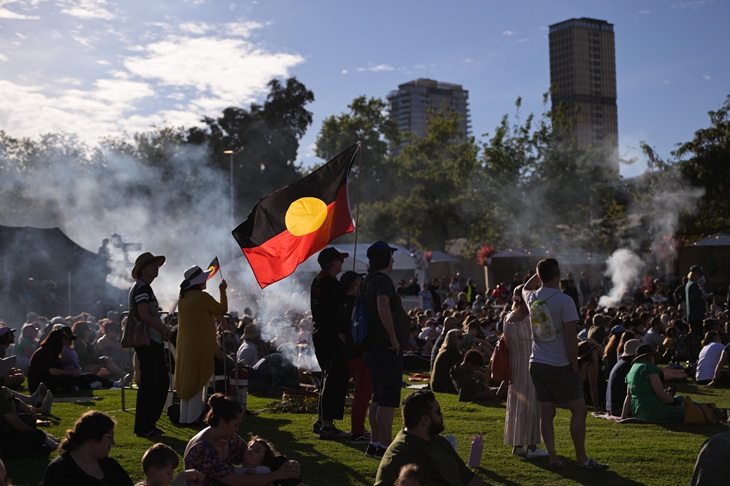
ADELAIDE, AUSTRALIA - JANUARY 26: People attend the 2025 Mourning in the Morning Smoking Ceremony at Elder Park/Tarntanya Wama on January 26, 2025 in Adelaide, Australia. Australia Day, formerly known as Foundation Day, is the official national day of Australia and is celebrated annually on January 26 to commemorate the arrival of the First Fleet to Sydney in 1788. Many indigenous Australians refer to the day as 'Invasion Day' and there is a small but growing movement to change the date amid broader debate on the day's significance. (Photo by Tracey Nearmy/Getty Images)
BREAKING: South Australia is advancing critical reforms from the Uluru Statement from the Heart, aiming to establish a First Nations Voice and engage in treaty negotiations with Aboriginal communities. These developments come amid heightened scrutiny and public debate over their implications for governance and equality.
Officials confirmed that the new initiatives include establishing a First Nations Voice—a body designed to represent Indigenous perspectives in government decision-making. This follows consultations initiated by Dale Agius, who became the inaugural Commissioner for First Nations Voice on July 5, 2022, after the South Australian Labor government won elections in March that year.
The First Nations Voice to Parliament was formally established when the South Australian Parliament passed the First Nations Voice Bill 2023 during a special session on March 26, 2023. Elections for this body were held on March 16, 2024, although they saw a concerning turnout of just 8.7 percent, raising questions about public support and legitimacy.
As South Australia moves forward with plans for truth-telling processes and treaty discussions, the Australians for Better Government (ABG) organization emphasizes the need for public consent and transparency. The group argues that reforms should not create divisions but rather enhance fairness across the community, reflecting the sentiments of over 64 percent of South Australians who voted ‘No’ in the recent federal referendum on a similar proposal.
“It is essential for South Australians to understand the consequences of these proposed changes and how they may affect governance and equality in our state,” said ABG representatives.
Experts express concerns that implementing ancestry-based governance structures could lead to unintended legal and financial complications. The Commonwealth already allocates approximately $5.3 billion annually to Indigenous Australians, with South Australia contributing around $1.3 billion for targeted Aboriginal services. There are fears that new governance bodies could duplicate existing frameworks, leading to blurred accountability and increased taxpayer burdens.
As discussions continue, ABG insists that any constitutional changes should be put to a public vote to ensure democratic legitimacy. Critics argue that the recent establishment of the SA Voice was accomplished without direct public input, as the South Australian Constitution allows for amendments via parliamentary vote.
The low voter turnout in the First Nations Voice elections has amplified concerns about whether this initiative truly reflects the will of the people. Some candidates were elected with as few as six votes, prompting questions about the democratic mandate of such reforms.
ABG’s position highlights the critical need for reforms that unite rather than divide Australians. “True reconciliation must come from a foundation of unity and equal dignity for all,” they stated, urging government leaders to focus on shared economic growth rather than revisiting contentious political structures based on ancestry.
As South Australia navigates these pivotal reforms, all eyes will be on the government’s next steps. Will they prioritize community consent and transparency in pursuing the aspirations of the Uluru Statement? The coming months will be crucial in shaping the future landscape of governance in South Australia.
For more information about the Australians for Better Government and their mission, visit www.australiansforbetter.com.
This developing story will continue to evolve, and the implications of these reforms are likely to resonate widely. Stay tuned for updates as South Australia forges ahead with its ambitious agenda.