




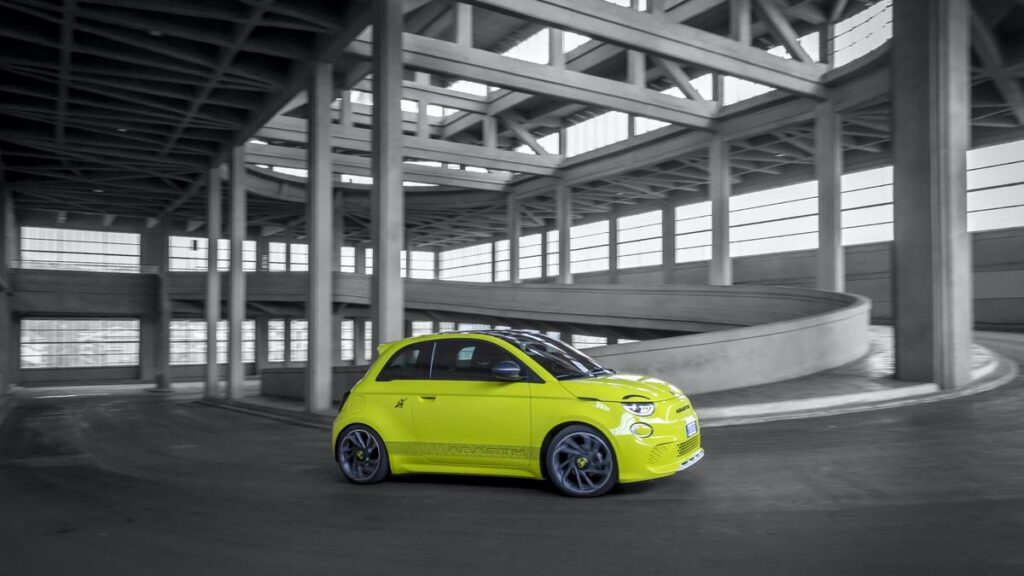
Fiat Abarth 500e.
UPDATE: Stellantis NV has just announced a staggering €22.2 billion ($26 billion) in writedowns, sending its stock plummeting 25% during intraday trading in Milan. This shocking development comes just days after CEO Antonia Filosa reassured investors about the company’s performance, marking a critical blow to investor confidence.
Filosa’s announcement reveals that a significant portion of the charges is tied to the unwinding of former CEO Carlos Tavares‘s investments in electric vehicles (EVs) that are now deemed unprofitable. This oversight has not only impacted the company’s bottom line but has also erased nearly €70 billion from Stellantis’ market value since March 2024.
The fallout from these revelations is profound. Analysts are expressing concerns over the company’s future, with Evercore analyst Chris McNally predicting a potential second-half deficit of up to €1.5 billion, which he describes as “much worse” than expected. The company’s vague outlook for 2026 is also alarming, forecasting only a mid-single-digit revenue increase and a low-single-digit adjusted operating income margin.
Stellantis has also disclosed plans to sell its 49% stake in a Canadian joint venture to partner LG Energy Solution for just $100, a drastic drop from its initial investment of $980 million. This move reflects the challenges the automaker faces in its EV strategy, previously touted as a key growth area.
The latest earnings report also highlighted a €4.1 billion charge related to warranty expenses due to quality issues linked to prior management decisions, alongside €1.3 billion in charges connected to previously announced job cuts in Europe.
Despite these setbacks, Filosa remains optimistic about Stellantis’ core brands. The Jeep and Ram brands showed signs of recovery, with Jeep’s sales rising 4% in the fourth quarter of 2023, breaking a six-year slump. However, analysts warn that investor confidence is at a critical low.
“The chasm that Stellantis management needs to bridge to reestablish trust is significant,” said Stephen Reitman, a Bernstein analyst.
As this situation unfolds, investors are left wondering if this “kitchen sink” moment will lead to a real turnaround in Stellantis’ business fundamentals. The company’s next steps will be crucial in regaining market trust and stability.
The automotive industry is closely monitoring Stellantis’ moves, particularly how it navigates the turbulent waters of the EV market. As developments occur, stay tuned for updates on this evolving story.
