




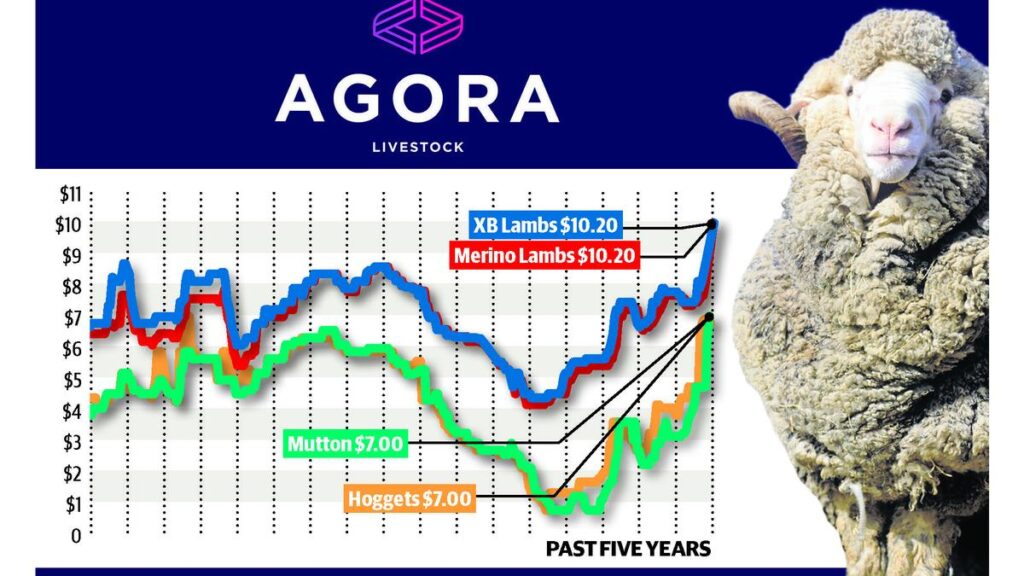
WA lamb and sheep values update.
The sheep and lamb sector in Western Australia has experienced a significant structural transformation over the past year. A combination of processing trends, turnoff data, live export movements, and market activities reveals a clear message: the state’s sheep flock is decreasing, supply is tightening, and market behaviors are adapting accordingly.
Changing Processing Patterns
Analysis of a decade’s worth of monthly processing data shows a marked shift in supply patterns. Historically, around 35% of the annual sheep and lamb kill occurs between July and November. However, in both 2024 and 2025, this percentage has increased considerably, peaking at 42% in 2024 and remaining near 38% this year. These figures indicate that lambs are being brought to market earlier, driven by stronger prices that encourage more supply in the first half of the season. Consequently, fewer lambs are available later in the year, a trend now evident across saleyards, grids, and private-market activities.
The shift is particularly notable in the mutton segment. Last year, nearly half of the annual mutton kill occurred within just five months. This year, the proportion for the July to November period has decreased to approximately 34%. This decline is not due to a drop in demand from processors, but rather a significant reduction in the number of mature sheep available.
Market Dynamics and Future Challenges
The industry is grappling with the consequences of this reduced supply. Throughout the year, total turnoff—including slaughter, live export, and interstate transfers—has remained above sustainable levels. While live export figures have softened, this is more reflective of a smaller flock and decreased availability of suitable sheep, rather than any substantial recovery.
The trends in saleyards, private treaty sales, and direct-to-works bookings all indicate that Western Australia is operating with fewer sheep. This scarcity is influencing pricing and market dynamics, leading to stronger mutton prices and a cautious, yet gradually improving, competition for breeding stock. Producers are also adopting a more careful approach to flock rebuilding intentions in response to these changes.
Processors and buyers face the challenge of securing reliable supply amid increasing market volatility. Looking ahead, tight supply conditions are anticipated to persist through 2025–26. Sheep enterprises within mixed-farming systems will need to enhance their financial competitiveness against cereals, necessitating a greater focus on breeding efficiency, genetics, and strategic marketing decisions.
To navigate these challenges, procurement processes must become more disciplined, emphasizing early planning, forward pricing, and clearer communication among producers, agents, and processors. AGORA Livestock is committed to supporting this transition by offering Base+ forward pricing, enhancing digital booking visibility, and expanding national marketplace reach. This approach aims to provide the necessary clarity and structure in an increasingly constrained supply environment.
In closing, AGORA extends sincere gratitude to all producers, agents, processors, buyers, and its 11,000 registered users for their support throughout this transformative year. The organization wishes everyone a safe and successful conclusion to the harvest, a productive upcoming season, and a joyous festive season as they look forward to continued collaboration in 2026 and beyond.