




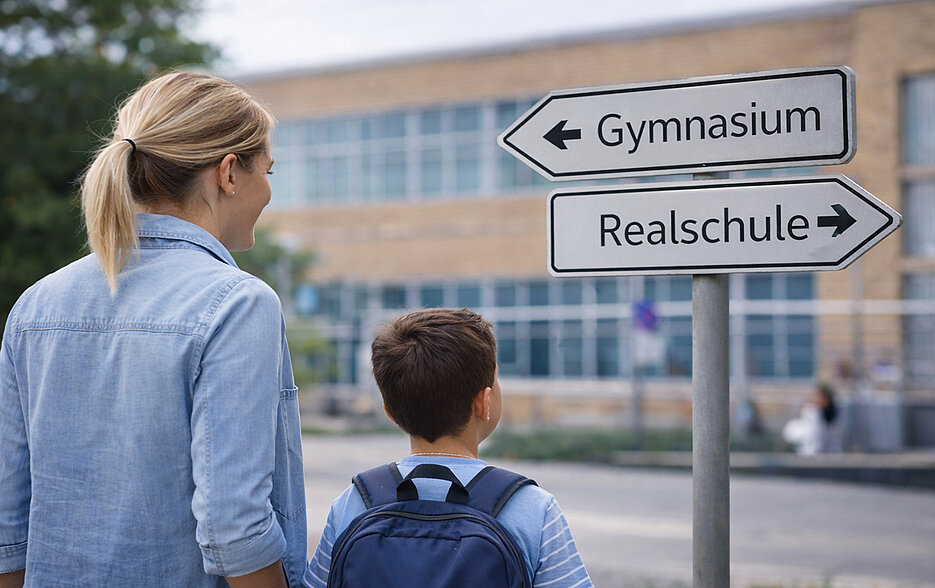
Children from less privileged backgrounds in Germany are notably less likely to attend grammar school compared to their peers from more affluent families, even when academic performance is equal. A recent study by the Cluster of Excellence ECONtribute at the Universities of Bonn and Cologne highlights how targeted mentoring can help close this educational gap.
The research team, led by Professor Pia Pinger of the University of Cologne, Professor Armin Falk of the University of Bonn, and Professor Fabian Kosse of the University of Würzburg, examined the impact of socio-economic status on secondary school choices. In most German federal states, parents decide on their child’s secondary school at the end of fourth grade, following a recommendation from primary school educators.
The findings reveal a stark disparity: primary school children from less privileged families are approximately one-third less likely to transition to grammar school than their counterparts from wealthier households. Even with comparable academic results, a gap of about 22 percentage points remains. “Our results clearly show how strongly social background continues to determine educational pathways,” stated Pia Pinger. “Equal opportunities still do not exist in the German education system.”
Insights from the Bonn Family Panel
The study is based on extensive data collected from the Bonn Family Panel, which tracked over 700 families with children born between 2002 and 2004 for a period of seven years. The data encompasses interviews with children and their families, along with school-related information and insights into the decision-making process regarding school selection.
Utilizing this comprehensive data set, the research team not only analyzed the transition gap to grammar school but also evaluated the effects of targeted support programs. The results were promising: “Targeted mentoring programmes for socially disadvantaged children improve equal opportunities permanently and measurably,” noted Fabian Kosse, who leads the Chair of Data Science in Business and Economics at the University of Würzburg.
The Role of Mentoring in Educational Outcomes
To assess the effectiveness of mentoring, the study involved randomly selected primary school children from low socio-economic backgrounds participating in the “Balu und Du” mentoring programme. Volunteer mentors, primarily students, engaged with the children for a year, focusing on promoting psychosocial development and expanding their personal horizons through various joint activities.
The analysis showed that children who participated in the mentoring programme were 11 percentage points more likely to progress to secondary school compared to those who did not participate. This positive effect persisted even five years after the programme’s conclusion. “The transition from primary school to secondary school plays a key role in determining a child’s future educational and professional career,” emphasized Pia Pinger. “Mentoring ensures that children have appropriate role models and that their parents become more open to a secondary school education.”
The findings underscore the crucial importance of mentoring in addressing educational disparities among children from different socio-economic backgrounds. These insights will be published in the Journal of Political Economy on December 10, 2025, under the title “Mentoring and Schooling Decisions: Causal Evidence.” The research offers a compelling call to action for policymakers and educators to implement targeted mentoring initiatives, fostering a more equitable educational landscape in Germany.