


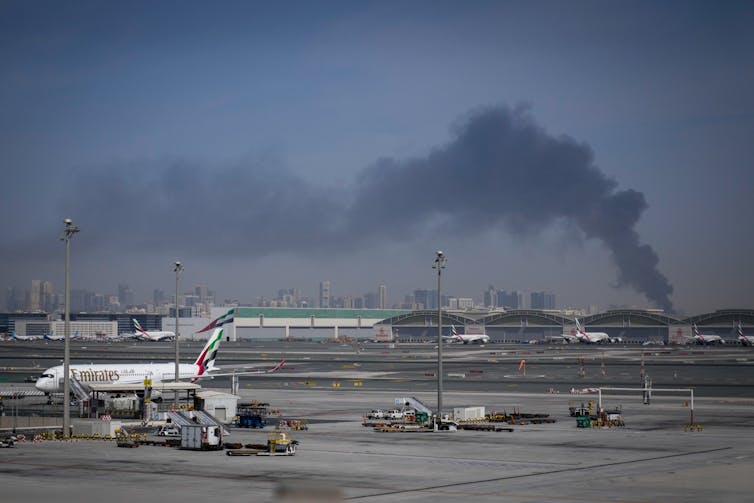
A sudden outbreak of conflict in the Middle East has left many travelers stranded, raising questions about the limitations of travel insurance policies. Major tensions involving the United States, Israel, and Iran have led to widespread flight cancellations, disrupting travel plans for thousands, including many Australians. Surprisingly, many travelers are discovering that their insurance policies explicitly exclude coverage for incidents related to war, complicating their situations further.
The current crisis has prompted travelers to reconsider what their insurance policies actually cover. While many purchase travel insurance to protect against unforeseen events, the fine print often reveals exclusions that can leave individuals without support when they need it most. As travelers grapple with uncertainty, they are left asking: why are war-related impacts typically excluded from coverage?
Insurance operates on a principle of risk management, pooling premiums from many individuals to cover potential claims. Insurers assess the likelihood of claims against the premiums collected, allowing them to balance risk and profitability. Yet, the presence of explicit exclusions in most travel insurance contracts, particularly regarding war, raises ethical questions about fairness in these arrangements.
Understanding Exclusions in Travel Insurance
The Australian Securities and Investments Commission (ASIC) defines contract terms as “unfair” if they create a significant imbalance in rights and obligations, are not necessary to protect legitimate interests, or cause harm to one party if enforced. Travel insurance exclusions for war could potentially meet these criteria, as they often allow insurers to limit their liability while leaving travelers without recourse.
The challenge lies in defining terms such as “war.” Current conflicts may not fit neatly into traditional definitions, complicating claims. Although changes in consumer protection laws now include insurance contracts under the ASIC Act, exclusions for war are standard across the industry and are rarely negotiable.
Despite the legal landscape, travelers impacted by the current disruptions may find it challenging to seek relief through this avenue. Most travel insurance policies are standardized, meaning that individual negotiation is uncommon, reinforcing the established exclusions.
Steps for Affected Travelers
For those whose travel plans have been disrupted by the ongoing conflict, there are several actions to consider. First, do not cancel your flight without consulting your airline. Many carriers are offering refunds or rebooking options, and independent cancellations could jeopardize your eligibility for compensation under Australian Consumer Law.
If you have concerns about your specific policy, contact your insurer for clarification on coverage details. Independent legal advice may also be beneficial; community legal services frequently provide free general guidance. For formal complaints regarding financial products, reach out to the Australian Financial Complaints Authority (AFCA) at 1800 931 678 or via their website, where they will assess your claim.
Additionally, stay updated through the Australian government’s Smartraveller website, which offers current travel advice. As the situation evolves, travelers must remain informed and proactive to navigate the complexities of travel insurance amidst global instability.
The current conflict has highlighted the importance of understanding the limitations of travel insurance, prompting a broader discussion about consumer rights and the fairness of exclusion clauses. As the situation develops, many will be watching closely to see if this leads to significant changes in the industry.