



UPDATE: Melbourne is bracing for a critical shortage of school places as rising population densities threaten to overwhelm local education systems. Authorities project an influx of 100,000 children in the next decade, primarily affecting the inner city and northern and western suburbs.
This urgent situation demands immediate attention, as reports reveal 63,000 school-aged children will flood the outer north and western fringe by 2035. Suburbs like Box Hill and North Melbourne are poised for significant growth, yet education officials are slow to act.
“The concerns are more in existing areas,” warns Jonny Barnard, a population forecaster. “How do you retrofit a school in these neighborhoods? It becomes quite an expensive process.” With the primary school-age population in Box Hill expected to double by 2045, the pressure is mounting.
In Box Hill Central, where a primary school closed in the 1990s, new apartment developments are prompting discussions about a potential vertical school. Meanwhile, Kerrimuir Primary School has seen enrolments soar from 311 students in 2015 to 579 last year. Principal Kellie Ind states, “There’s constant enrolment pressures due to the development in the area.”
North Melbourne is set to see 20,000 new residents by mid-century, and while the state government has committed to building a new primary school, its completion is still years away. School council president David Frazer highlights a critical issue: “We’re finding the government is looking at this very much in the immediate. Buying the land is a once-in-a-lifetime opportunity because our school is completely locked in by housing.”
Frustration is palpable as the council’s approach to acquire nearby land for expansion was met with a resounding “no” from authorities, leaving the school unable to cope with growing enrolments. “We’ve literally got rooms in our school that we can’t use,” Frazer lamented. “The population is growing, and we need to ensure schools can cope with the increase.”
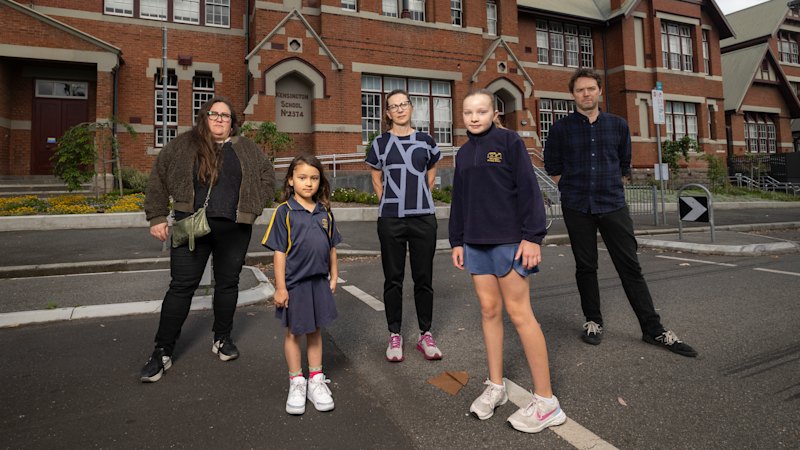
In a move to address these challenges, the Victorian Greens leader Ellen Sandell criticized the government’s failure to plan adequately for the future. “Kensington won’t be able to put in more portables because there’s only limited space to play,” Sandell remarked.
Nearby schools are already feeling the strain. University High has relocated all year nine students to a temporary campus, while Docklands Primary opened a second campus to accommodate surging enrolments.
Education Department secretary Tony Bates acknowledged the unprecedented population growth and the pressures on schools. “The number of families with small children living in high-rises is far exceeding normal predictions,” Bates noted.
In this year’s state budget, the government allocated $1 million to identify new school sites and $411 million for expanding existing schools. Education Minister Ben Carroll confirmed that a new school in Arden will complement the 123 new schools planned for Victoria, with 19 set to open next year in growth suburbs.
As Melbourne navigates this critical juncture, the urgency for effective planning and immediate action is clearer than ever. The future of education for thousands of families hangs in the balance, and swift government intervention is crucial to ensure that every child has access to quality schooling.
Stay tuned for further updates as this story develops.