




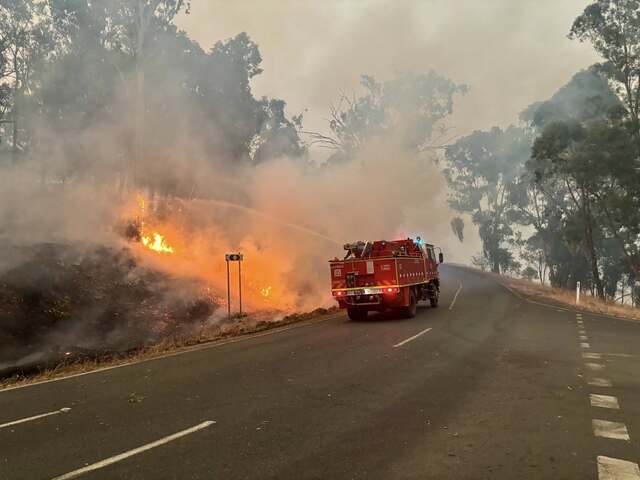
URGENT UPDATE: Misinformation is spreading rapidly across the Yarra Valley, sparking confusion and panic in communities already grappling with recent disasters. A viral conspiracy theory claiming the use of “energy weapons” to ignite fires has circulated widely on social media, reaching thousands in just days.
The alarming rumor, first shared in a local Healesville Facebook group, suggests that these supposed weapons were employed to clear land for the Longwood–Eildon renewable energy transmission line. The claims of unusual fire behavior—homes incinerated while nearby trees remain untouched—have fueled fears and distrust among residents. This misinformation, viewed over 286,000 times, underscores a growing crisis of confidence in official information during emergencies.
According to a 2025 study by Deakin University’s Centre for Resilient and Inclusive Societies, misinformation can lead to dangerous consequences. Co-author Mark Duckworth warns that this trend reflects a global decline in trust toward governments and institutions. “When trust begins to fray, it creates serious problems for us,” he stated.
The World Economic Forum has identified misinformation as the top global risk for the next two years, with extreme weather events coming in a close second. The intertwining of these issues is evident, as misinformation can hinder effective responses to disasters.
Australian Associated Press (AAP) FactCheck has debunked the Longwood fire conspiracy theory, emphasizing the importance of accurate communication. Duckworth highlighted the difference between misinformation—shared without harmful intent—and disinformation, which is deliberately misleading. “When people do not trust official information, they turn to alternative sources, often spreading misinformation without realizing it,” he explained.
This phenomenon is not new; similar conspiracy theories emerged during the COVID-19 pandemic and the devastating Black Summer bushfires. Duckworth noted how social media amplifies these narratives, allowing misleading views to reach a global audience.
To combat the spread of misinformation, experts suggest “pre-bunking” strategies, providing quick, accurate information to communities. Building trust before crises occur is crucial, as Duckworth emphasized that “you can’t build relationships during a crisis.” Emergency services must improve their response speed to counter misinformation while ensuring the accuracy of their communications.
The challenge remains significant as communities navigate through crises with heightened fears fueled by misinformation. As Duckworth pointed out, “Official sources can sometimes move more slowly than social media,” creating a gap that misinformation can easily fill.
Residents of the Yarra Valley are urged to seek information from credible sources, especially during emergencies. As the situation develops, vigilance and accuracy in information-sharing will be key to maintaining public trust and safety.
