




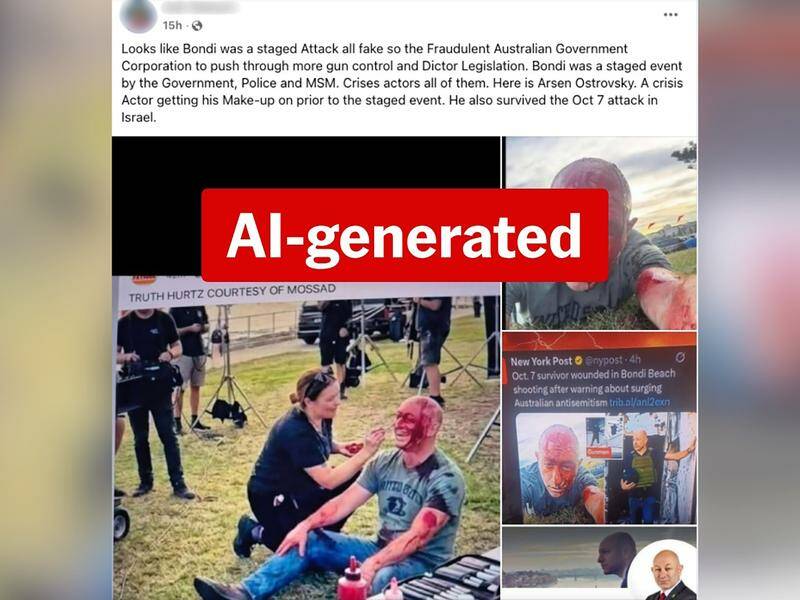
UPDATE: A wave of misinformation is sweeping through social media following the deadly terrorist attack at Bondi Beach on December 14, where 15 people were killed during a Jewish Hanukkah event. New reports confirm that claims surrounding the attack are not just false; they are part of a coordinated disinformation campaign exploiting this horrific incident.
Authorities confirm that the attackers, Sajid Akram, 50, and his son Naveed Akram, 24, were inspired by Islamic State ideology. They targeted the event with deadly intent, with Sajid killed on-site and Naveed charged with murder and terrorism offenses. This tragedy has opened floodgates for misinformation, including fake identities for the gunmen and dubious claims suggesting it was a false-flag operation.
The AAP FactCheck editor, Ben James, highlights a troubling trend: artificial intelligence (AI) is being used to generate and spread this harmful content. Disturbing images and audio clips have surfaced, including fabricated statements allegedly made by Australian officials. An alarming amount of the misinformation appears to be orchestrated from overseas, particularly from a network of Facebook pages based in Vietnam.
False narratives alleging Israeli involvement have gained traction, with nearly 1,000 mentions on social media since the attack, according to NewsGuard analyst Ines Chomnalez. Compounding the crisis, misleading accounts from Pakistan and India are muddying the waters regarding the attackers’ nationalities, with conflicting reports about their origins further fueling geopolitical tensions.
James states, “There are signs of what appears to be a coordinated overseas disinformation effort exploiting this horrific event.” This suggests that many of the false claims are amplified by accounts outside of Australia, lacking firsthand knowledge of the situation.
The rapid spread of misinformation is alarming. The ease of creating authentic-looking posts using simple prompts means that misinformation is getting harder to differentiate from legitimate news. “It is also becoming increasingly difficult to distinguish AI-generated text from human-written content,” James adds.
In the lead-up to the Bondi attack, disinformation pages on Facebook shifted their focus from false claims about elite swimmers and LGBTQ issues to Australian politics, just weeks before the attack. These posts gained thousands of shares and often featured fabricated quotes from politicians, including Pauline Hanson.
Since the tragedy, there has been a continuous stream of misinformation aimed at further polarizing public opinion. While the exact motives behind this surge are unclear, experts suggest it could be an effort to capitalize on the tragedy for engagement and revenue.
The situation is developing rapidly, and experts urge Australians to remain vigilant against this misinformation. “What is clear is that Australians are being exposed to disinformation on a troubling scale,” James warns.
As the investigation unfolds, the public must be aware of the potential dangers posed by misleading narratives. Authorities are working to combat this misinformation, but the challenge remains significant. Stay tuned as we continue to follow this urgent story and its evolving impact.
