




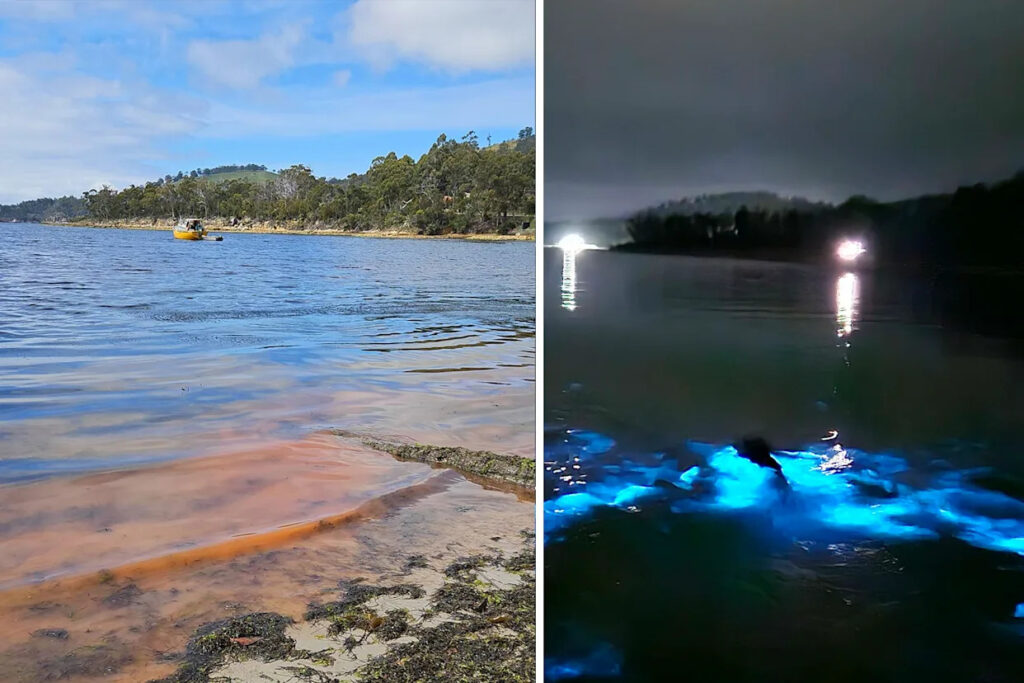
UPDATE: A shocking red tide phenomenon has turned the waters of the Huon River, near Hobart, a deep pink, causing alarm among local residents and prompting urgent public warnings. Over the weekend, the dramatic change in water color was linked to a bloom of tiny plankton known as Noctiluca scintillans, which resulted in at least one woman experiencing alarming skin irritation after contact with the water.
Locals, still reeling from a devastating fish kill last summer, are on high alert as fears mount that pollution and the salmon farming industry may be to blame for this latest environmental anomaly. Jessica Hoverman captured stunning images of the Barretts Bay shoreline transformed by the red tide on July 14, 2023, followed by a mesmerizing bioluminescent glow the next night, which she described as “magical.” However, her initial excitement was dampened by concerns over potential health risks and environmental impacts.
“I felt a burning, tingling sensation after touching the water,” said Lilly Henley from the non-profit group Neighbours of Fish Farming (NOFF), who experienced pain after collecting a sample on the opposite side of the river. She warned others against contacting the water, stating that in high concentrations, the bloom may cause skin irritation.
The NRE-Tas has advised that while such algal blooms can occur naturally, they may still pose risks to human health, emphasizing caution when interacting with affected waters. Emeritus Professor Michael Rowan from the University of South Australia expressed concern about the bloom, stating, “Reports of the algae bloom rang loud alarm bells.” Calls for a government investigation into the incident are gaining traction, particularly as images of the red discoloration were documented near fish farms.
Compounding the anxiety is the memory of last summer’s bacterial outbreak, which saw millions of fish perish in local aquaculture facilities, leaving thousands of dead fish on the beaches. This led to heightened scrutiny of the salmon farming industry, with environmental advocates like Bob Brown questioning whether the industry’s practices could be contributing to the severity of the red tide.
On the other hand, marine scientists are divided on the implications of the red tide. While some argue that human activity exacerbates these phenomena, others like Emeritus Professor Gustaaf Hallegraeff believe the blooms should be appreciated rather than feared. He notes that the presence of Noctiluca scintillans is increasingly common in Tasmania, driven by climate change and rising water temperatures.
As the situation develops, the community remains on edge, grappling with fears of pollution and the potential impacts of salmon farming. Local residents are urged to stay informed about the health risks associated with the red tide and to avoid contact with the water until further notice.
Authorities continue to monitor the situation closely, and more updates are expected as investigations into the cause and potential impacts of this alarming event proceed. The urgency of this situation highlights the ongoing tension between environmental health and aquaculture practices in Tasmania.
Stay tuned for further developments on this critical story as it unfolds.