




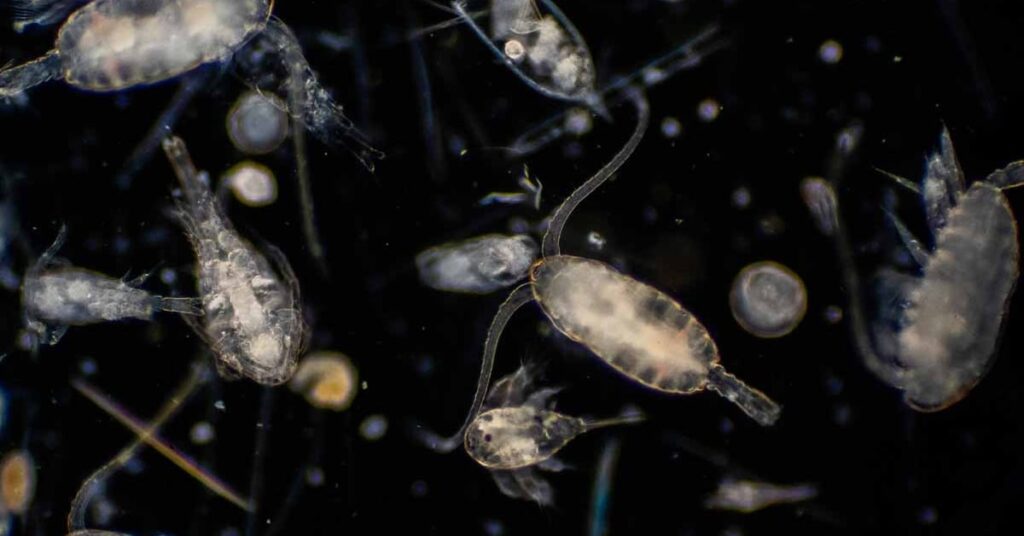
UPDATE: New reports confirm that trillions of microscopic zooplankton are playing a crucial role in combating climate change by removing a staggering 65 million tonnes of carbon dioxide from the atmosphere every year. As atmospheric CO2 levels reach unprecedented highs, these tiny ocean creatures offer a vital lifeline for our planet.
The latest findings spotlight the Great Bear Sea in British Columbia, where a groundbreaking initiative—finance for permanence (PFP)—has been launched to protect this ecologically rich area. This project, spearheaded by the provincial and federal governments alongside 17 First Nations, aims to monitor and safeguard one-third of the Great Bear Sea, integrating scientific management with Indigenous knowledge.
The Great Bear Sea is teeming with diverse marine life, serving as a habitat for not just zooplankton but also hundreds of fish species and marine mammals. “Zooplankton are small, drifting animals,” explains marine biologist Liberty Boyd, PhD. She emphasizes their critical role in the marine food web, linking microscopic phytoplankton to larger species like fish and whales. Their nocturnal feeding habits and daily migrations make them pivotal in maintaining ocean health.
As pollution levels rise, zooplankton are increasingly consuming microplastics instead of their primary food source, phytoplankton, threatening their ability to capture carbon effectively. The ocean absorbs 30% of global CO2 and produces 50% of our oxygen, making it essential in our fight against climate change. The Southern Ocean, while only 15% of the world’s oceans, contributes a remarkable 40% of the ocean’s carbon capture, much of which is attributed to zooplankton.
“Zooplankton regulate climate via what’s called the biological carbon pump,” Boyd adds. They ingest carbon-rich phytoplankton and excrete waste that sinks deep into the ocean, effectively storing CO2 in what could be termed a natural climate defense mechanism. This process has the potential to equate to powering nearly 39.5 million homes or removing more than 18 million cars from Canadian roads annually.
However, the future of zooplankton is under threat. Environmental risks have doubled in recent years due to pollution, warming oceans, and increasing water acidification. “Rising levels of microplastics are a major concern,” warns Boyd. She advocates for reducing single-use plastics and supporting sustainable seafood as simple yet effective actions individuals can take to protect these essential creatures.
Advanced technologies are now being deployed to monitor zooplankton populations and movements. Space-based spectroradiometers, launched by NASA, are tracking zooplankton activity, while environmental DNA (eDNA) analysis allows researchers to map populations through water samples.
The importance of zooplankton in mitigating climate change is becoming increasingly recognized, underscoring our collective responsibility to safeguard the environment for future generations. As Boyd stresses, “The ocean serves as a carbon sink and oxygen producer; we must do all we can to protect these tiny animals—and our waterways—that play an outsized role in our planet’s climate defense system.”
As this story develops, the urgent need for coordinated global action to protect marine ecosystems and combat climate change becomes ever clearer. The Great Bear Sea initiative stands as a beacon of hope in this critical effort. Stay tuned for further updates on this pivotal environmental breakthrough.
