




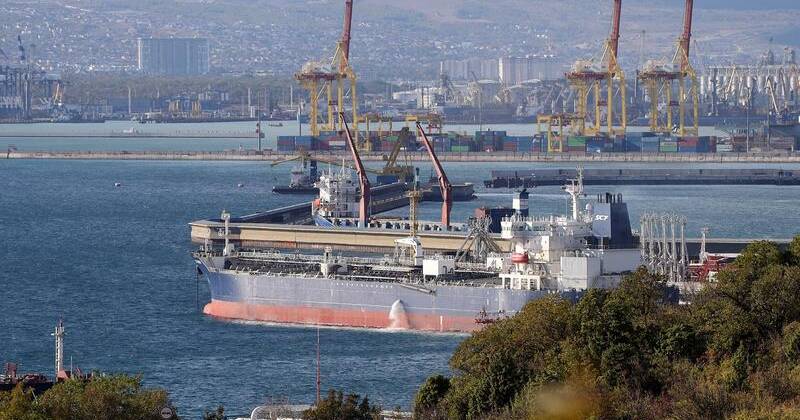
The United States has introduced a 30-day waiver allowing countries to purchase sanctioned Russian oil and petroleum products that are currently stranded at sea. This decision, announced by Treasury Secretary Scott Bessent, aims to stabilize global energy markets affected by escalating tensions due to the conflict in Iran. Following the announcement, oil prices saw a decline on Friday morning in Asia, reflecting immediate market reactions.
According to Kirill Dmitriev, Russia’s presidential envoy, the waiver will impact approximately 100 million barrels of Russian crude oil, nearly equivalent to a day’s worth of global production. This marks the second significant easing of sanctions related to the Ukraine conflict by the US within just over a week. The move aligns with President Donald Trump‘s administration’s efforts to mitigate rising energy prices in light of recent US and Israeli military actions that have disrupted shipping in the Strait of Hormuz.
The International Energy Agency described the ongoing conflict in the Middle East as resulting in the most severe oil supply disruption in history. The waiver, issued on Thursday, permits the delivery and sale of Russian crude oil and petroleum products loaded on vessels on or before March 12, 2024, and remains valid until midnight Washington time on April 11, 2024. The text of the waiver was made publicly available on the Treasury Department’s website.
The White House is concerned that the surging oil prices, which have exceeded $100 per barrel, could negatively impact American businesses and consumers ahead of the upcoming midterm elections in November. The Republican Party is particularly focused on maintaining control of Congress during this pivotal election period. In a statement on social media platform X, Bessent characterized the measure as “narrowly tailored” and “short term,” asserting that it would not yield substantial financial benefits for the Russian government.
While the sanctions relief is anticipated to enhance global oil supplies, it also presents challenges for Western nations striving to limit Russian revenue sources linked to its military actions in Ukraine. European Commission President Ursula von der Leyen stated after a recent G7 leaders’ conference that it is not the appropriate time to relax sanctions against Russia. Furthermore, British energy minister Michael Shanks reaffirmed on BBC Radio that the UK government would maintain its sanctions on Russia, highlighting the critical nature of the situation regarding Russian aggression in Ukraine.
This sanctions waiver follows a conversation between Trump and Vladimir Putin on March 9, 2024, and a subsequent visit to the US by Dmitriev. During this visit, discussions centered on the ongoing energy crisis and included meetings with key US figures, such as Trump’s special envoy Steve Witkoff and his son-in-law, Jared Kushner.
As the geopolitical landscape evolves, the implications of these decisions continue to unfold, with potential repercussions for energy markets and international relations.
