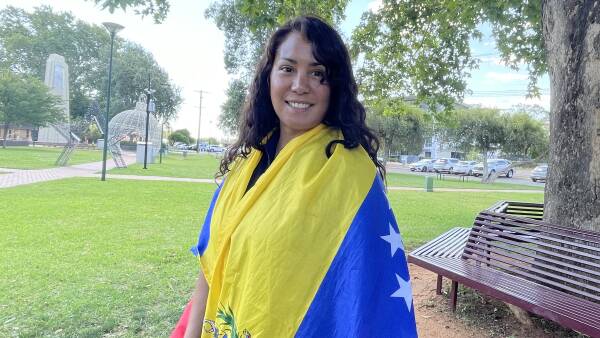
UPDATE: Venezuelan President Nicolas Maduro has been captured during a significant military operation by US forces on January 3, 2024, marking a dramatic turn in the ongoing turmoil in Venezuela. This event has prompted urgent reactions from Venezuelans worldwide, including a poignant response from Erika Antia, a Griffith woman originally from Venezuela, who is grappling with the emotional fallout of her homeland’s crisis.
Antia, who has lived in Australia for 24 years, expressed a mix of hope and grief over the situation in Venezuela, saying, “Maduro is a horrible, corrupt man – a criminal.” Her remarks highlight a growing sentiment among many Venezuelans that the capture of Maduro could signal a potential shift toward recovery.
“This is the first glimmer of hope in a long time,” Antia stated, emphasizing that despite the controversial nature of the US intervention, the humanitarian crisis in Venezuela remains dire. Reports of ongoing violence, widespread poverty, and oppression paint a grim picture. Antia highlighted the brutal reality faced by civilians: “People have been put in jail and killed in the street – civilians have had no way to fight back.”
The humanitarian situation is especially alarming. Antia shared her personal losses, including the tragic deaths of family members due to inadequate medical care in Venezuela, where the minimum salary is less than $1. “I lost my aunt because they didn’t have the supplies at the hospital to help her,” she shared, stressing the urgent need for change in her home country.
Her mother experienced a near-fatal health crisis, ultimately requiring intervention in Australia for treatment. Antia’s narrative underscores the stark contrast between her life in Australia and the struggles of her family back home, where the basic necessities of life are increasingly out of reach.
Antia’s sister, who fled to Germany, also illustrates the ongoing migration crisis triggered by Venezuela’s instability. “She had a beautiful home, a wonderful family and ran multiple businesses,” Antia said, noting that repeated robberies forced her sister to leave everything behind. “Now she is in Germany working 12-hour shifts on a packing line, separated from her family.”
In her heartfelt account, Antia emphasized the importance of democracy and civic engagement, urging others to recognize the power of their vote. “Your vote is so important,” she declared. “Do your research; that is what I tell my son every time.”
As world attention turns to Venezuela following Maduro’s capture, the question remains: what will happen next? Many are watching closely for the international community’s response and what it could mean for the future of democracy and human rights in Venezuela. Antia remains cautiously optimistic but recognizes the long road ahead for her country. “We need to get to a place where money goes back to the people and democracy is reinstated, but we need to be patient.”
The ongoing developments in Venezuela represent not just a political shift but also a critical moment for the millions affected by the humanitarian crisis. As the situation unfolds, the international community is urged to respond decisively to support the Venezuelan people in their quest for stability and dignity.