




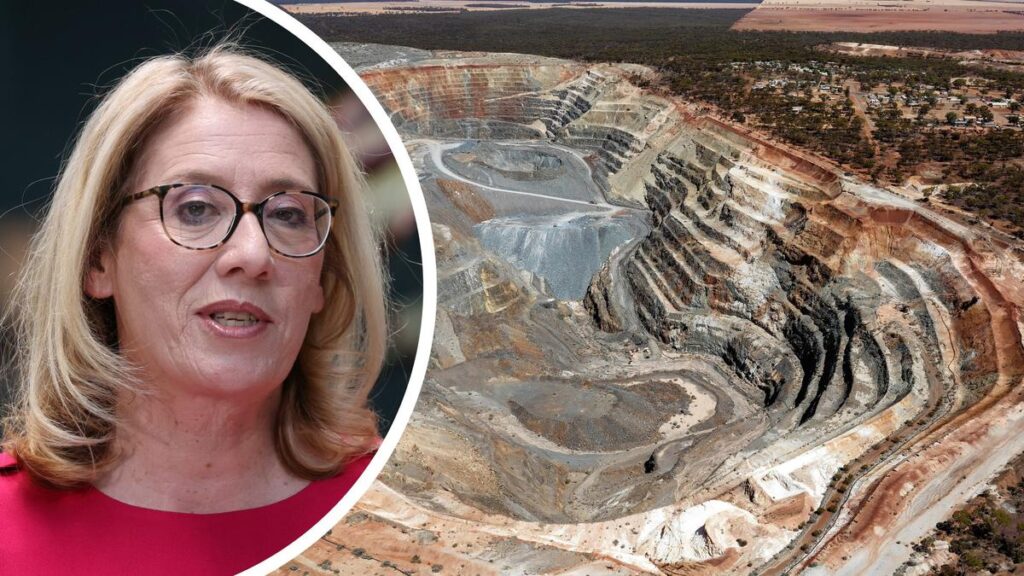
Rita Saffioti has confirmed a $2.4 billion boost to State coffers thanks to a bonanza of iron ore and gold royalties.
UPDATE: Western Australia Treasurer Rita Saffioti has just confirmed a significant $2.4 billion boost to the State Budget, driven by robust iron ore and gold royalties. However, she emphasizes that WA urgently needs its GST deal to sustain financial health as living costs rise for residents.
The mid-year budget review, set for release this week, is expected to reveal a surplus exceeding $2 billion for the current financial year, with projections indicating more multi-billion dollar surpluses ahead. This stands in stark contrast to the $30 billion deficit projected in the recent Federal Budget presented by Jim Chalmers.
While the budget forecasts offer a silver lining for WA’s finances, the relief may not reach many West Australians grappling with escalating living expenses. In an interview with The Sunday Times, Saffioti expressed disappointment over the Reserve Bank of Australia‘s failure to implement further interest rate cuts this year, impacting many households struggling to meet financial obligations.
“Despite our enviable economic position, it’s vital we don’t give up our fight to hold onto WA’s fair share of the GST,”
said Saffioti. She highlighted the critical nature of maintaining GST revenues, estimating a potential loss of $6 billion to the WA economy if changes occur to the current GST deal, which is projected to generate $8 billion this financial year alone.
Royalty income forecasts have been revised upward by $2.4 billion across the upcoming years, with iron ore revenue expected to increase by $1.6 billion and gold revenue by $799 million. Saffioti confirmed that this revenue will be reinvested into essential services, particularly health and housing initiatives.
Despite these positive adjustments, the plight of many West Australians remains dire. The review will include previously announced measures aimed at improving regional airfares and expanding the State’s rent relief program. Additionally, public transport fares will be capped starting next month, saving commuters approximately $625 annually.
However, Saffioti has not committed to reinstating power bill rebates, even as new data from Synergy reveals that 32,043 residential customers have entered payment plans this year—an increase of nearly 9,000 from 2024. Synergy is currently owed $127.7 million in unpaid bills, marking a worrying trend that includes referrals of over 10,000 households to debt collectors.
Saffioti’s call for further interest rate cuts reflects the pressing need for financial relief among WA households. “I was hoping for more interest rate cuts at the end of the year, and that hasn’t happened,” she noted, underscoring the persistent inflation challenges facing Australians.
The upcoming mid-year review is not expected to introduce significant changes to the key economic forecasts released in June, which estimated a surplus of $2.4 billion and a net debt projected to reach $42 billion within three years. Saffioti defended WA’s rising debt, asserting that it remains more sustainable compared to other states.
“Our government’s strong financial management means we are able to continue investing in what matters most to Western Australians,” she asserted, highlighting that WA’s economy continues to outperform the national average, driven by robust employment and consumer spending.
As the state prepares for the budget review, all eyes will be on Saffioti’s next moves to ensure that the financial stability translates into tangible benefits for residents facing economic challenges.
