

A new escalation in the conflict between Israel and Iran has seen a series of missile strikes and bombings intensify across the Middle East. Following a week of joint U.S. and Israeli military operations against Iranian targets, the situation remains volatile, with reports of significant casualties and widespread destruction.
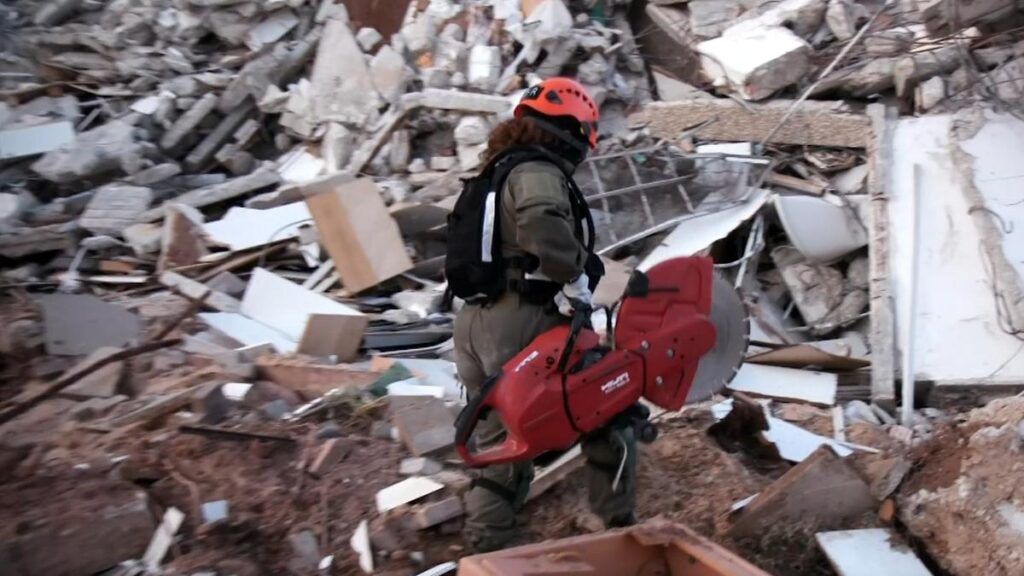
Israel has launched a barrage of airstrikes aimed at both Tehran and the Lebanese militant group Hezbollah. In a tragic incident in Beit Shemesh, an Iranian missile struck a residential area, resulting in the deaths of nine individuals and the destruction of an entire city block. A bomb shelter was compromised when a half-tonne warhead penetrated the roof, leaving behind debris and twisted metal, although many residents managed to survive by seeking shelter indoors.
Among those responding to the crisis were two Australians, a soldier known only as “N” and a companion identified as “T,” who traveled from Melbourne to support Israel amid the unfolding conflict. Soldier N described the situation as “confronting,” emphasizing the extensive training that prepared them for such circumstances. He commented, “With everything that happened in Bondi, it gave me more motivation to be here.”
Last December, a shooting during a Hanukkah event at Bondi Beach resulted in 15 fatalities and left 40 injured, a tragedy that resonated deeply across Australia. This background has intensified the drive for some Australians to engage directly in the ongoing conflict.
As the military operations continue, Iranian forces have indicated their determination to retaliate. Following a fresh wave of strikes, Iranian authorities reported extensive damage, claiming that over 3,000 homes were affected in the capital. The Iranian Red Crescent Society confirmed these figures, highlighting the humanitarian crisis developing as a result of the conflict.
Evacuations in Beirut and Ongoing Strikes
In Lebanon, Israeli airstrikes have targeted Hezbollah positions in Beirut, prompting widespread evacuations. Lebanese authorities reported that approximately 420,000 residents have been displaced due to Israeli warnings to vacate southern areas of the capital. Many were given only one hour to pack, leading to chaos as people rushed to leave their homes.
Casualties in Lebanon have also risen, with reports indicating that at least 70 individuals have died as the conflict escalates. Israeli military officials have intensified their operations in an effort to neutralize Hezbollah, which has posed a significant threat along the border.
Meanwhile, Iranian President Masoud Pezeshkian stated that mediation efforts are underway to address the conflict. He noted that some nations have started mediating, although he did not specify which countries are involved. Pezeshkian affirmed Iran’s commitment to defending its sovereignty while calling for a lasting peace in the region.
Despite the apparent reduction in ballistic missile attacks from Iran, there have been reports of hybrid drone and missile strikes targeting Israel. In a notable incident, Iranian forces reportedly launched attacks that affected infrastructure in Bahrain, including a hotel and residential buildings in Manama. Additionally, an Air France repatriation flight departing from the UAE was forced to return due to missile activity in the vicinity.
The conflict continues to evolve, with both sides entrenched in a cycle of retaliatory strikes. As the situation develops, the international community watches closely, hoping for a resolution that can bring stability to a region long plagued by violence.