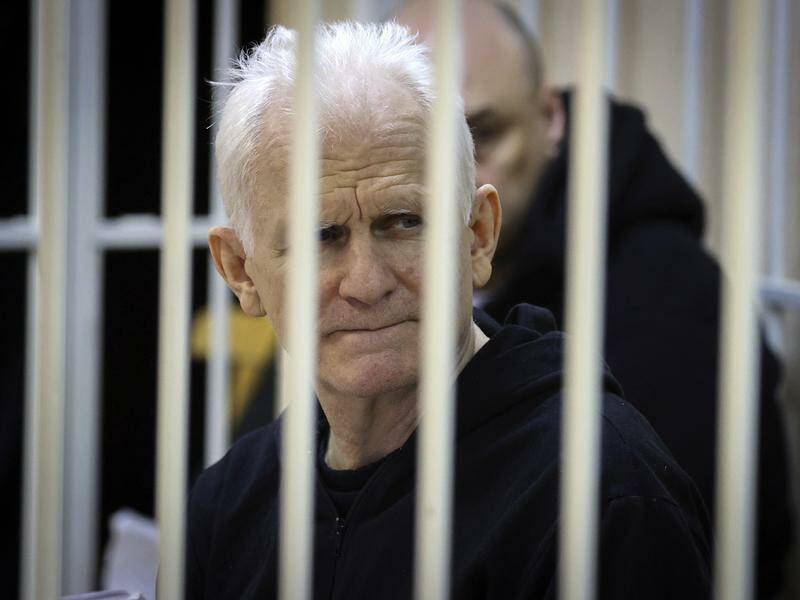
Belarusian President Alexander Lukashenko has granted freedom to 123 prisoners, a significant move that includes the release of Ales Bialiatski, a Nobel Peace Prize laureate, and prominent opposition leader Maria Kalesnikava. This decision follows two days of talks involving an envoy from former President Donald Trump, according to a statement from the United States.
In exchange for this prisoner release, the United States has agreed to lift sanctions on Belarusian potash, a crucial fertilizer component. Belarus is one of the world’s leading producers of potash, making this agreement economically significant. This release marks the largest such action by Lukashenko since diplomatic engagements began with the Trump administration earlier this year.
Bialiatski, who has dedicated his life to advocating for human rights, had been imprisoned since July 2021. Alongside him, Viktar Babaryka, another key figure who was arrested while preparing to run for president in 2020, has also been freed. The exact whereabouts of the released individuals remain unclear, but previous releases have typically involved them departing Belarus via neighboring Lithuania.
The talks between the United States and Belarus signify a strategic attempt to reduce Lukashenko’s reliance on Vladimir Putin, the Russian President. This outreach has been met with skepticism from Belarusian opposition groups, who have expressed doubts about the effectiveness of engaging with Lukashenko, given his historical repression of dissent.
The U.S. and the European Union imposed extensive sanctions on Belarus following a violent crackdown on protests after the disputed 2020 election. Sanctions intensified when Belarus facilitated Russia’s invasion of Ukraine in 2022. The exiled Belarusian opposition has acknowledged the recent developments, attributing the prisoner release to the impact of sanctions.
Sviatlana Tsikhanouskaya, a leading figure in the Belarusian opposition, has articulated a nuanced view of the situation. She stated, “US sanctions are about people. EU sanctions are about systemic change – stopping the war, enabling democratic transition, and ensuring accountability.” Her comments reflect a belief that both approaches can coexist and be mutually beneficial in promoting human rights and democratic values in Belarus.
Lukashenko previously dismissed the existence of political prisoners in Belarus, referring to those detained as “bandits.” He has publicly questioned the rationale behind releasing individuals he perceives as threats to the state. In contrast, Trump has characterized Lukashenko as “the highly respected president of Belarus,” a label that starkly contrasts with the opposition’s view of him as a dictator. Trump has called for the release of as many as 1,400 prisoners, whom he has described as “hostages.”
The U.S. Embassy in Lithuania reiterated its commitment to further diplomatic efforts aimed at freeing remaining political prisoners in Belarus. As of the latest reports, the Belarusian human rights group Viasna has identified 1,227 political prisoners in the country, underscoring the ongoing human rights challenges within Belarus.
During discussions between U.S. officials and Lukashenko, a broad range of topics were addressed, including the ongoing conflict in Ukraine and the situation in Venezuela. U.S. envoy Coale emphasized the potential for Lukashenko’s historical ties with Putin to serve as leverage in efforts to de-escalate the war in Ukraine, highlighting the complex geopolitical dynamics at play.
The recent developments in Belarus illustrate a significant moment in the ongoing struggle for political freedom and human rights in the country, as well as a complicated diplomatic landscape that continues to evolve.