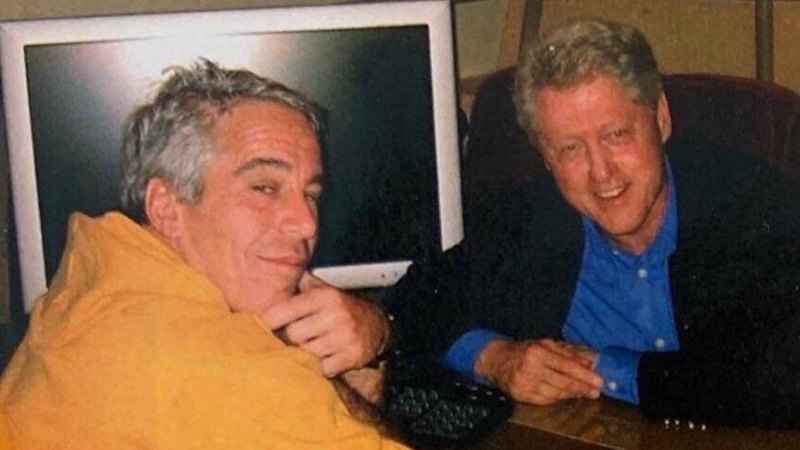
A protracted legal confrontation between James Comer, the Republican chair of the House Oversight Committee, and former President Bill Clinton and former Secretary of State Hillary Clinton may reach a critical juncture this week. Comer has warned that he will initiate contempt of Congress proceedings if the Clintons do not appear for scheduled depositions regarding the committee’s investigation into Jeffrey Epstein.
The committee’s inquiry has shifted focus from former President Donald Trump to prominent Democrats linked to Epstein, a convicted sex offender. The Clintons have been subpoenaed alongside several former law enforcement officials, but Comer has since excused five former attorneys-general from testifying. In contrast, he insists on the necessity of live testimony from the Clintons, despite their repeated offers to provide sworn statements instead.
Details of the Subpoena and Legal Maneuvers
For months, the Clintons have actively engaged with Comer, responding to his requests to avoid appearing in person. Their attorney, David Kendall, has sent multiple letters outlining why the Clintons should only need to submit sworn statements. Despite this, Comer has accused them of obstructing the committee’s efforts, stating, “The former president and former secretary of state have delayed, obstructed and largely ignored the committee staff’s efforts to schedule their testimony.” He has set a deadline for the Clintons to appear before the committee on December 17 and 18, 2023, or face contempt charges.
Kendall has countered Comer’s accusations, claiming that the inquiry is more about political spectacle than genuine oversight. In a recent letter, he stated that the targeting of the Clintons appears to be a politically motivated effort to distract from Trump’s own relationship with Epstein. Kendall emphasized that both Bill and Hillary Clinton had limited connections to Epstein, with Bill stating in his memoir that he ceased contact with Epstein two decades ago.
The Implications of Testifying
Bill Clinton’s potential appearance at Congress would be historically significant as no former president has been compelled to testify since Gerald Ford in 1983. The implications of contempt charges are serious, carrying a maximum penalty of one year in prison and fines up to $100,000. Notably, not every congressional subpoena leads to contempt charges, as evidenced by the case of Jim Jordan, who received a subpoena but was not penalized for non-compliance.
The Clintons maintain that they should be treated similarly to other officials who have been excused from testifying. Kendall has argued that Hillary Clinton has no relevant knowledge regarding Epstein’s activities and has never had any personal interaction with him or his associate, Ghislaine Maxwell. The attorney describes the focus on the Clintons as “purposeless and harassing,” and questions the fairness of the committee’s approach.
As the December deadlines approach, tensions are expected to escalate. The Clintons reaffirm their willingness to cooperate but insist that they should not be held to a different standard than others who have been excused from testimony. The outcome of this confrontation may have lasting implications for congressional oversight and partisan investigations moving forward.