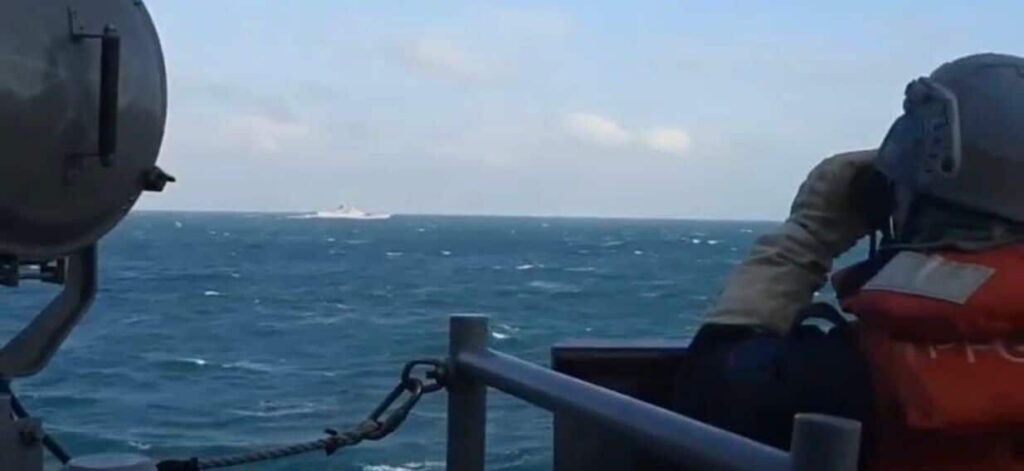
TAIWAN - DECEMBER 29: (----EDITORIAL USE ONLY - MANDATORY CREDIT - TAIWAN'S MINISTRY OF NATIONAL DEFENSE/HANDOUT' - NO MARKETING NO ADVERTISING CAMPAIGNS - DISTRIBUTED AS A SERVICE TO CLIENTS----) A screen grab from a video shows Taiwan Coast Guard personnel as Taiwanâs Ministry of National Defense said the islandâs armed forces conducted rapid response exercises on Monday in response to aircraft and naval activity by Chinaâs Peopleâs Liberation Army in Taiwan on December 29, 2025. In a statement posted on social media, the ministry said the armed forces closely monitored the situation and carried out joint sea and air operations involving all service branches.The ministry said Taiwanâs Coast Guard also remained on high alert as part of the response. No further details on the scale or duration of the activities were immediately provided. China launched joint military drills Monday around Taiwan in a stern warning against 'Taiwan Independence' separatist forces and external interference, according to state-run media.The Eastern Theater Command of the People's Liberation Army (PLA) dispatched fighter jets, bombers and unmanned aerial vehicles (UAVs) in coordination with long-range rocket forces to conduct drills code-named 'Justice Mission 2025' in the Taiwan Strait and areas to the north, southwest, southeast and east of Taiwan Island, Xinhua news agency reported, citing Shi Yi, a spokesperson for the theater command. (Photo by Taiwan's Ministry of Defense/Anadolu via Getty Images)
China has launched significant military exercises around Taiwan, marking one of the largest drills conducted by the People’s Liberation Army (PLA) in recent history. These exercises, which began on September 21, 2023, involve a range of military activities, including air and naval operations, intended to demonstrate China’s capacity to respond to perceived threats in the region.
The drills come in response to increasing military collaboration between Taiwan and the United States, particularly following the recent arms sales to Taiwan, which China views as provocative. The exercises are occurring in the East China Sea and the South China Sea, areas that have been the focal point of ongoing territorial disputes and military posturing in the region.
Scope and Scale of the Exercises
According to reports from the PLA, the exercises involve thousands of troops, numerous aircraft, and a variety of naval vessels. The drills are designed to enhance the PLA’s capabilities in joint operations, as well as to test new military technologies. Analysts suggest that the scale of these exercises is unprecedented, indicating China’s commitment to asserting its sovereignty over Taiwan and signaling its military readiness.
In a statement released by the PLA, officials emphasized the importance of these drills, asserting that they are a necessary response to external interference and provocations that threaten China’s national security. The statement also warned that such actions would be met with a robust military response, further elevating tensions in the region.
International Reactions and Implications
The military exercises have drawn significant attention from international observers. The United States, a key ally of Taiwan, has expressed concern over the impact of these drills on regional stability. According to officials, the U.S. will continue to support Taiwan in its defense capabilities and maintain its commitment to a free and open Indo-Pacific region.
The ASEAN bloc has also responded, calling for restraint from all parties involved. In a joint statement, the member nations urged dialogue and diplomacy to resolve tensions, highlighting the need for stability in Southeast Asia.
The ongoing military activities around Taiwan have potential implications for global shipping routes, as the region is a critical passage for international trade. With increased military presence, there are fears of miscalculations that could escalate into larger conflicts, affecting not only regional players but also global economies.
As the situation develops, the international community remains keenly focused on China’s military posture and its implications for peace and security in the Asia-Pacific region.