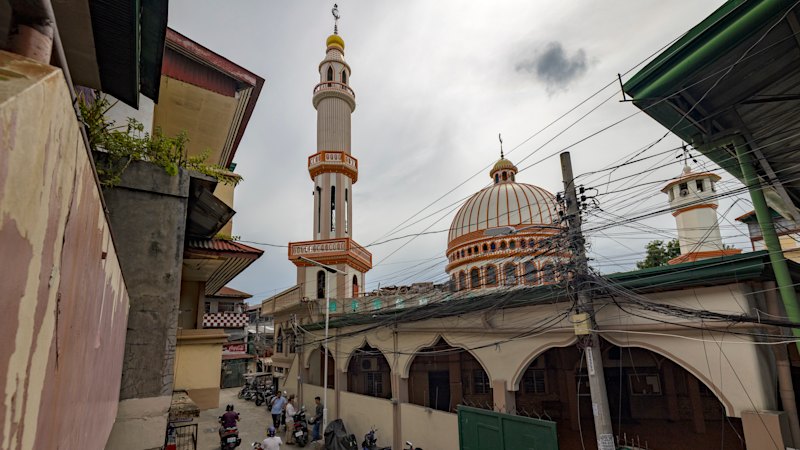
In a significant effort to gather information on the Bondi gunmen, images of Sajid and Naveed Akram will be displayed in at least 70 mosques across Davao City. Local Muslim leaders aim to encourage community members to report any details regarding the pair’s activities during their month-long stay in the Philippines before the tragic shooting that claimed 15 lives in Australia.
Community Response to Tragedy
On Sunday, Sheikh Muhammad Yusop Pasigan, the most senior Islamic cleric in the Davao region, emphasized the need for vigilance within the community. Holding an A4 printout of the Akram duo, he stated, “They are no good – not good people,” urging members to contact local authorities with any relevant information. The images will be displayed prominently above the doors of the mosques to ensure visibility.
Sheikh Pasigan outlined additional measures to enhance security within the mosques. He indicated that if newcomers attend services, their identification details will be collected. Those who exhibit any disruptive behavior could be reported to the local emergency number, 911.
The investigation into the Akram’s activities during their stay in Davao from November 1 to November 28 has become a focal point for Philippine authorities. So far, investigators have only uncovered a limited number of CCTV images depicting the pair’s movements. The Philippines National Police confirmed that Sajid Akram, aged 50, visited a local gun shop, while other footage shows the men jogging and walking in the vicinity of their hotel.
Ongoing Investigations and Community Dynamics
Reports indicate that one video, first aired by the ABC, captured Naveed Akram, aged 24, walking near their hotel in the early morning hours. A police spokesperson declined to comment on a News Corp report suggesting that two other men from Sydney might have crossed paths with the Akram pair during their stay.
Davao City, while not a typical tourist destination, has seen an influx of Australian visitors, particularly those traveling to nearby Siargao Island for surfing. The city is predominantly Catholic but serves as the largest urban center on Mindanao, an area with a complex history involving Islamist militants.
Evidence gathered from the Akram’s vehicle used in the December 14 shooting revealed homemade Islamic State flags. This alarming discovery has prompted the Philippine government to respond to media portrayals of Mindanao as a center for violent extremism. Officials stated that Islamic State-inspired groups in the region have been “fragmented, deprived of leadership, and operationally degraded.”
Staff at the GV Hotel, where the Akrams resided for 27 days, reported that the men left their room for only one or two hours each day. This limited movement raises questions about their ability to travel extensively during their stay. Sheikh Pasigan, when asked about potential extremist elements in Davao, stated that he had “no information” regarding such activities.
To further aid the investigation, Sheikh Pasigan plans to meet with other senior Islamic leaders to foster communication and encourage community members to share any information about the Bondi gunmen. He suggested that the leadership could also conduct independent inquiries to assist law enforcement.
Leon Victor Rosete, the regional police director, confirmed that investigators are continuing “backtracking operations” to identify individuals the Akrams may have interacted with and to evaluate possible support networks. The situation remains fluid as the community grapples with the implications of the tragedy and the ongoing investigation.