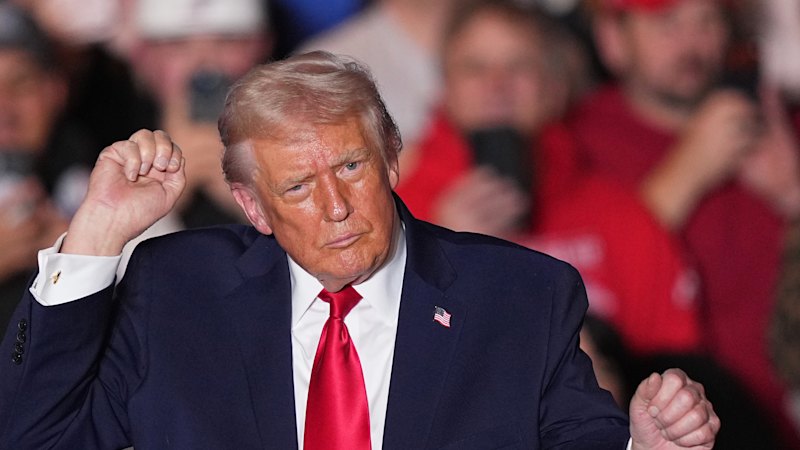
European leaders are taking decisive steps in response to remarks made by Donald Trump, who criticized the continent’s handling of migration during a recent interview. Trump claimed that a lack of stringent policies has led to a “decay” in Europe, igniting discussions among leaders about potential solutions to curtail irregular migration.
At a recent meeting of the Council of Europe, 27 of its 46 member countries endorsed a statement advocating for a re-evaluation of human rights norms in relation to deportations. This statement suggests that governments should not be hindered in forming agreements with third nations regarding asylum and return processes. Such an approach echoes the controversial Pacific Solution implemented by Australia, which involved sending asylum seekers to offshore facilities.
New Strategies on the Table
Leaders from various countries are increasingly exploring alternatives to manage the ongoing migration crisis. The United Kingdom has sought to implement a similar strategy by negotiating a two-for-one exchange deal with France, which involves returning an unauthorized migrant while accepting two vetted refugees in return. This deal comes in the wake of persistent crossings of the English Channel by small boats.
Public sentiment across Europe has shifted, with far-right nationalist parties gaining traction by capitalizing on fears surrounding migration and its perceived impact on national identity. The rhetoric from leaders such as Jordan Bardella, head of France’s National Rally, indicates a growing alignment with Trump’s views. Bardella has expressed willingness to collaborate with Nigel Farage of Reform UK to further their mutual goals, including making France less appealing to migrants.
Meanwhile, Viktor Orban, the Prime Minister of Hungary, has echoed Trump’s call for a shift in the European Union’s approach to migration, suggesting that current policies are insufficient and need revising.
Human Rights and Political Challenges
One of the major obstacles to implementing stricter migration policies is the European Convention on Human Rights, which some argue complicates efforts to deport migrants effectively. In the UK, both the Conservative Party and Reform UK have committed to withdrawing from the convention, while Labour leader Sir Keir Starmer has rejected this idea but aims to reinterpret its clauses to facilitate deportations.
Starmer, a former human rights lawyer, emphasized the need for reforms during a joint opinion piece with Mette Frederiksen, the Prime Minister of Denmark. Both leaders assert that the current asylum systems must adapt to the realities of mass mobility and changing global dynamics.
Despite the support for new measures, not all member states of the Council of Europe signed the statement advocating for constrained human rights regarding deportations. Key players like France, Germany, and Spain abstained, highlighting divisions within Europe on how best to address the migrant crisis.
As the situation evolves, leaders face the dual challenge of addressing public concerns about migration while adhering to international human rights standards. The current discussions and proposed strategies represent early steps towards a more unified European response to migration but may also reflect a growing moral conflict among nations on how to balance compassion with control.
In conclusion, Trump’s recent remarks have catalyzed a complex dialogue among European leaders about migration and human rights. As they navigate this contentious issue, the outcomes of these discussions could shape the future of migration policy across the continent.