Minutes from the December 9-10, 2023, Federal Open Market Committee meeting reveal that most Federal Reserve officials anticipate further interest rate cuts if inflation decreases as expected. However, some members expressed a preference for maintaining the current rate for an extended period following the meeting.
The minutes, released on January 3, 2024, indicate ongoing divisions among U.S. central bankers regarding the direction of monetary policy. “A few of those who supported lowering the policy rate at this meeting indicated that the decision was finely balanced or that they could have supported keeping the target range unchanged,” the minutes state.
In early December, the committee voted 9-3 to reduce the benchmark interest rate by a quarter percentage point, bringing it to a range of 3.5% to 3.75%. The post-meeting statement included a subtle adjustment suggesting uncertainty regarding the timing of future rate cuts. While the median projection from officials hinted at one quarter-point reduction occurring in 2026, individual forecasts varied significantly, with investors anticipating at least two cuts within the next year.
Disagreements were evident among policymakers during the meeting. Governor Stephen Miran voted against the rate cut, advocating for a larger half-point reduction. Meanwhile, Austan Goolsbee, president of the Chicago Fed, and Jeff Schmid from Kansas City, dissented in favor of keeping rates unchanged. Projections for 2025 illustrated a deeper divide, with six officials suggesting that the benchmark rate should remain at 3.75% to 4% by the end of this year.
Divided Perspectives on Economic Risks
The minutes highlight considerable differences among policymakers concerning whether inflation or unemployment poses a greater risk to the U.S. economy. “Most participants noted that a move toward a more neutral policy stance would help forestall the possibility of a major deterioration in labour market conditions,” the minutes indicate. Conversely, “several participants pointed to the risk of higher inflation becoming entrenched,” cautioning that further reducing the policy rate in the context of elevated inflation could imply a reduced commitment to the 2% inflation target.
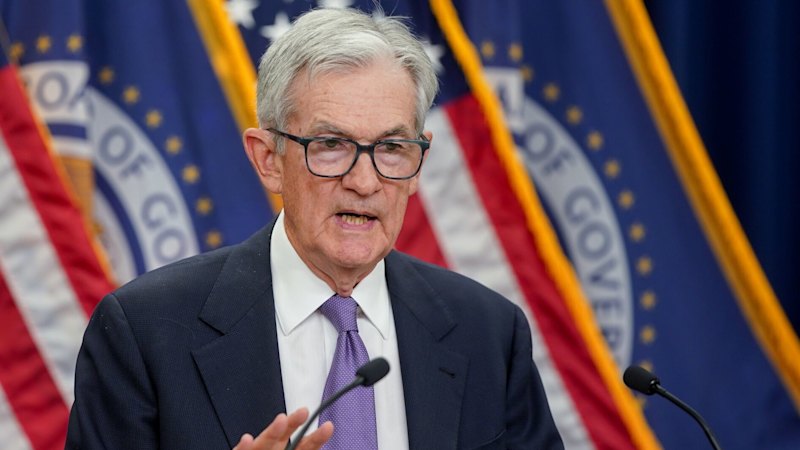
In a press conference following the meeting, Federal Reserve Chairman Jerome Powell suggested that the committee had already lowered rates sufficiently to mitigate significant risks to the labour market while still maintaining pressure on inflation.
The recent government shutdown, which lasted throughout October and into mid-November, limited access to standard economic data for officials. Nevertheless, policymakers acknowledged that incoming data in the weeks following the meeting could inform their decisions. “Some participants who favored or could have supported keeping the target range unchanged suggested that the arrival of a considerable amount of labour market and inflation data over the coming inter-meeting period would be helpful in making judgments on whether a rate reduction was warranted,” the minutes noted.
Since the meeting, new economic data has only heightened divisions within the Fed. In November, the unemployment rate increased to 4.6%, its highest level since 2021, and consumer prices rose less than anticipated. These developments reinforced the case for those advocating for lower rates. Conversely, the economy grew at an annualized rate of 4.3% in the third quarter, the fastest pace in two years, raising concerns about inflation among those opposed to the December cut.
As the Federal Reserve navigates these complex economic indicators, the potential for future rate cuts remains a focal point of discussion among its officials.