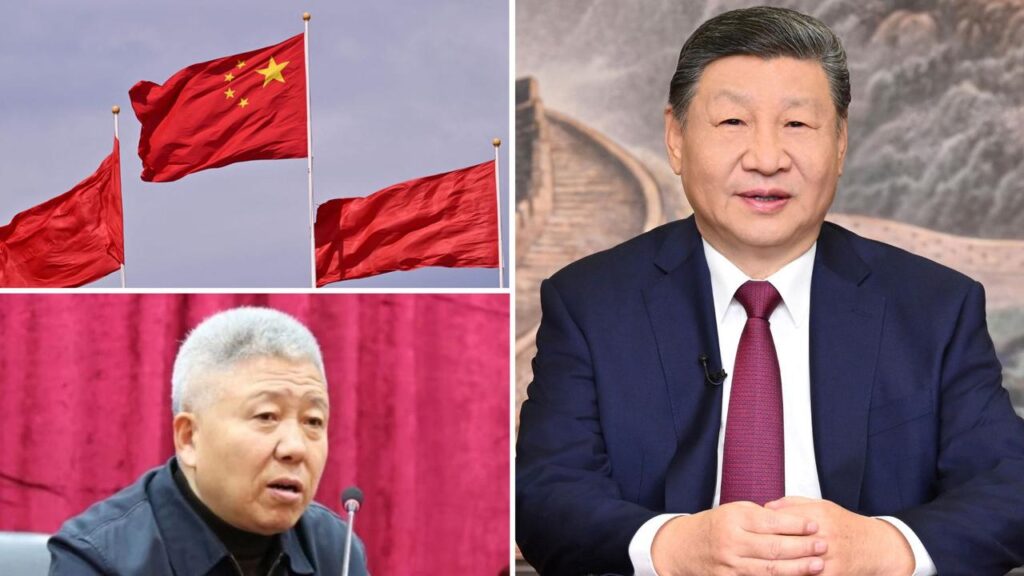
Gao Yichen, a former high-ranking official in China’s Ministry of State Security, has been stripped of his membership in the Chinese Communist Party (CCP) and is facing potential imprisonment. This action comes as part of an ongoing anti-corruption campaign led by President Xi Jinping. Gao, who retired from his official roles nine years ago, was found to have committed serious violations of party discipline and integrity, according to the Central Commission for Discipline Inspection (CCDI).
The CCDI’s announcement on January 12, 2024, detailed allegations against the 75-year-old, stating he “seriously violated party political discipline, organisational discipline, integrity discipline, and work discipline.” The agency accused him of having “lost his ideals and conviction” and “polluting the political environment” while evading scrutiny. Formal charges include “amassing wealth through bribery” and “improperly accepting gifts,” which are common allegations against officials who fall from grace in the CCP.
Gao previously served as the deputy director of the 610 Office, an organization known for its role in suppressing religious practices deemed inconsistent with party ideology. His influence persisted long after retirement as he leveraged extensive networks within political and commercial circles. CCDI investigators assert that he continued to exploit his connections for personal gain, raising concerns about corruption at high levels of government.
The implications of Gao’s downfall extend beyond individual accountability. Analysts suggest that his case reflects a broader trend within the CCP’s governance structure. The party has captured nearly one million individuals under the anti-corruption banner in the previous year alone. Additionally, reports indicate that Xi Jinping seeks to intensify these efforts throughout 2024, indicating that more high-profile arrests could be forthcoming.
Shifting Power Dynamics in the CCP
The political landscape in China is undergoing significant changes, with many senior officials facing scrutiny as Xi Jinping consolidates power. An Asia Society Policy Institute report highlights that the rapid transformation in China is often challenging for analysts to interpret. The report states, “China is changing faster than most of us can keep pace.”
Amidst this backdrop, the leadership structure is evolving as many Politburo members age. While a generational shift is evident, newcomers are finding themselves in a precarious position where loyalty to Xi is paramount. The report underscores a fundamental challenge for these rising officials: balancing political allegiance with the need for effective governance. Issues such as economic growth and debt management require pragmatic solutions that may conflict with Xi’s overarching ideological goals.
The statement from Xi on January 12 emphasized the need for “higher standards and more concrete measures” from officials, reinforcing the importance of party loyalty and control. He directed the CCDI to “uphold and strengthen the Party’s overall leadership,” which serves as a warning that dissent or failure to conform to party expectations could lead to severe repercussions.
Implications for Future Leadership
Gao Yichen’s case is not an isolated incident but part of a broader trend of purges within the Chinese political system. General He Weidong was recently dismissed on corruption charges, further indicating the high stakes involved in party loyalty and governance. Analysts, including Singapore’s Nanyang Technological University scholar Lee Chan Hui, argue that these purges reflect Xi’s preference for loyalty over competence, which may undermine operational effectiveness within the military and other state sectors.
The implications of these developments are significant for China’s future governance and international relations. As the CCP grapples with internal challenges and external pressures, the need for a cohesive strategy that aligns with Xi’s vision will be critical. The report concludes that many of Xi’s policies may hinder effective governance and sustainable economic development, raising questions about the capacity of future leaders to navigate these complexities.
In summary, Gao Yichen’s removal from power underscores the ongoing transformations within the CCP and the potential instability that may arise as loyalty becomes the predominant criterion for advancement in the party hierarchy. As Xi Jinping continues to tighten his grip on power, the political landscape in China remains as complex and unpredictable as ever.