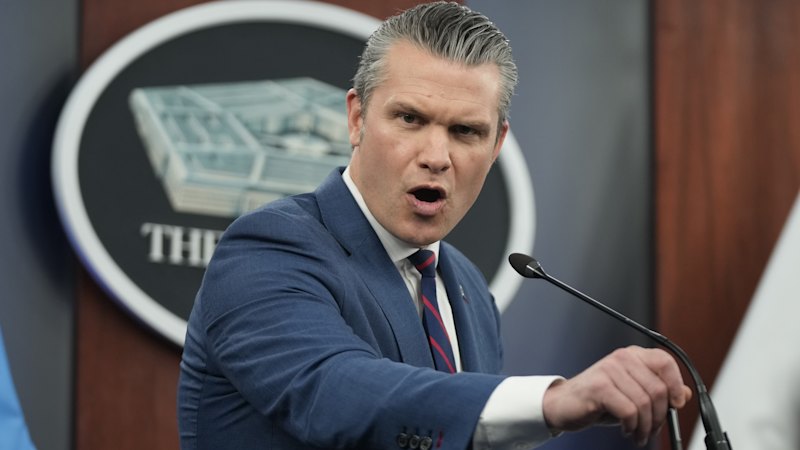
US Defence Secretary Pete Hegseth publicly criticized media coverage of the recent military operations against Iran, arguing that it has failed to adequately reflect the American military’s successes. Speaking on March 14, 2026, Hegseth addressed the Pentagon press corps after detailing the extensive damage inflicted on Iran’s military capabilities, including its leadership, missile stockpiles, naval forces, and weapons infrastructure.
Hegseth expressed dissatisfaction with phrases like “intensifying” or “widening” that were used in television headlines to describe the conflict. Instead, he asserted that a more accurate portrayal would be “Iran increasingly desperate” or “Iran shrinking, going underground.” He emphasized that this is what a “patriotic press” would communicate, implying a need for media narratives to align with government perspectives.
His remarks were further fueled by a report from CNN, which stated that senior officials in the Trump administration had acknowledged during classified briefings that they had not anticipated Iran’s potential closure of the Strait of Hormuz in response to the US-Israeli strikes. Hegseth denounced the CNN story as “patently ridiculous,” pointing out that Iran has long threatened to disrupt shipping in the strategic waterway.
“This is what they always do – they hold the strait hostage,” Hegseth remarked. He criticized CNN for suggesting that the government had not considered such a scenario, calling the report “fundamentally unserious.” Following Hegseth’s comments, CNN issued a clarification on the story, with its chief executive, Mark Thompson, reaffirming the network’s commitment to journalistic integrity.
Hegseth’s statements took a more contentious turn when he mentioned the anticipated leadership change at CNN, suggesting that the network would benefit from the influence of David Ellison, chairman and chief executive of Paramount Skydance. This company was formed from a recent $8 billion merger and is in the process of acquiring Warner Bros Discovery, the parent company of CNN. The implications of Hegseth’s comments indicate a desire within the Trump administration for a shift in the media landscape that aligns more closely with its viewpoints.
Traditionally, the relationship between the government and the media has been a contentious one. Hegseth’s remarks underscore a broader theme of the Trump administration’s approach: to not only critique the media but also exert pressure on media ownership to achieve more favorable coverage. Previous reports have indicated that Ellison assured Trump administration officials that, if he succeeded in acquiring Warner Bros, he would implement “sweeping changes” at CNN to address the network’s perceived biases.
Former CNN Pentagon reporter Barbara Starr responded to Hegseth’s comments on social media, emphasizing the importance of defending press freedom. She noted that CNN has a long history of sending personnel into conflict zones, often at great personal risk. “You have a legal and moral obligation to defend the free press, even the ones you don’t personally like,” she stated, highlighting the ethical responsibilities that accompany freedom of expression.
As the tension between the Trump administration and media outlets continues to evolve, Hegseth’s comments reflect a significant moment in the ongoing dialogue regarding press coverage of military actions and governmental accountability. While he may have articulated a common frustration over media narratives, his calls for a shift in coverage raise important questions about the role of journalism in a democratic society.
The implications of these developments will be closely watched as the administration navigates its relationship with the media and the public continues to seek accurate and responsible reporting in times of conflict.