


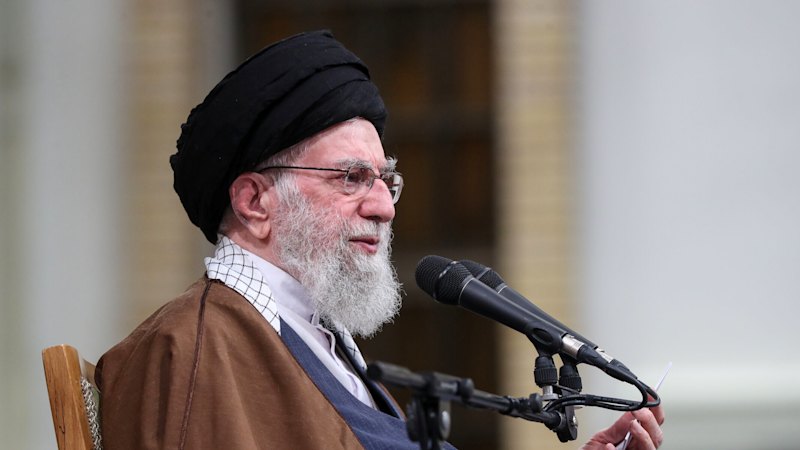
In a significant acknowledgment, Iran’s Supreme Leader Ayatollah Ali Khamenei confirmed on January 27, 2024, that “several thousand people” have died in the recent anti-government demonstrations. This marks the first time Khamenei has publicly recognized the deadly scale of the unrest that has swept across the nation.
During a meeting broadcast on state television, Khamenei described the deaths as “brutally and inhumanely” inflicted but did not provide specific details. He accused foreign powers, specifically the United States and Israel, of contributing to the violence and claimed the Islamic Republic possesses evidence to support these allegations. Khamenei emphasized that while Iran does not seek war, it will not allow either domestic or international criminals to escape accountability for their actions.
This admission aligns with estimates from various human rights organizations, which suggest that approximately 3,500 people have died during the protests. Additionally, these groups report that over 22,000 individuals have been detained as unrest continues to unfold in the country.
Protests and Government Response
The protests began in response to a severe currency crisis that has plagued Iran for months. Khamenei has framed the unrest as part of a broader strategy by Washington to impose military, political, and economic domination over Iran. His remarks come amid a record-long internet blackout affecting the country’s population of approximately 92 million.
Local media reported that internet connectivity was partially restored on January 27, although many residents remained largely isolated from the outside world for the ninth consecutive day. The Iranian government had cut internet and mobile phone services on January 8 to control the rising protests. According to the semi-official Mehr News Agency, access has been reestablished for some subscribers, though it remains unclear which specific restrictions were lifted or if international platforms are accessible again.
The Fars News Agency indicated that mobile text messaging services have also been reactivated after an earlier suspension. However, the internet traffic monitoring group NetBlocks noted only a minimal increase in connectivity, stating that access still remains at about 2 percent of normal levels, with no significant return to full services.
As of early Saturday afternoon local time, many users appeared to be offline, with limited activity on platforms such as Telegram, Instagram, and X, which had previously been accessed through virtual private networks (VPNs).
Implications of Communication Blackouts
Near-total communication blackouts have become a common strategy for authorities during critical events in Iran, effectively cutting off much of the population from the global internet. This tactic has been employed during recent protests, diverting users onto a government-controlled domestic network that operates independently of the wider web.
NetBlocks reported that the current internet shutdown has surpassed the one imposed during the nationwide protests in 2019. On January 27, Fars cited unidentified authorities stating that internet and communication services were gradually being restored, but warned that some restrictions would remain as long as security conditions necessitate.
Khamenei’s remarks and the government’s ongoing response reflect a tense atmosphere in Iran, as both domestic unrest and international relations continue to evolve. The situation remains fluid as the nation grapples with the consequences of the protests and the leaders’ attempts to maintain control amidst widespread discontent.