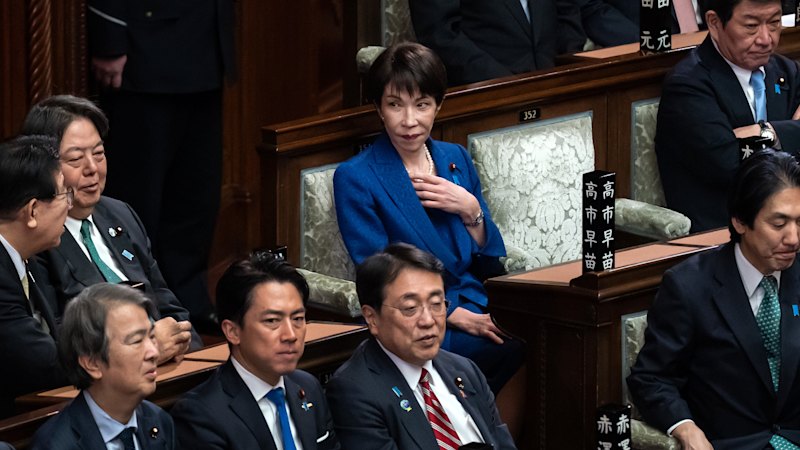
Japanese Prime Minister Sanae Takaichi has dissolved the lower house of parliament, setting the stage for an early election scheduled for February 8, 2026. This strategic move aims to leverage her current popularity to help her party, the Liberal Democratic Party (LDP), recover from significant electoral setbacks experienced in recent years. Despite her strong approval ratings, estimated at around 70 percent, the decision to call for an election delays the parliamentary approval of a crucial budget intended to bolster a struggling economy and address soaring prices.
Takaichi, who made history as Japan’s first female leader when she took office in October 2025, has only been in power for three months. Her administration is characterized by challenges, including ongoing scrutiny from scandals related to corruption and the LDP’s historical connections to the Unification Church. The newly formed Centrist Reform Alliance, which comprises the Komeito party and the Constitutional Democratic Party of Japan, raises questions about its ability to attract moderate voters, as opposition parties remain fragmented.
As tensions rise with China over remarks regarding Taiwan, Takaichi faces increasing pressure from international allies, notably from U.S. President Donald Trump, to escalate military spending. During the official dissolution of the 465-member House of Representatives, lawmakers celebrated with shouts of “banzai,” or “long live,” signaling their readiness for the upcoming campaign.
The early election is essential for Takaichi to secure a governing majority in the lower house, which wields more power than the upper house, the House of Councillors. Following a loss in the 2024 elections, the LDP and its coalition partners hold a slim majority in the lower house and lack a majority in the upper house, relying on opposition votes to push their agenda forward. Critics have pointed out that delaying the budget’s passage could hinder essential economic measures.
“I believe that the only option is for the people, as sovereign citizens, to decide whether Sanae Takaichi should be prime minister,” she stated at a press conference announcing the election plans. Takaichi has emphasized her commitment to her policies, asserting, “I’m staking my career as prime minister on it.”
A hard-line conservative, Takaichi aims to distinguish her administration from that of her centrist predecessor, Shigeru Ishiba. She is advocating for increased military spending, stricter immigration policies, and heightened fiscal responsibility, presenting these as essential for Japan to become “strong and prosperous.” Despite her personal popularity, the LDP continues to grapple with the fallout from a political funds scandal that has eroded its traditional voter base, with some constituents shifting toward emerging far-right populist parties.
Tensions with China have escalated, particularly after Takaichi suggested Japan might intervene if China were to take military action against Taiwan, a self-governing island claimed by Beijing. This has led to a backlash from China, manifesting in increased economic and diplomatic pressure on Japan. Takaichi is advocating for a military buildup and increased defense spending in response to these regional challenges, aligning her policies with those of her coalition partner, the right-wing Japan Innovation Party (JIP).
The JIP partnership emerged after Komeito distanced itself from the governing bloc due to ideological differences and a lack of anti-corruption measures. With the JIP’s support, Takaichi secured sufficient votes to ascend to the prime ministership. Yoshihiko Noda, a former prime minister and leader of the Constitutional Democrats, expressed hopes for the new coalition, emphasizing its goal of creating a diverse and inclusive political landscape.
Despite the coalition’s ambitions, polling suggests that opposition parties may be too fragmented to mount a substantial challenge during the upcoming election. Nevertheless, Komeito’s ability to mobilize voters from the Soka Gakkai sect could prove significant in the election outcome.
As Takaichi prepares for the campaign, her focus remains on economic issues, aiming to appeal to voters with proposals to combat rising costs and stagnant wages, along with specific support for low-income households. She has also committed to revising security and defense policies, including the elimination of restrictions on arms exports to foster a robust Japanese defense industry.
In recent days, the LDP has put forward new immigration policies that introduce stricter requirements for foreign property owners and impose caps on the number of foreign residents. These measures reflect a growing sentiment of anti-foreign sentiment within the electorate, further complicating the political landscape as the country approaches the election.