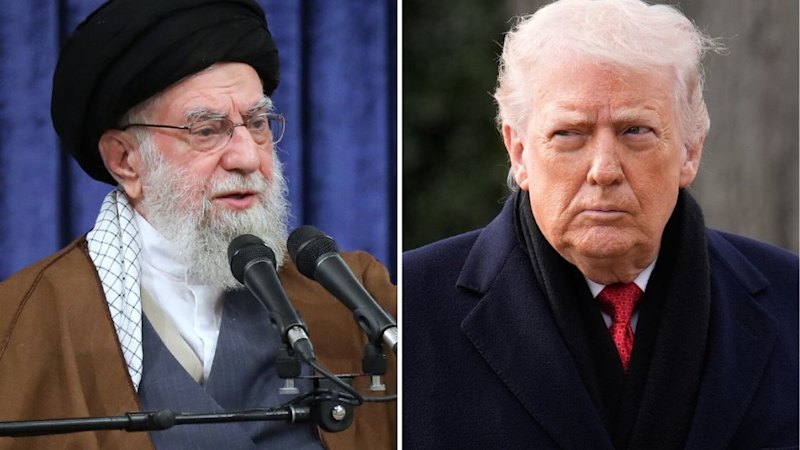


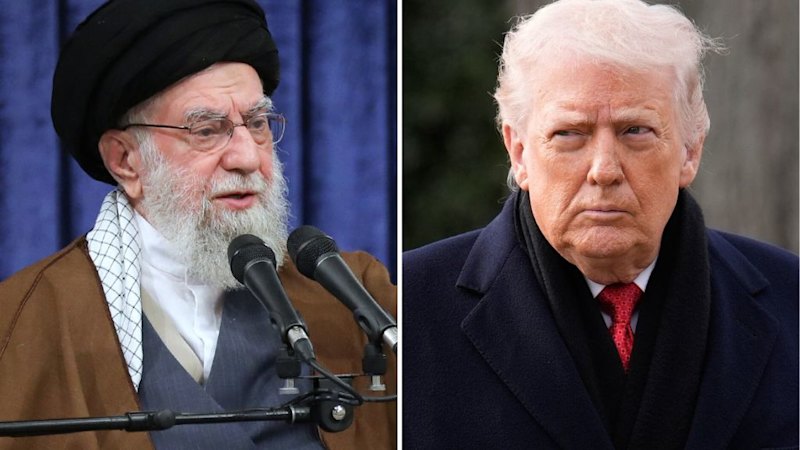
Ayatollah Ali Khamenei, Iran’s Supreme Leader, has publicly condemned former United States President Donald Trump, labeling him a “criminal” for his role in the unrest that has claimed “thousands” of lives. Khamenei’s remarks were delivered during a speech on October 3, 2023, where he held both the United States and Israel accountable for the violence and unrest in Iran.
Khamenei’s statements come amidst ongoing protests across Iran, which have been fueled by a variety of socio-economic issues. He accused Trump of inflicting casualties and damage on the Iranian populace, suggesting that the former president’s actions have compounded the suffering of the Iranian people. Khamenei’s comments reflect the heightened tensions between Iran and the U.S., particularly in the wake of Trump’s administration’s withdrawal from the 2015 nuclear deal.
Impact of Protests and Government Response
The protests in Iran have garnered international attention, with demonstrations erupting in response to government policies and rising inflation. Khamenei’s remarks serve not only as a rebuke to Trump but also as a rallying cry to consolidate domestic support against perceived foreign threats.
According to reports, the protests have seen significant casualties, with human rights organizations estimating that the death toll could be in the thousands. Khamenei’s focus on external blame, particularly towards the U.S. and Israel, illustrates a common narrative in Iranian political discourse that seeks to unify citizens against foreign adversaries.
Following the protests, Iranian authorities have implemented a crackdown on dissent, citing national security concerns. Khamenei’s rhetoric likely aims to bolster the government’s position against these protests by framing them as part of a larger conspiracy orchestrated by foreign powers.
International Reactions and Future Implications
The international community has reacted with cautious interest to Khamenei’s statements. Analysts suggest that his comments may serve to strengthen hardline factions within Iran, complicating the prospects for diplomatic engagement with the West. The ongoing tensions could impact future negotiations regarding Iran’s nuclear program and its relations with Western nations.
The implications of Khamenei’s remarks extend beyond Iran’s borders, as they may influence the geopolitical landscape in the Middle East. The involvement of the U.S. and Israel in Iranian affairs is a sensitive subject, and Khamenei’s labeling of Trump as a criminal risks escalating hostilities.
As the situation continues to evolve, the potential for further unrest in Iran remains high. Khamenei’s statements reflect a broader strategy to galvanize support among the Iranian populace while diverting attention from internal challenges. The next steps taken by both the Iranian government and the international community will be critical in determining the future stability of the region.